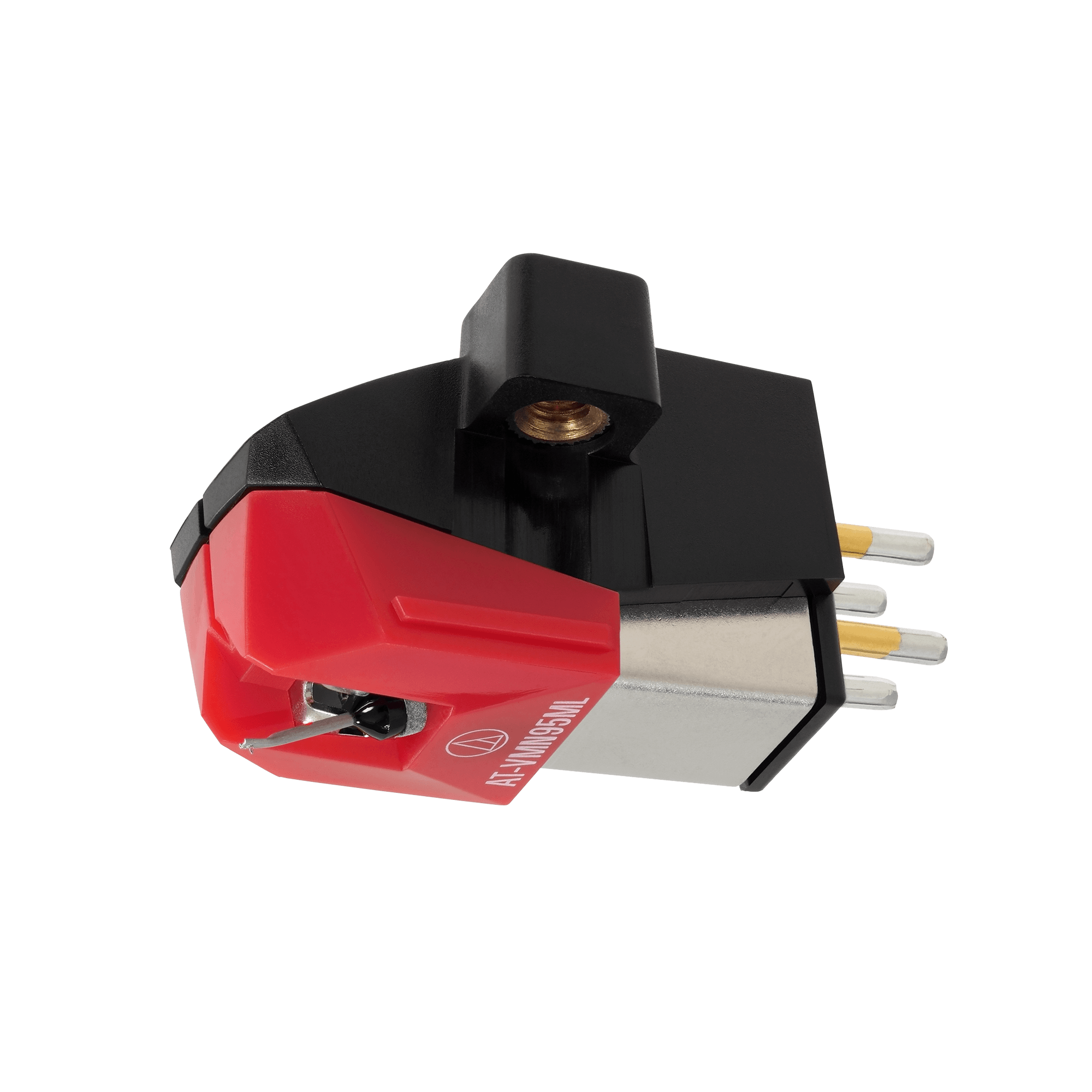
Audio-Technica AT-VM95ML Dual Moving Magnet Stereo Turntable Cartridge with Microlinear Stylus
The clearest supported use is an upgrade aimed at more controlled groove tracking: Scoot Technology heard better consistency toward the inner grooves but little change in clicks and surface noise. Check the specified 2 g force, MM input, loading and threaded mounting before buying. The measured channel-balance result corroborates physical review testing but does not guarantee every installation or a quieter worn record.
Updated 2026-10-08

We may earn a commission from qualifying purchases.
Prices and sellers
No price information yet
Conditions and limitations
Tracking force, MM input and electrical loading documented; equipment-specific alignment and all turntable combinations remain unverified.
Compatibility
Fluance RT85 review installation and VM95 replaceable-stylus design documented; not a universal turntable or AT95-body compatibility certification.
Where sources differ
Quoted output differs from manufacturer specification
- Explanation
- Use the manufacturer's nominal specification; do not treat the review's quoted figure as a physical measurement.
- Status
- explained
Reported issues and fixes
Limited surface-noise improvement reported in one comparison; no systematic defect incidence or reliability study found in the reviewed sources.
Care and support
Replaceable VM95 styli documented; no US service-duration guarantee or current repair-cost evidence established.
Ownership costs
Replacement route discussed qualitatively; prices and monetary ownership calculations excluded from this assignment.
Who it suits
Fit depends on tracking needs and compatible installation; no universal rival ranking or guarantee of reduced clicks.
Measured performance
Channel balance
1.29 dBReviewer's channel-balance measurement comparing VM95 styli on the same body. · Technics SL-1200, standard Technics headshell, Marantz PM-11S3 MM stage at 47 kΩ and 100 pF; 2 g tracking force, Technics alignment, 20 hours stylus run-in. Test signal, record and sample count not specified for this figure.
Source [6]Reviewer consensus
Single-source notes
The review
AT-VM95ML: consistent groove tracking with setup requirements
Who it fits
The Audio-Technica AT-VM95ML is the nude Microlinear model discussed here, rather than a generic recommendation for every cartridge carrying an AT95-like name. Audio Appraisal identifies it as an attractive point for existing AT95 owners to enter the VM95 family. That is a buyer-fit judgment from a review, not proof that every older body, arm or complete turntable will deliver the same result. Start by identifying what is already installed and whether you are replacing a complete cartridge or only a compatible stylus. The manufacturer lists the cartridge mass as 6.1 g and its nominal output as 3.5 mV at 1 kHz and 5 cm/sec. These are published specifications, not newly measured results. Its recommended resistive loading is 47 kΩ, with a specified capacitance range of 100–200 pF. Buyers should compare those requirements with their playback equipment before treating the stylus profile alone as the deciding factor. The useful proposition is a documented cartridge with an advanced stylus and supporting listening evidence; the specification sheet by itself does not establish how your records will sound. [6], [3]
Observed tracking
Scoot Technology's listening comparison reports a more composed passage from the outside of a record toward its inner grooves with the Microlinear stylus. Its comparison was against the AT-VM95E, and the review describes improvement on records where inner-groove distortion had been audible. This is relevant if your frustration is the way difficult passages become less controlled toward the end of a side. It supports considering the upgrade for that problem, while leaving room for differences between records and playback systems. The same reviewer did not hear much improvement in surface noise, clicks or pops. That qualification belongs beside the tracking result, because a clearer presentation and a quieter damaged or dirty record are different expectations. Do not turn one positive observation into a promise to remove every distraction in a collection. A buyer whose main concern is crackle should read the limitation as carefully as the benefit. The evidence makes a narrower, more useful case: improved tracking was heard in this comparison, but surface-noise reduction was limited and the result should not be generalized into a guaranteed restoration effect. [5]
One physical measurement, carefully scoped
Audio Appraisal reports a measured channel-balance figure of 1.29 dB for the VM95ML. This is a physical result from the review and is recorded separately from manufacturer specifications. It is not a star rating, a sound-quality score, or an inference from a marketing description. The review compared styli using the same VM95 body, which helps interpret the result as part of that reviewer's comparison rather than an uncontrolled list of unrelated cartridges. The disclosed setup used a Technics SL-1200, a standard Technics headshell and a Marantz PM-11S3 moving-magnet input. The input was specified at 47 kΩ and 100 pF, and the reviewer set tracking force to 2 g after alignment, with 20 hours of stylus run-in before critical listening. However, the exact test signal, test record and sample count attached to the channel-balance figure are not supplied. That missing detail limits reproducibility and prevents claiming a production-wide tolerance or a statistical result. For a buyer, the measurement is useful corroboration that the review involved physical testing, while listening suitability still depends on the system and material being played. [3], [6], [2]
Replacement and mounting are part of ownership
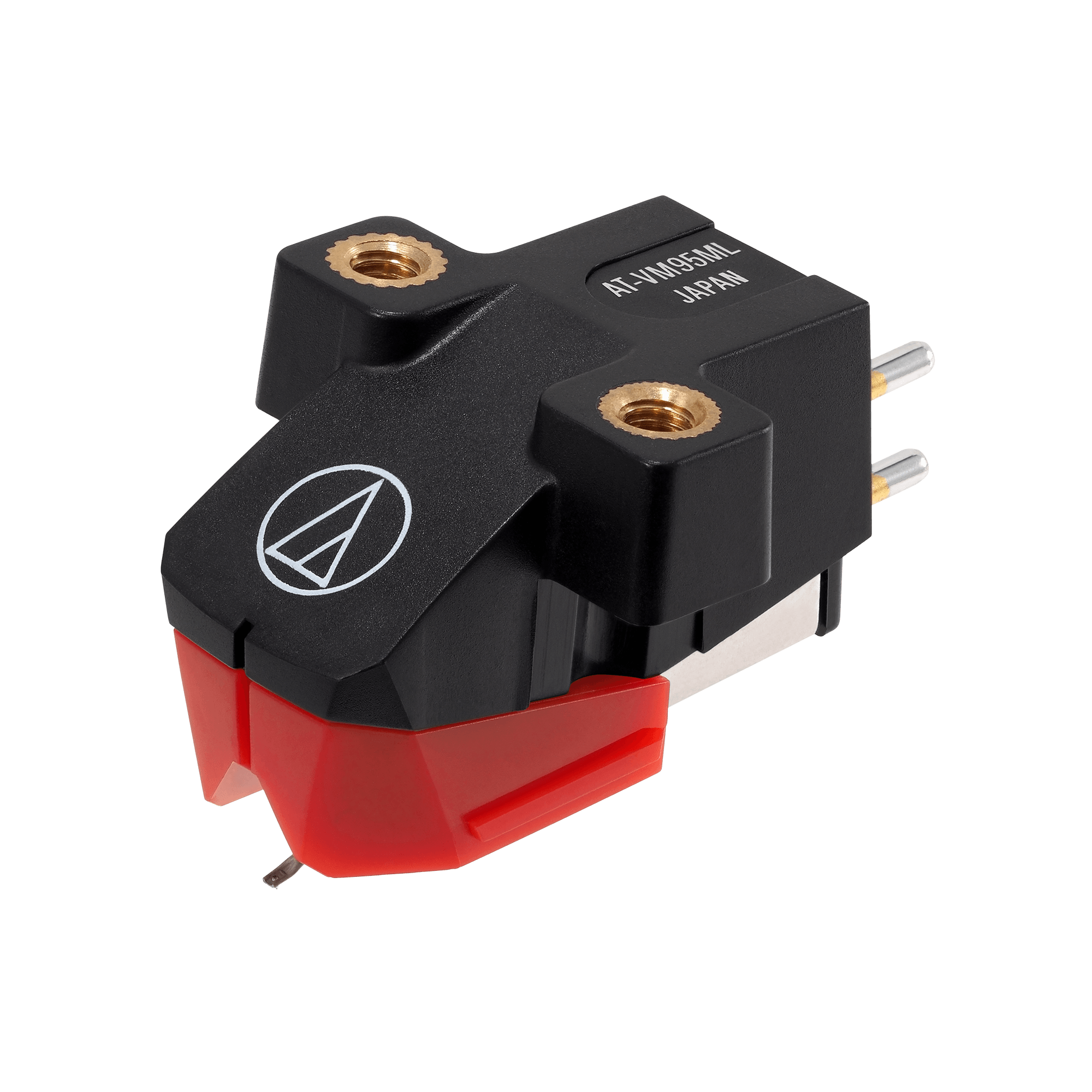
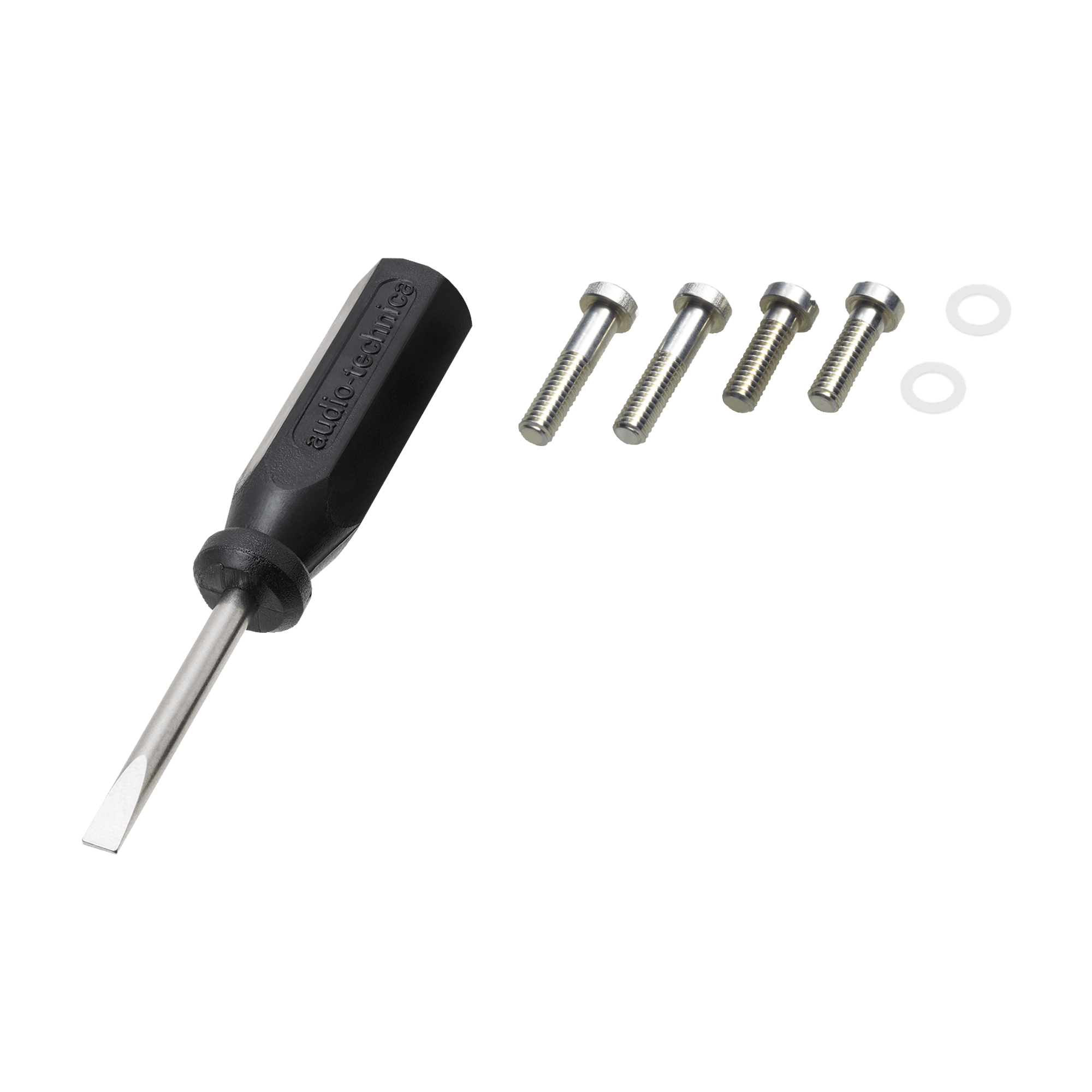
The manufacturer's exact-model page describes replacement styli shared within the AT-VM95 series. That matters because ownership is not limited to the first stylus fitted to the body: the documented design provides a replacement path when the appropriate stylus needs changing. Check the exact replacement designation and cartridge family rather than treating visually similar parts as interchangeable. Audio Appraisal's recommendation for AT95 owners is a reason to investigate the VM95 family, not a substitute for identifying your own cartridge. The manufacturer also documents a threaded-insert mounting structure. This is a practical mounting feature: it describes the fastener arrangement, not an automatic solution for every tonearm or headshell. A prospective buyer should confirm that the mounting arrangement fits the equipment and that the required adjustment can be performed. A replaceable stylus and documented mounting arrangement can make the product easier to plan around, but neither establishes a total cost of ownership. Replacement prices, repair charges and a guaranteed US service period have not been researched for this update. The sensible decision is to value the documented replacement route while keeping those unresolved costs and equipment-specific checks explicit. [6], [3]
Setup and limitation
The user manual gives 2.0 g as the standard tracking force, within a range of 1.8–2.2 g. Keep that specification separate from the listening review: it tells you how the manufacturer intends the cartridge to be operated, rather than measuring the performance of a particular installation. A review describing good tracking does not authorize ignoring the specified force or applying an arbitrary setting inherited from another cartridge. Confirm your own installation against the manual before using a listening impression to judge the purchase. The manual also directs connection to a PHONO (MM) preamplifier or amplifier terminal. Combined with the published 47 kΩ resistive load and 100–200 pF capacitance recommendation, this makes the electrical setup part of the purchase decision. Check the equipment you plan to use, rather than assuming that the presence of an audio input settles compatibility. After setup, judge the benefit against the actual problem in your collection. The surface-noise limitation remains relevant even when the recommended force and input requirements are met: those settings are operating requirements, not a promise that clicks and pops will disappear. [5], [3], [2]
Read comparisons with the setup in view
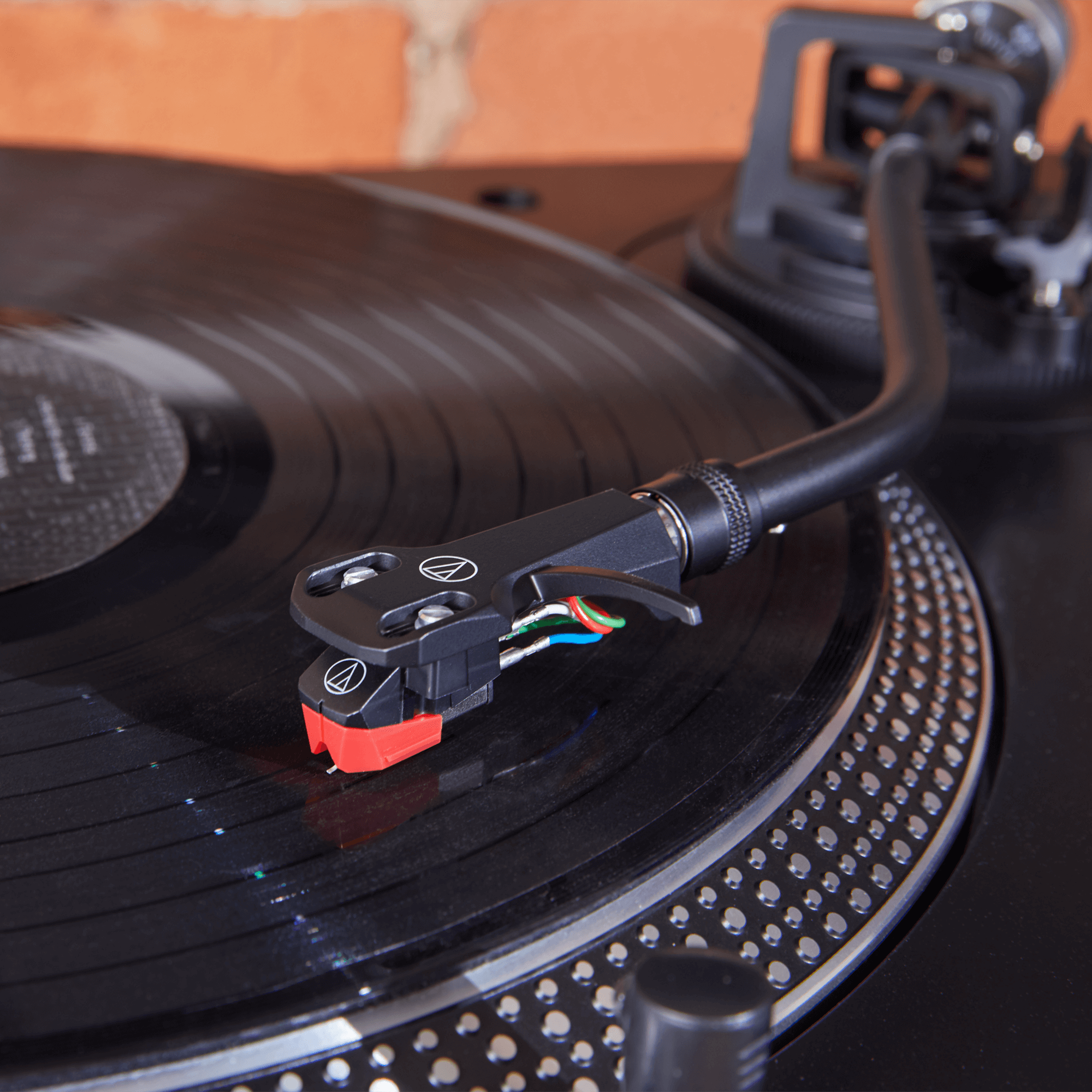
Analog Planet mounted the AT-VM95ML and its comparison cartridge on a Fluance RT85 tonearm. This establishes a concrete reviewed combination, which is more useful than an unsupported claim that the cartridge fits every turntable. It should still be read as evidence about that test installation. It does not establish that another arm has the same mounting, adjustment range or electrical chain. The page's specification summary also differs from the manufacturer's nominal output figure: use the manufacturer's 3.5 mV specification for the AT-VM95ML instead of promoting a review's quoted specification into a new measurement. Keep three kinds of evidence separate when deciding. Manufacturer data describes the intended operating requirements; Audio Appraisal contributes an explicitly measured channel-balance result; and Scoot Technology contributes a listening comparison with both a tracking benefit and a surface-noise limitation. Taken together, these support a conditional purchase for someone pursuing more controlled tracking with compatible equipment. They do not support a universal sound-quality ranking, a promise to eliminate record noise, or a replacement for checking the actual installation. Make the purchase around the problem you need to solve and the conditions you can meet. [5], [3], [6], [4]
Buyer questions
Before you buy
Who is the clearest buyer fit?
The review evidence points to existing AT95 owners seeking a Microline entry into the VM95 family. [6]
What was actually measured in an independent review?
Audio Appraisal measured 1.29 dB channel balance for the VM95ML. Its disclosed rig used a Technics SL-1200 and Marantz PM-11S3 MM input. The exact test signal and sample count were not specified, so this is a result for the reviewed setup rather than a universal tolerance. [6]
Compatibility
Setup
What tracking force does the manual specify?
The standard tracking force is 2 g, within the stated 1.8–2.2 g adjustment range. [2]
Everyday use
How did it perform across a record side?
One review found it stayed composed and consistent from the outer to inner grooves. [5]
Limitations
Will it remove clicks and surface noise?
The reviewed evidence found little improvement in surface noise, clicks, or pops versus the comparison stylus. [5]
Product images
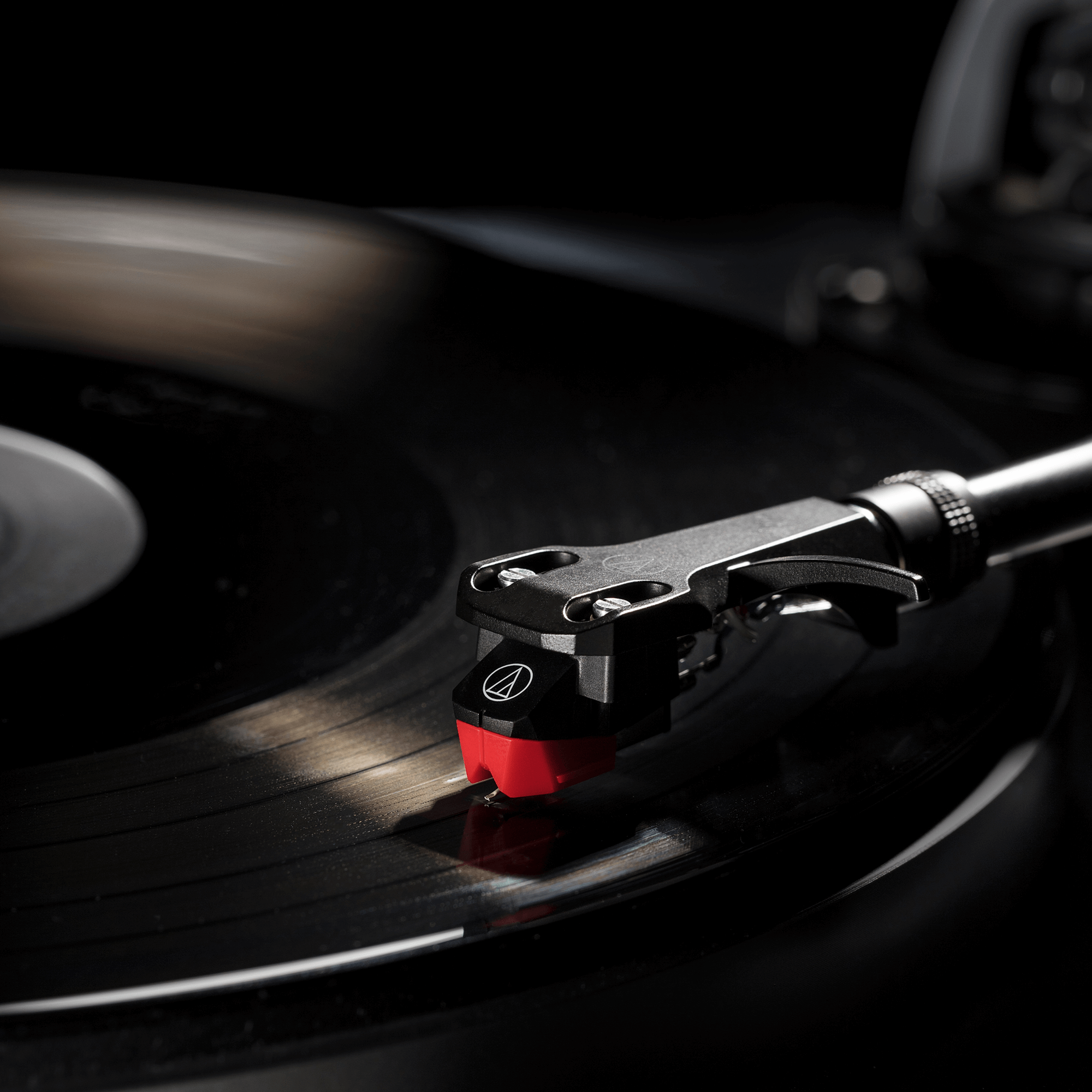
Facts and specifications
Manufacturer datasheet
| Specification | Value | Source |
|---|---|---|
| Compatibility | VM95 cartridge bodies support replaceable styli. | [3] |
| Load Impedance | 47000 Ω | [3] |
| Mount Type | Threaded-insert mounting structure. | [3] |
| Output Voltage | 0.0035 V | [3] |
| Setup Requirement | Manufacturer recommends 100–200 pF load capacitance. | [3] |
| Stylus Shape | Nude Microlinear | [3] |
| Weight | 6.1 g | [3] |
Manufacturer manual
| Specification | Value | Source |
|---|---|---|
| Setup Requirement | Connect to a PHONO (MM) preamplifier or amplifier input. | [2] |
| Tracking Force | 2 g | [2] |
Stated by reviewers
| Specification | Value | Source |
|---|---|---|
| Compatibility | Analog Planet mounted the AT-VM95ML to a Fluance RT85 tonearm for its comparison. | [4] |
Other facts
| Specification | Value | Source |
|---|---|---|
| Buyer Fit | Existing AT95 owners seeking a Microline entry into the VM95 family. | [6] |
| Limitation | The reviewer did not hear much improvement in surface noise, clicks, or pops versus the AT-VM95E. | [5] |
| Use Case | The Microlinear stylus stayed composed from outer to inner grooves in the reviewer's test. | [5] |
KnowSpec analysis
A tracking upgrade with installation checks
The clearest supported use is an upgrade aimed at more controlled groove tracking: Scoot Technology heard better consistency toward the inner grooves but little change in clicks and surface noise. Check the specified 2 g force, MM input, loading and threaded mounting before buying. The measured channel-balance result corroborates physical review testing but does not guarantee every installation or a quieter worn record.
Method: Synthesis of exact-model manufacturer specifications, one physical reviewer measurement and independent listening reports.Visible information gaps
Missing information is shown rather than guessed.
- Topic:Efficiencynot found
Sources and method
- Audio-Technica AT-VM95ML test excerptSTEREO · retrieved 2026-10-08Editorial review
- AT-VM95ML User ManualAudio-Technica · retrieved 2026-09-27ManualPDF
- AT-VM95ML technical dataAudio-Technica · retrieved 2026-10-08Manufacturer
- Ortofon 2M Blue Versus Audio Technica AT-VM95MLAnalog Planet · retrieved 2026-10-08Editorial review
- Audio Technica AT-VM95ML UpgradeScoot Technology · retrieved 2026-09-27Editorial review
- Audio-Technica AT-VM95 Detailed Review & MeasurementsAudio Appraisal · retrieved 2026-10-08Lab review
- Audio-Technica AT-VM95 Detailed Review and MeasurementsAudio Appraisal · retrieved 2026-09-27Lab review