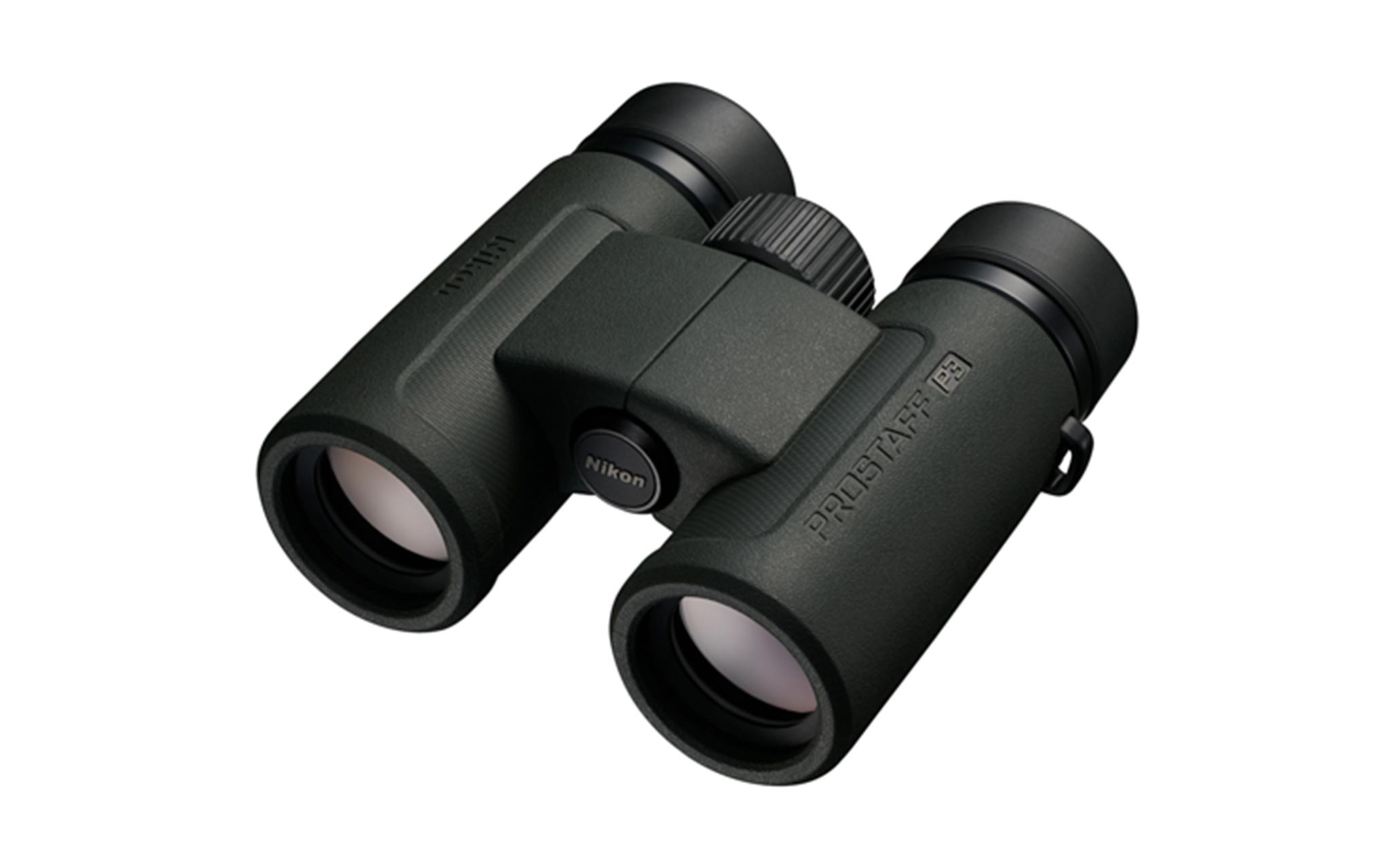
Nikon PROSTAFF P3 10x30 Binoculars
The documented 10x magnification, 30 mm objectives and 6.6-degree field establish the viewing format. Choose it for that format after checking the 15.4 mm eye relief in person; the waterproof rating does not establish low-light clarity or long-term durability, and the 470 g launch figure differs from a retailer's 465 g specification.
Updated 2026-10-08

We may earn a commission from qualifying purchases.
Prices and sellers
No price information yet
Conditions and limitations
Wet-weather use has a stated boundary
- Capability
- Nikon specifies waterproofing to 1 m for 10 minutes and fog resistance from nitrogen filling and O-ring seals.
- Limitations
- Not designed for underwater usage.
- No independent water-ingress test was verified.
- Requirements
- Treat the stated depth and duration as manufacturer limits.
Compatibility
Eye relief is documented but personal glasses fit and exact tripod-adapter combinations have no verified tests.
Where sources differ
Documented weight differs by source
- Explanation
- No sample was weighed and no hardware revision was identified. These are source specifications, not two measurements of the same sample.
- Status
- unresolved
Reported issues and fixes
Secondary review synthesis was read, but no firsthand defect investigation or failure-rate dataset was verified.
Care and support
Exact US warranty eligibility, repair terms and future spare-part availability were not verified for this ASIN.
Ownership costs
No price observations were collected. Repair and replacement-accessory terms remain unverified, so total ownership cost is unknown.
Who it suits
Documented magnification, close focus, eye relief and weather limits support conditional buyer guidance; exact-model physical performance is unverified.
Reviewer consensus
Consensus rows require at least two distinct sources for the topic.
| Topic | Positive | Negative | Mixed | Reading | Evidence |
|---|---|---|---|---|---|
| Buyer fit | 1 | 0 | 1 | Mixed · 1/2 | [6], [3] |
| Eye relief and eyecups | 1 | 0 | 1 | Mixed · 1/2 | [1], [2] |
| Weather sealing | 2 | 1 | 0 | Debated · 2 v 1 | [3], [1], [2] |
| Weight and handling | 1 | 0 | 2 | Mixed · 2/3 | [4], [3], [1] |
Single-source notes
The review
Nikon PROSTAFF P3 10x30: specifications and buyer fit
Viewing specifications
The Nikon PROSTAFF P3 10x30 combines 10x magnification with 30 mm objective lenses. Nikon lists a real angular field of view of 6.6 degrees and a 3 mm exit pupil for this configuration. These figures identify the optical format; they do not supply a measured resolution result, light-transmission percentage or guaranteed ability to identify a particular distant bird. A buyer should therefore begin with the viewing task rather than treating the magnification number as a complete quality score. The documented lens treatment is multilayer coating. That describes construction, while sharpness, contrast and the visibility of fine detail are questions that need viewing or reliable tests. This distinction matters when a description sounds reassuring but supplies no test conditions. For an observer choosing a compact binocular for ordinary outdoor use, the published specification is a useful starting point. It remains necessary to decide whether the actual view suits the subjects and lighting that observer expects. [2], [3]
Nikon specifies eye relief of 15.4 mm and a close-focusing distance of 2.5 m. It also describes multi-click turn-and-slide rubber eyecups for positioning the eyes at the correct eyepoint. These are practical setup details rather than a promise that every person wearing glasses will see an equally comfortable image. Glasses fit and viewing preference are reasons to try the binocular in person, with the eyewear intended for field use. Nikon's general birdwatching guide recommends holding binoculars and looking through them before deciding what works best. For someone interested in nearby subjects, the 2.5 m figure is the documented close-focus boundary to consider. It should not be silently changed into a result measured on this particular sample. A useful purchase check is to view both the nearby subjects and the distant subjects that matter to the buyer, then assess eye positioning and focus comfort without assuming that the published numbers settle personal fit. [2], [6]
Handling and outdoor construction
The manufacturer labels the dimensions as 125 mm in length, 130 mm in width and 52 mm in depth. Keeping those labels is important: an unlabeled sequence of three dimensions can lead to a wrong claim about which side is the width. The earlier article's basic portability discussion is retained, with the axes now made explicit. Weight needs a separate qualification. Nikon's June 2022 announcement lists the 10x30 at 470 g, whereas Wex's UK product specification lists 465 g. These are two published specifications, not two physical measurements made under matching conditions. No sample was weighed for this research, and the difference does not establish a hardware revision or a change to the assigned US product. A buyer planning a tight carrying allowance should check the supplied unit and any accessories they intend to carry. The sensible conclusion is to retain the documented size and attribute the weight figures to their respective sources. [3], [1], [4]
Nikon specifies waterproofing to a depth of 1 m for 10 minutes, together with nitrogen filling and O-ring seals for fog resistance. Its announcement also states that the binoculars are not designed for underwater usage. The retailer's shorter waterproof and fog-resistant description should be read within that manufacturer boundary. This gives an outdoor buyer a stated protection limit to consider, rather than a reason to plan underwater observation. Nor does it convert into evidence of a lifetime without leaks, resistance after accidental damage or an independent water-ingress test. The protection claim is useful for comparing documented outdoor suitability, but the depth and duration should travel with the claim wherever it is repeated. Someone whose intended use depends on unusual exposure should verify that use with Nikon rather than infer a broader guarantee from the word waterproof. The present evidence supports the stated construction and its published limitation, while leaving actual ingress performance unmeasured. [2], [1], [3]
Who should consider it
Nikon positions the PROSTAFF P3 series for novices, nature watching, birdwatching and other outdoor activities. That positioning is useful context, but it is the manufacturer's intended audience rather than an independent conclusion that this exact configuration suits every beginner. For the assigned 10x30, the useful purchase questions are concrete: does its documented magnification match the observer's subjects, is the view comfortable in hand, and is the specified close-focus distance appropriate? Nikon's general guide encourages the buyer to hold and look through binoculars instead of deciding entirely from a list of features. The guidance is general and should not be mistaken for a review of this model. It supports a practical approach to selection: try the intended viewing task and keep personal comfort central to the decision. The nature-viewing role remains meaningful, with suitability conditional on actual handling and the evidence limits discussed here. [2], [3], [6]
The accessible OptiqueNature article explicitly bases its discussion on technical specifications, user-community feedback and available expert analysis. It is consequently treated here as secondary review synthesis, not as a documented firsthand test of a supplied sample. Its prose can help identify questions to ask, but it cannot supply new physical benchmarks simply because its title says review. Likewise, a retailer's description of generous eye relief does not replace a personal glasses-fit check or quantify comfort over a long observation session. The manufacturer coating description and the documented exit pupil are retained as specifications. Claims about actual low-light detail, edge sharpness or sustained viewing comfort require a different standard of evidence. This separation helps a buyer understand why an appealing narrative and a traceable measurement are not interchangeable. It also prevents a collection of repeated descriptions from being presented as multiple independent tests of the same product. [3], [1], [2], [5]
Limits of the available evidence
This refresh does not establish an independently verified physical measurement of optical resolution, low-light performance, water ingress or long-term focusing behavior for the assigned product. Published specifications remain specifications. The review synthesis does not close those gaps, and the collected evidence is insufficient to turn an editorial score into a physical benchmark. For a buyer who depends on viewing in difficult light or on prolonged sessions, that uncertainty deserves attention before purchase. Ask for a trustworthy exact-model test with conditions that resemble the intended use, or try the binocular directly. For a buyer whose priority is a documented viewing format and ordinary nature observation, the existing specification can still support an informed shortlist. The difference is the strength of the conclusion being drawn: the evidence identifies features and limits, while a claim about measured field performance would need a verified method, sample and result. [2], [5]
Before buying, confirm the PROSTAFF P3 10x30 configuration, check the labeled dimensions against the intended carrying space, and try the eyecup adjustment with the glasses normally worn outdoors. If weight is decisive, resolve the differing published figures with the supplied unit rather than assuming that one source describes an undocumented revision. Keep the manufacturer's underwater-use warning alongside the waterproof rating. The general Nikon guidance to handle and look through binoculars is particularly useful when the choice depends on personal comfort. These checks preserve the original article's practical buyer focus while making its limits clearer. They do not require a claim that this model is universally best, nor do they rely on unverified comparisons with other products. The supported conclusion is conditional: the documented configuration may fit the buyer's task, provided its actual handling is comfortable and the buyer accepts the areas where verified performance evidence is still missing. [3], [4], [2], [6]
Buyer questions
Before you buy
What are the core optical specifications?
The PROSTAFF P3 10x30 provides 10x magnification, a 30 mm objective, and a 6.6-degree real angular field of view. [2]
Compatibility
Everyday use
How close can it focus?
The specified close-focusing distance is 2.5 m. [2]
Product images
Facts and specifications
Manufacturer datasheet
| Specification | Value | Source |
|---|---|---|
| Close Focus | 2.5 m | [2] |
| Width | 130 mm | [3] |
| Exit Pupil | 3 mm | [2] |
| Eye Relief | 15.4 mm | [2] |
| Field of View | 6.6 ° | [2] |
| Form Factor | 125 mm length; 130 mm width; 52 mm depth | [3] |
| Lens Coating | Multilayer-coated lenses | [3] |
| Limitation | Not designed for underwater usage. | [3] |
| Magnification | 10 | [2] |
| Objective Diameter | 30 mm | [2] |
| Setup Requirement | Use the multi-click turn-and-slide rubber eyecups to position eyes at the correct eyepoint. | [2] |
| Water Resistance | Waterproof to 1 m for 10 minutes; nitrogen-filled and O-ring sealed | [2] |
| Weight | 470 g | [3] |
Retailer listing
| Specification | Value | Source |
|---|---|---|
| Depth | 52 mm | [1] |
| Water Resistance | Retailer describes the model as waterproof and fog resistant | [1] |
| Weight | 465 g GB | [4] |
Other facts
KnowSpec analysis
A conditional fit for portable nature viewing
The documented 10x magnification, 30 mm objectives and 6.6-degree field establish the viewing format. Choose it for that format after checking the 15.4 mm eye relief in person; the waterproof rating does not establish low-light clarity or long-term durability, and the 470 g launch figure differs from a retailer's 465 g specification.
Method: Manufacturer specifications and retailer comparison, without physical testingVisible information gaps
Missing information is shown rather than guessed.
- Topic:Tripod Mountingnot found
- Topic:Sustained Performancenot found
- Topic:Limitationsnot found
- Topic:Measured Performancenot found
- Topic:Brightness And Low Lightnot found
- Topic:Focus Mechanismnot found
- Topic:Efficiencynot found
Products in this content
-
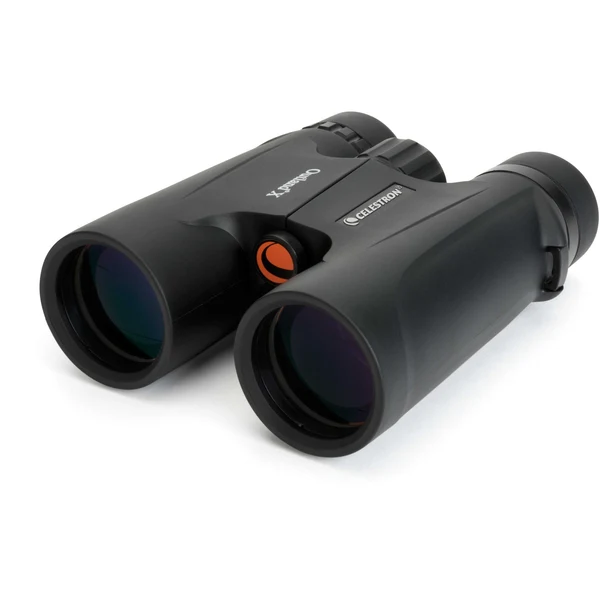
Celestron Outland X 10x42mm Roof Binoculars
The Celestron Outland X 10x42 is a plausible starting point for daytime birdwatching and general outdoor viewing, according to HuntingOptics. Its roof-prism design and multi-coated optics come with a waterproof, nitrogen-pur
-
Rodcirant 20x25 Compact Binoculars for Adults and Kids
The published 25 mm objective and approximate converted weight support considering a portable option, but disputed magnification and the absence of a trustworthy exact-model test call for a personal inspection before relying on it.
Sources and method
- PROSTAFF P3 10X30Météotronic · retrieved 2026-09-28Retailer listing
- PROSTAFF P3 8x30 / 10x30Nikon · retrieved 2026-09-28Manufacturer
- Nikon releases PROSTAFF P3 binocularsNikon · retrieved 2026-09-28Manufacturer
- Nikon PROSTAFF P3 10x30 BinocularsWex Photo Video · retrieved 2026-10-08Retailer listing
- Nikon Prostaff P3 10x30 Binoculars ReviewOptiqueNature · retrieved 2026-10-08Editorial review
- Binocular User's Guide: Bird WatchingNikon · retrieved 2026-10-08Manufacturer support