WD Blue SN580 2TB NVMe Internal SSD (WDS200T3B0E)
The WD Blue SN580 suits creators, professionals and laptop upgraders who want an efficient, single-sided PCIe 4.0 drive with strong burst and everyday performance. Its measured sequential read result reached 4.185 GB/s, but heavy sustained writes can fall to roughly 400–600 MB/s after the simulated SLC cache is exhausted, and one lab found weak random-read behavior.
Updated 2026-09-26

We may earn a commission from qualifying purchases.
Reviewer consensus
Single-source notes
- Buyer fit: Agreed · 1/1 · [4]
- Efficiency: Agreed · 1/1 · [4]
- Endurance in practice: Agreed · 1/1 · [4]
- Firmware and tooling: Agreed · 1/1 · [3]
- Heatsink and cooling: Mixed · 1/1 · [2]
- Limitations: Weak point · 1/1 · [3]
- Measured performance: Agreed · 1/1 · [2]
- Power draw and efficiency: Agreed · 1/1 · [4]
- Price per terabyte: Weak point · 1/1 · [3]
- Ps5 and laptop fit: Agreed · 1/1 · [4]
- Random 4k responsiveness: Agreed · 1/1 · [4]
- Slc cache behavior: Mixed · 1/1 · [1]
- Sustained performance: Agreed · 1/1 · [1]
- Sustained write after cache: Weak point · 1/1 · [1]
- Thermal throttling: Agreed · 1/1 · [1]
The review
WD Blue SN580 2TB: efficient mainstream storage with cache limits
What the SN580 is for
The WD Blue SN580 targets content creators and professionals, with a slim single-sided M.2 design intended for space-constrained systems such as laptops. [4]
Its low-power design and WD Dashboard support make it practical for buyers who want basic health, temperature and firmware management. [4], [3]
Performance profile
One review measured sequential reads at 4.185 GB/s, while official data lists random-read capability up to 600,000 IOPS. [2], [4]
A separate fill test reported performance close to fresh-drive behavior after the drive was filled to nearly 90 percent. [1]
Thermals and installation
An independent bare-drive test removed the motherboard M.2 heatsink and did not observe heat-related dropouts or speed reduction during its long write run. [1], [2]
The single-sided layout and low-power positioning support use in compact systems, though real temperatures still depend on the host and airflow. [4], [2]
Cache behavior under long writes
The drive is DRAM-less and uses simulated SLC behavior. After the dynamic cache was exhausted and fill passed 50 percent, observed writes fluctuated around 400–600 MB/s. [1]
This makes the drive a less comfortable fit for repeated, very large continuous writes than for ordinary bursty desktop work. [1]
Limitations and verdict
The strongest cautions are weak random-read behavior in one lab, post-cache write slowdown and a launch-value assessment that was unfavorable on a cost-per-terabyte basis. [3], [1]
For mainstream laptop and creator storage, the mix of burst performance, power efficiency, endurance and management tools is useful. Buyers focused on sustained writes or high random I/O should weigh the limitations closely. [2], [4], [3], [1]
Buyer questions
Before you buy
Who is the WD Blue SN580 best suited for?
It is positioned for creators, professionals and compact-system users who value mainstream PCIe storage, low power use and a single-sided M.2 form factor. [4]
Setup
Limitations
What happens after the write cache is exhausted?
The DRAM-less design relies on simulated SLC caching. After cache exhaustion and more than 50 percent fill in one test, writes fluctuated around 400–600 MB/s. [1]
Care and maintenance
What management software is available?
WD Dashboard can monitor health, capacity and temperature and can handle firmware updates. [3]
Facts and specifications
Manufacturer datasheet
Measured by a lab
Other facts
| Specification | Value | Source |
|---|---|---|
| Buyer Fit | Designed for content creators and professionals.; The slim single-sided M.2 2280 form factor targets space-constrained systems including laptops. | [4] |
| Limitation | After the dynamic SLC cache is exhausted and fill passes 50%, writes fluctuate around 400–600 MB/s.; StorageReview judged the launch value disappointing on a cost-per-terabyte basis. | [1], [3] |
| Risk | A long write test showed no heat-related drive dropouts or speed reduction.; Lab testing found weak 4K random-read performance. | [3], [1] |
| Setup Requirement | A bare-drive thermal test was run with the motherboard M.2 heatsink removed.; WD Dashboard monitors drive health, capacity, temperature and firmware updates. | [2], [3] |
| Use Case | Performance remained close to fresh-drive behavior after filling the drive to nearly 90%.; The low-power design is intended to prolong laptop battery life. | [1], [4] |
KnowSpec analysis
Who the WD Blue SN580 suits
The WD Blue SN580 suits creators, professionals and laptop upgraders who want an efficient, single-sided PCIe 4.0 drive with strong burst and everyday performance. Its measured sequential read result reached 4.185 GB/s, but heavy sustained writes can fall to roughly 400–600 MB/s after the simulated SLC cache is exhausted, and one lab found weak random-read behavior.
Method: evidence_synthesisEfficient mainstream performance
The evidence supports strong sequential performance, stable behavior when the drive was filled close to capacity, low active power, laptop-friendly packaging and useful health and firmware tools. These traits fit mainstream creative work and storage upgrades better than high-end benchmark chasing.
Method: evidence_synthesisCache, random I/O and value tradeoffs
The DRAM-less design relies on simulated SLC caching, so sustained writes slow after the cache is depleted. StorageReview also reported weak random-read performance and questioned launch value on a cost-per-terabyte basis, while exact application load-time evidence for this capacity remains unavailable.
Method: evidence_synthesisVisible information gaps
Missing information is shown rather than guessed.
- Topic:Real World Load Timesnot found
Products in this content
-
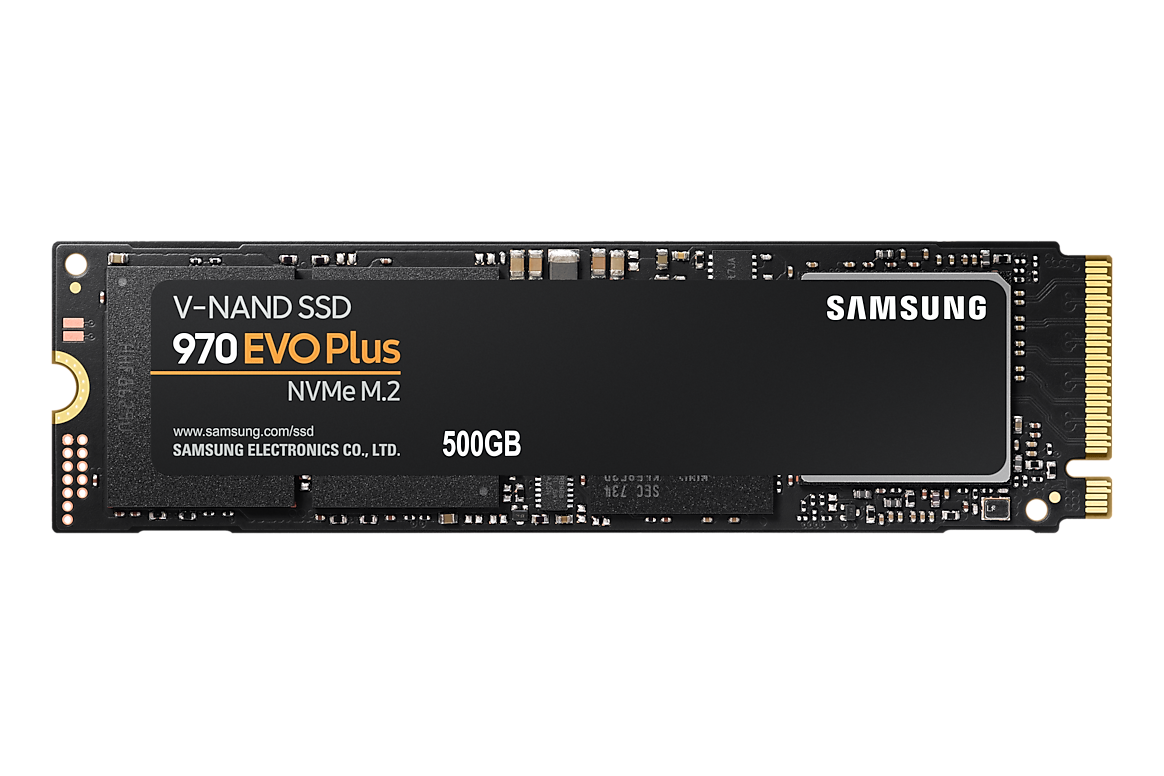
Samsung 970 EVO Plus NVMe M.2 SSD 500GB
The Samsung 970 EVO Plus 500GB is a PCIe Gen 3.0 x4 NVMe drive for a compatible M.2 system. Its rated sequential speeds describe peak conditions rather than guaranteed sustained transfers. Independent testing confirms seque
-
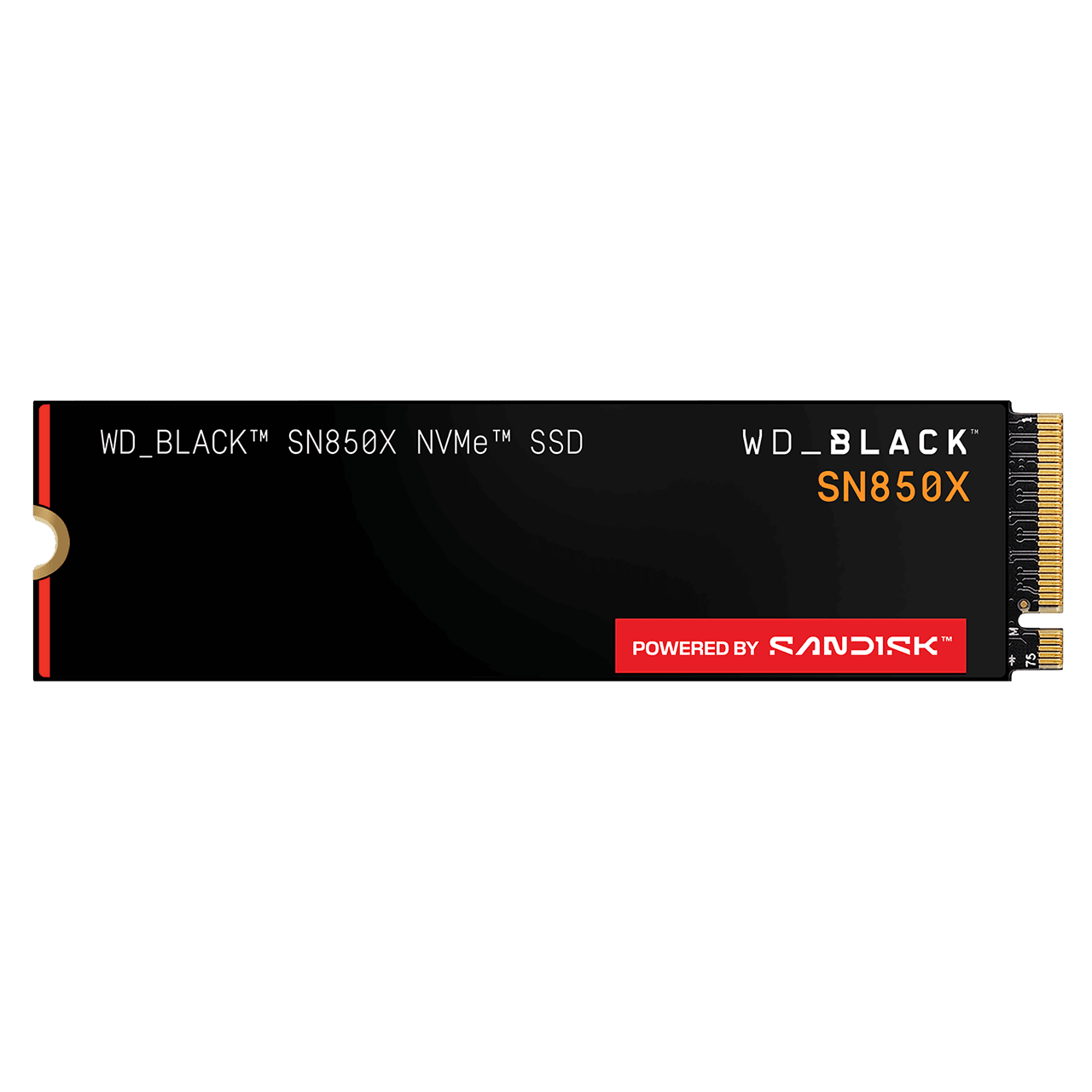
WD_BLACK SN850X 1TB NVMe SSD, Without Heatsink (WDS100T2X0E)
The bare SN850X suits a compatible PC whose motherboard already provides M.2 cooling. Its tested burst performance is strong, but sustained transfers expose a much lower write rate. Choose thi
-
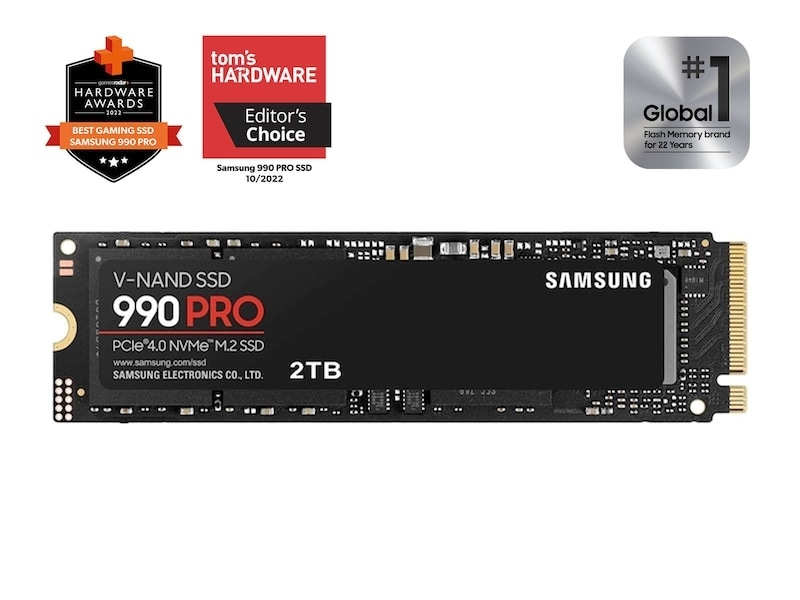
Samsung 990 PRO 2TB PCIe 4.0 NVMe M.2 Internal SSD (MZ-V9P2T0B/AM)
The Samsung 990 PRO 2TB is a strong fit for buyers building a high-end gaming or content-creation PC, and it also has documented PlayStation 5 support. Independent testing show
-
Crucial T705 2TB PCIe Gen5 NVMe M.2 SSD with Heatsink (CT2000T705SSD5)
The Crucial T705 with heatsink is aimed at performance-focused desktop users who value very high sequential read speed, strong sustained write behavior, DirectStorage positioning, and passive cooling. It is less convincing for value-conscio
-
Crucial BX500 4TB 3D NAND SATA 2.5-Inch Internal SSD, up to 540MB /s - CT4000BX500SSD1, Solid State Drive
The CT4000BX500SSD1 is a 4TB 2.5-inch SATA drive. Its 540/500 MB/s figures are manufacturer specifications. The syndicated review excerpt warns about slow direct writes, while the Nero and Pas
Sources and method
- “蓝盘”也进入4.0时代! WD Blue SN580 NVMe SSD少数派 · retrieved 2026-09-26Lab review
- 西部数据 WD Blue SN580 PCIe4.0 2TB开箱简测新浪众测 · retrieved 2026-09-26Lab review
- WD Blue SN580 ReviewStorageReview · retrieved 2026-09-26Lab review
- Product Brief: WD Blue SN580 NVMe SSDWestern Digital · retrieved 2026-09-26DatasheetPDF