Polk Audio Atrium 5 Outdoor Speakers with Powerful Bass (Pair, Black)
A permanent wired patio system is the supported buyer fit, but the owner report of poorer sound outside the canopy makes seating position a practical constraint. Use the adjustable mount to plan speaker direction, and audition the reported bass and midrange balance before committing. Retailer opinions and an owner setup are not calibrated coverage measurements or universal amplifier certification.
Updated 2026-10-08


We may earn a commission from qualifying purchases.
Prices and sellers
No price information yet
Conditions and limitations
Outdoor audio with external amplification
- Capability
- A reported Atrium 5 installation uses an external Fosi Audio BT20A Pro amplifier.
- Limitations
- This owner setup does not certify every amplifier or multiple-pair configuration.
- Requirements
- Plan external amplification and speaker wiring.
Compatibility
An owner reports Fosi Audio BT20A Pro use and a retailer lists 8 ohms; no controlled compatibility matrix.
Where sources differ
Public pages give conflicting port and driver descriptions; authoritative snapshots were denied, so disputed details are excluded.
Reported issues and fixes
Placement limitation reported by one owner; no model-wide defect or failure-rate evidence verified.
Care and support
Manufacturer and manual snapshots were denied; current US warranty, spares and repair support remain unverified.
Ownership costs
External amplification and wiring are setup requirements. Prices were excluded and total ownership cost is not calculated.
Who it suits
Wired installation fit, tonal preference and seating position are explained; no measured rival comparison is available.
Reviewer consensus
Single-source notes
The review
Polk Audio Atrium 5: wired patio sound and placement limits
Best fit
ChoiceCheck positions the Polk Audio Atrium 5 for homeowners planning a permanent wired audio system on a patio, deck or in a garden. That remains the central buying question: do you want an installed speaker system, and are you prepared to provide the electronics and wiring that go with it? An independent owner account at Casa Cabeza describes installing Atrium 5 speakers with a Fosi Audio BT20A Pro amplifier. This is evidence of one working arrangement, rather than a promise that every amplifier or streaming arrangement will behave identically. The Audio Tailor's product listing identifies gold-plated five-way binding posts as the inputs. Taken together, these sources support treating the speaker as part of a system rather than as a complete playback solution. Before choosing where it will live, think through where your amplifier will sit and how the speakers will be connected to it. The useful advantage of this approach is a listening area arranged around the place you spend time outside. The corresponding commitment is that the installation needs planning; choosing the speakers alone does not settle how music reaches them. [1], [4], [2]
Bass character
OuterAudio describes the bass as powerful and tight without masking the other tones. That is a useful subjective indication for casual outdoor listening, but it does not establish how low the speaker plays at a stated tolerance, how loudly it can reproduce bass without distortion, or how its response changes with distance. The original point about bass remains relevant when expressed as the reviewer's impression, with those limits visible. OuterAudio also publishes a general testing methodology that separates subjective listening from instrumented sound tests. A methodology page explains a publisher's approach; it is not a table of measurements for this particular model. There are no exact-model numerical results in the evidence used here from which to calculate a guaranteed bass extension or output ceiling. For a buyer, the sensible interpretation is that the review gives a reason to audition the speaker, not a numerical guarantee about performance in a different garden. Use familiar music to decide whether the reported balance matches your preference, and keep that judgment distinct from the amount of sound you need at your own seating positions. [3], [6]
Amplifier matching and connection planning
The Audio Tailor lists nominal impedance as 8 ohms and identifies five-way binding posts as the speaker inputs. These are retailer specifications, not measurements of an individual speaker's electrical behavior. Use the published nominal load as a starting point when checking the amplifier's own documentation, while recognizing that this research does not contain an impedance curve or a test of every possible receiver. Casa Cabeza's use of a Fosi Audio BT20A Pro supplies a concrete example of an external amplifier in a real installation. It does not certify that other systems, multiple connected pairs, or different source arrangements will work in exactly the same way. The practical task is to choose the amplifier and signal source as part of the same plan as the speakers. Check which equipment supplies playback and volume control, where that equipment will be installed, and how the speaker connections will be made. Keep the distinction between an observed example and a general compatibility guarantee clear. A documented component list can make a setup easier to evaluate, but the owner report is still one installation with its own conditions. [4], [2]
Tonal caution
The Audio Tailor warns that the warm midrange may be too smooth for listeners who want an analytical presentation. This is a tonal preference expressed by a retailer, and it should be read with that commercial context in mind. It is not a measured response curve or proof that every listener will find the same presentation. The earlier article's advice to audition with familiar material remains useful: listen for the parts of your music that matter most to you, rather than assuming a descriptive term such as warm is automatically desirable. OuterAudio's positive bass impression and The Audio Tailor's midrange caution address different aspects of the experience. Neither observation cancels the other, and neither creates a comprehensive laboratory assessment. A buyer who enjoys a relaxed presentation may interpret the caution differently from someone seeking an explicitly analytical sound. The evidence can frame that choice, but it cannot make the preference decision on the listener's behalf or establish an objective ranking against untested alternatives. [5], [3]
What to check before committing
The evidence supports considering Atrium 5 for a planned wired patio or garden system, especially when the installation can be aimed toward the areas where people actually listen. Its reported bass character and the retailer's warning about a smooth midrange provide useful audition questions. The owner account adds a practical reminder to listen beyond the most favorable position under the canopy. These findings improve the buying decision because they connect the sound descriptions to the physical arrangement rather than treating a positive review as proof of universal suitability. Before committing, check the intended seating positions, decide whether a wired system fits the space, and judge the tonal balance with music you know. The remaining uncertainty is substantial: this research contains no verified physical benchmark, no calibrated outdoor coverage map, and no exact-model instrumented response data. A publisher's general testing description cannot fill those gaps. Treat the conclusion as conditional on your setup and preferences. It is a grounded reason to investigate this speaker for a permanent outdoor installation, with the limits stated openly, rather than a promise of identical results in every backyard. [5], [3], [1], [4], [6]
Placement matters beyond the mounting bracket
Casa Cabeza's owner installed Atrium 5 speakers under a canopy and reported that the sound quality diminished noticeably outside the speakers' line of sight. This is a particularly useful qualification for an outdoor installation: an enjoyable result in one listening position does not establish the same result at a separate dining table. The account is a subjective report from one setup, with no measured dispersion angles, calibrated levels or controlled comparisons. It therefore supports checking your intended listening positions rather than applying a universal coverage number. The Audio Tailor lists a 180-degree Speed-Lock mounting system, which establishes an adjustment feature rather than a measured acoustic coverage angle. Those two concepts should not be confused. A movable bracket helps you choose where the speaker points; it does not prove uniform sound throughout that range. Plan around the seats and areas you actually use, then assess the result there. If the preferred mounting location leaves a frequently used area outside the useful listening direction, reconsider the layout before deciding that a louder setting will solve the whole problem. [4], [2]
Buyer questions
Before you buy
Who is the Atrium 5 for?
ChoiceCheck positions it for homeowners planning permanent wired patio, deck or garden audio. Plan the external amplifier and wiring as part of the installation. [1], [4]
How is the bass described?
OuterAudio describes powerful, tight bass without masking other tones. This is a subjective review impression; the evidence does not supply measured bass extension or maximum output. [3]
Limitations
What is the tonal caution?
The Audio Tailor says the warm midrange may be too smooth for listeners seeking an analytical presentation. Treat this as a retailer's opinion and audition with familiar music. [5]
Product images
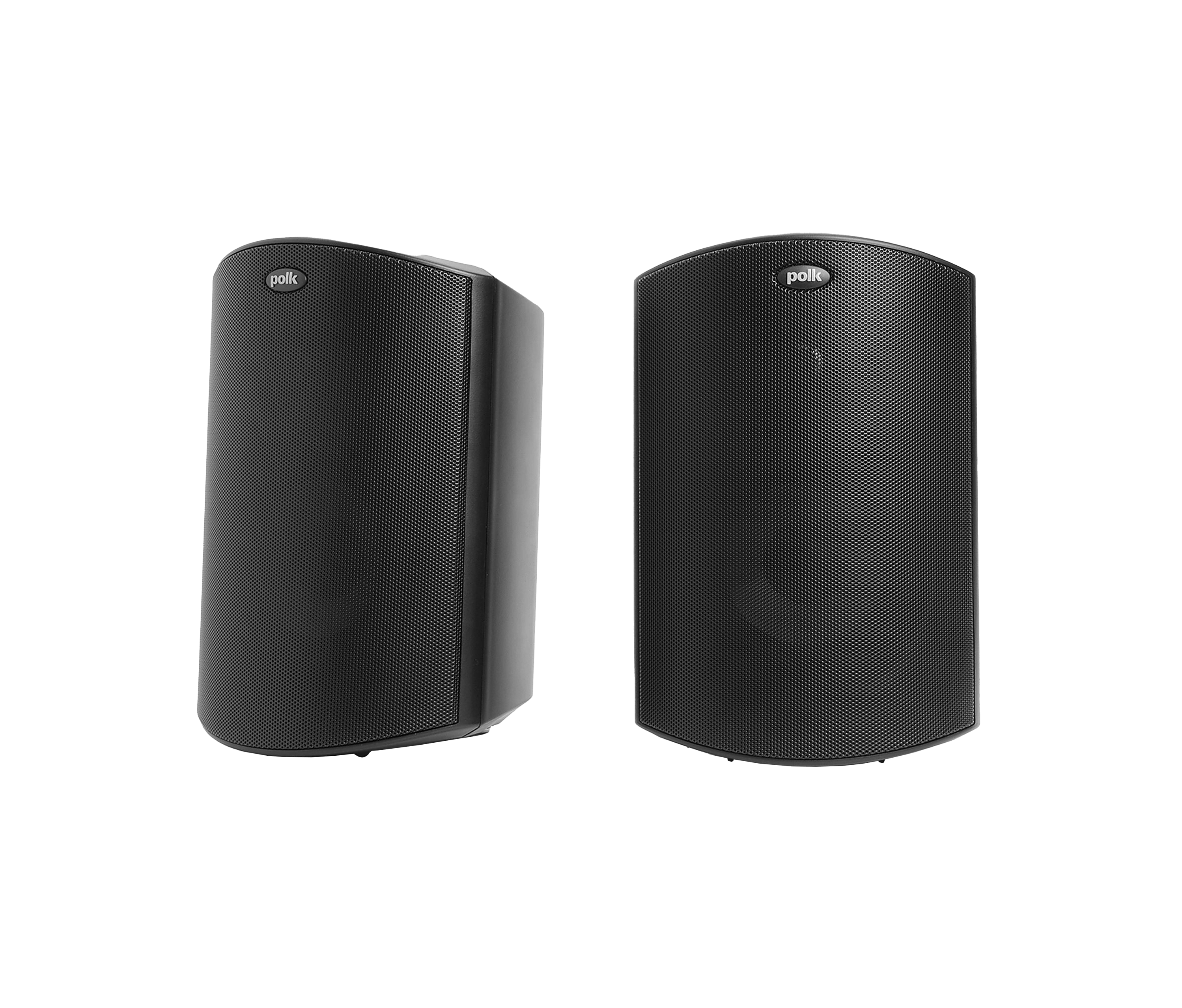
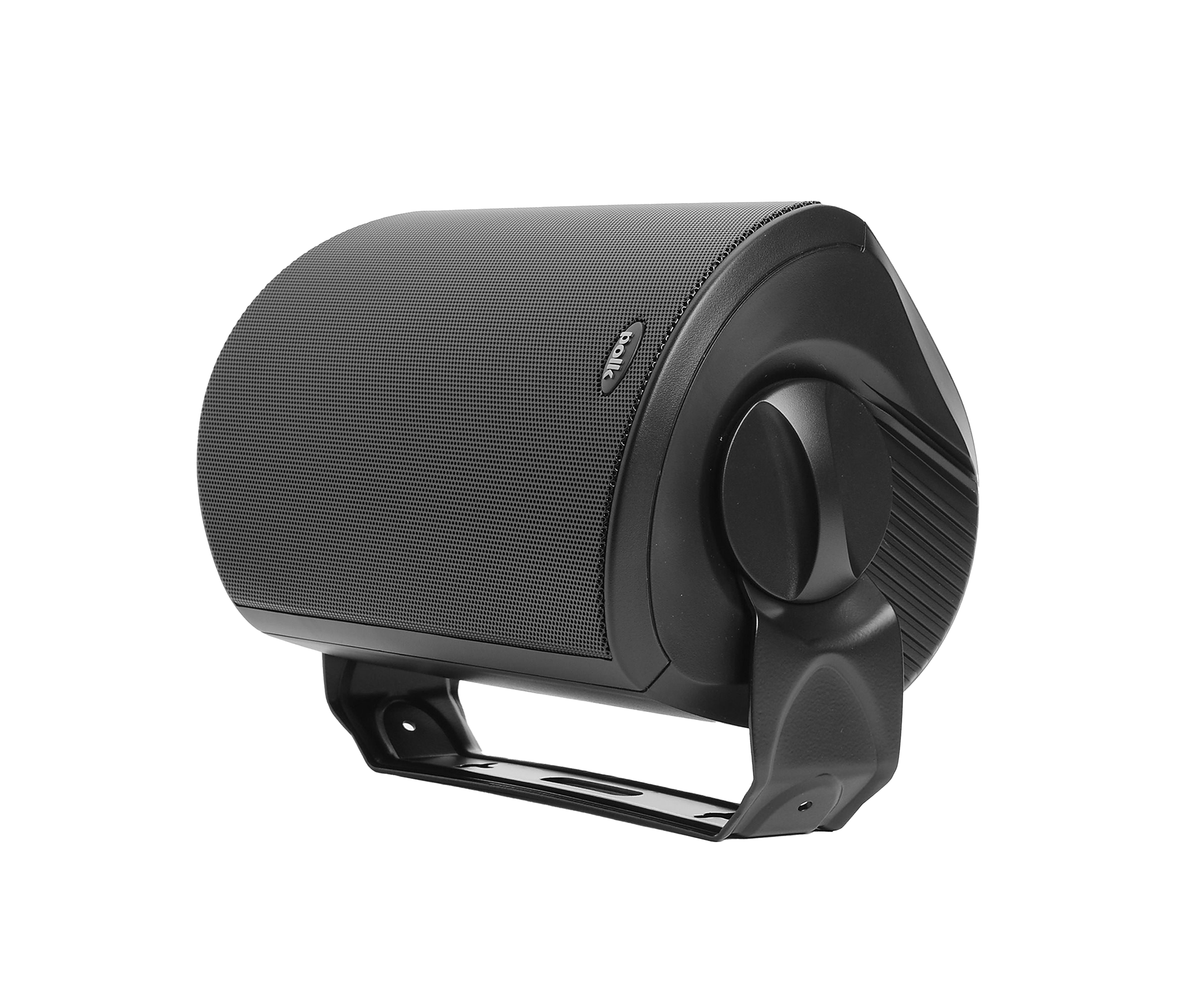
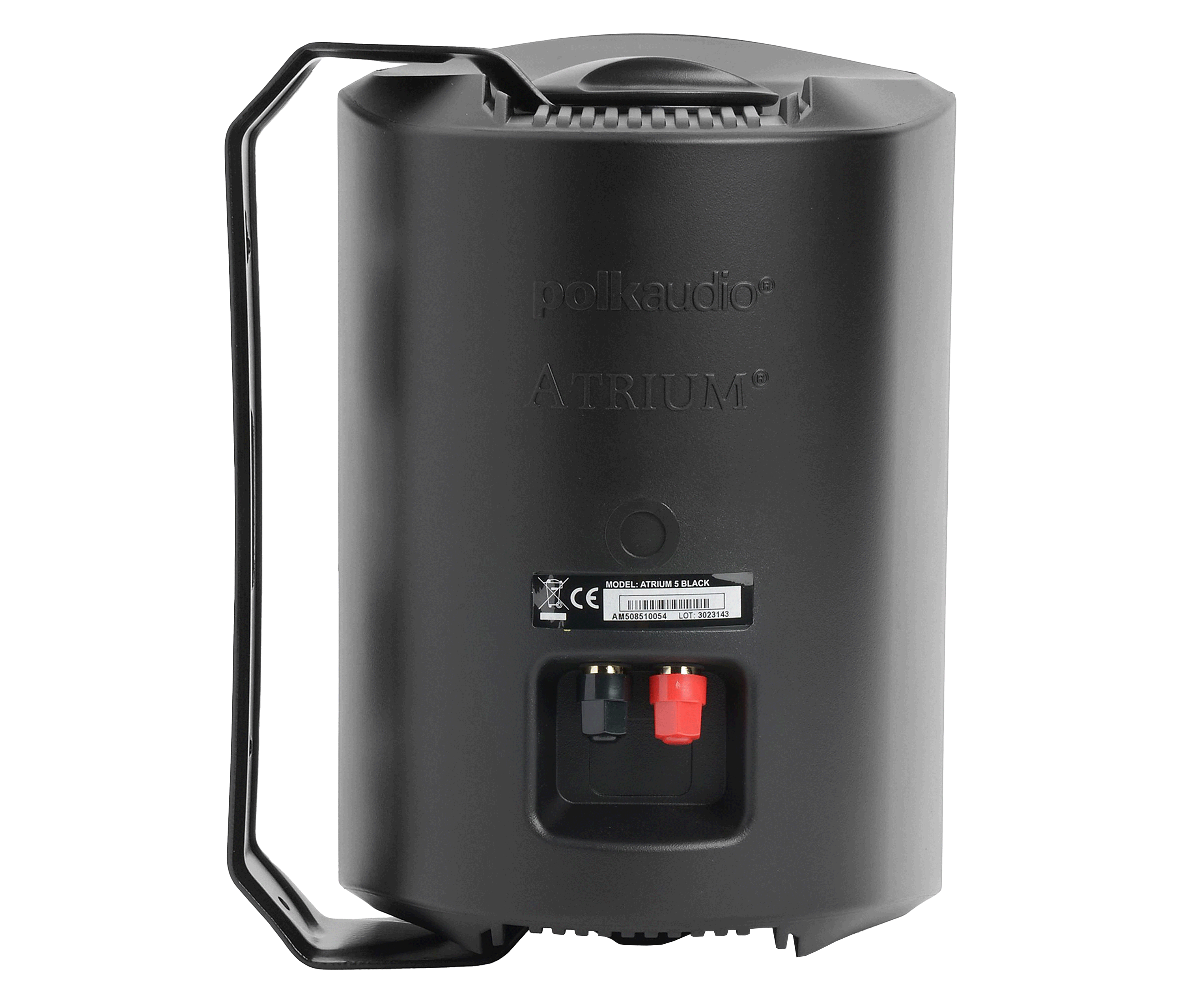
Facts and specifications
Retailer listing
| Specification | Value | Source |
|---|---|---|
| Impedance | 8 ohms | [2] |
| Inputs | Gold-plated 5-way binding posts | [2] |
| Mount Type | 180-degree Speed-Lock mounting system | [2] |
Other facts
| Specification | Value | Source |
|---|---|---|
| Buyer Fit | ChoiceCheck positions Atrium 5 for homeowners planning permanent wired patio, deck or garden audio. | [1] |
| Limitation | Casa Cabeza reports diminished sound outside the canopy when the listener was outside the speakers' line of sight.; The warm midrange may not suit buyers seeking analytical sound. | [5], [4] |
| Setup Requirement | Casa Cabeza installed Atrium 5 with an external Fosi Audio BT20A Pro amplifier; this is one reported setup. | [4] |
KnowSpec analysis
Who should consider the Atrium 5
A permanent wired patio system is the supported buyer fit, but the owner report of poorer sound outside the canopy makes seating position a practical constraint. Use the adjustable mount to plan speaker direction, and audition the reported bass and midrange balance before committing. Retailer opinions and an owner setup are not calibrated coverage measurements or universal amplifier certification.
Method: Synthesis of attributed editorial, retailer and owner evidence; no new physical measurements.Visible information gaps
Missing information is shown rather than guessed.
- Topic:Indoor Outdoor Durabilitynot found
- Topic:System Integrationnot found
- Topic:Dialogue And Imagingnot found
- Topic:Valuenot found
- Source.Manufacturernot public
- Topic:Sensitivity And Amplifier Matchingnot found
- Topic:Build Qualitynot found
- Topic:Comfort Usabilitynot found
- Topic:Tonality And Frequency Responsenot found
- Topic:Experience Qualitynot found
- Topic:Room Placementnot found
- Topic:Dispersion And Listening Windownot found
Products in this content
-
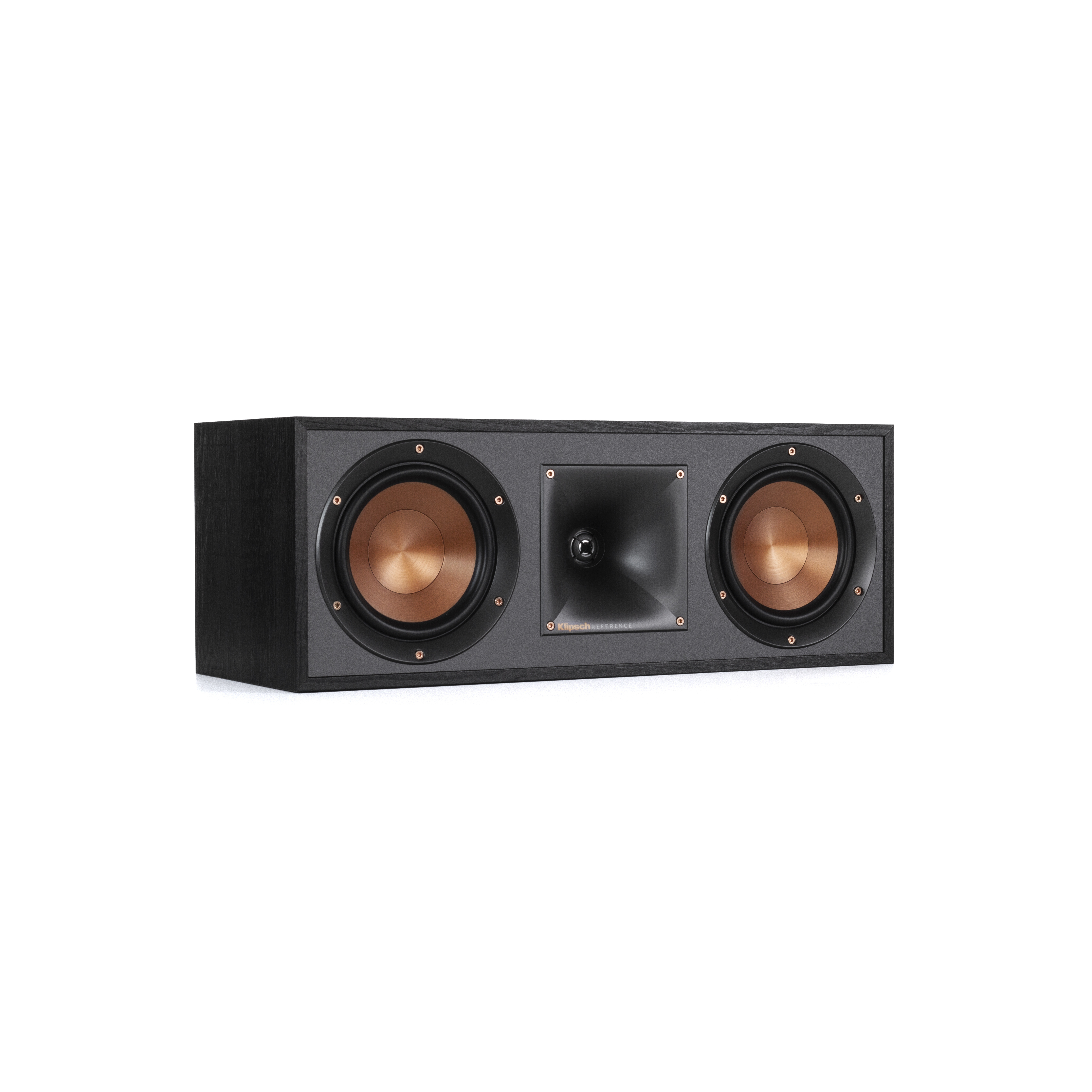
Klipsch R-52C Powerful Detailed Center Channel Home Speaker - Black
The R-52C's documented center-channel role and Easy Home Theater's firsthand dialogue impression make it a reasonable audition candidate for a home theater. ChoiceCheck's treb
-
Klipsch THX-5002-L In-Ceiling Speaker
The THX-5002-L offers a documented ceiling-integrated design, THX Ultra2 certification and a paintable grille, making it a conditional fit when appearance and installation are central to the brief. Its frequency range, impedance, sensitivit
-
Edifier T5 Powered Subwoofer
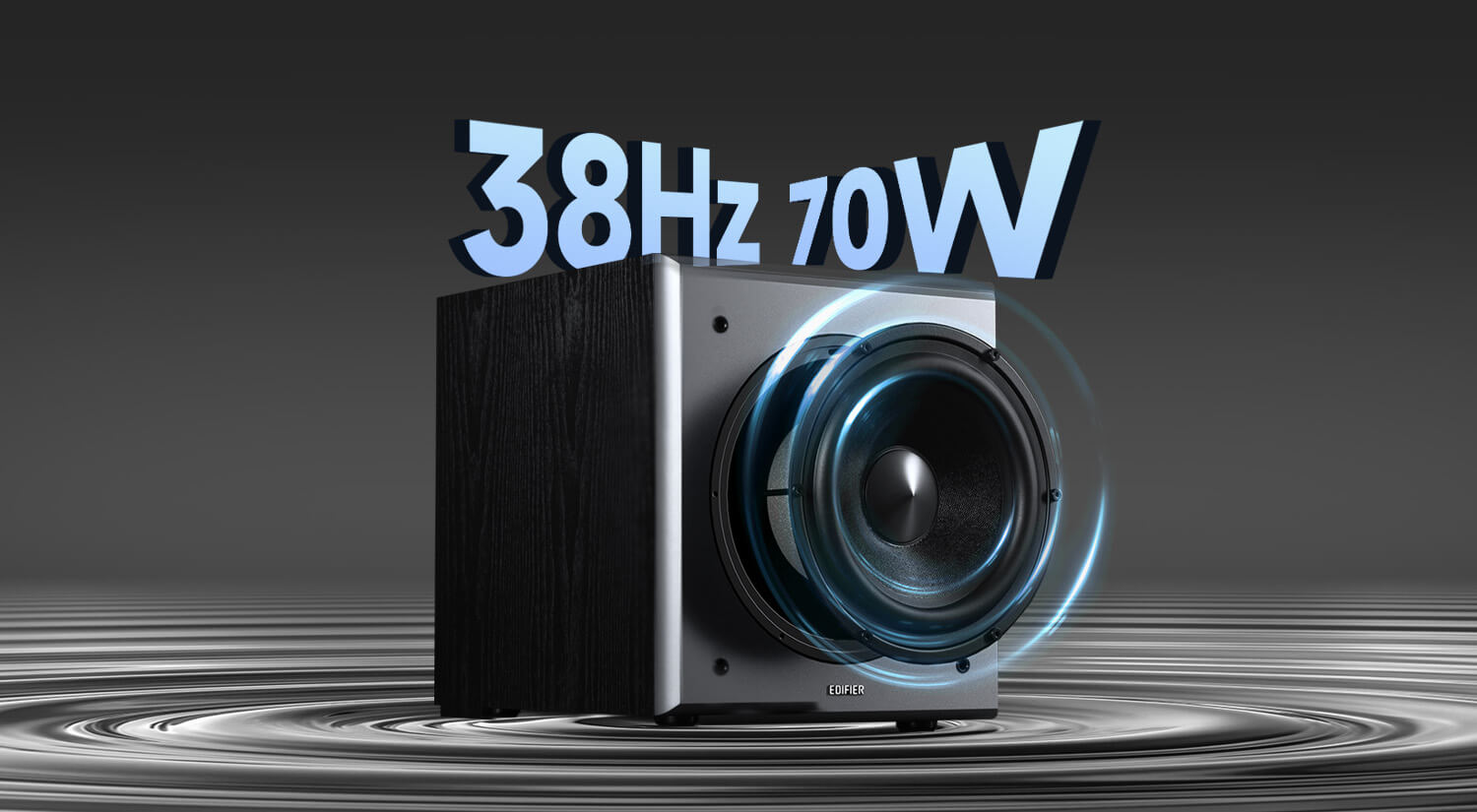
The Edifier T5 is a sensible add-on for home listeners who want audible bass impact in music, movies, and games. Its published 38–160 Hz range, 70 W RMS output, and RCA Signal In/Out pass-through support straightforward integration. Plan sp
-
Klipsch RP-8000F II 2.0 Dual Floorstanding Speaker Pair (Walnut)
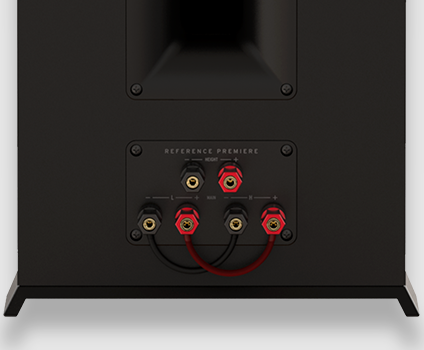
The RP-8000F II fits a fixed stereo or surround installation where the owner can aim the cabinets toward a main seat and check adjacent seats. Stable imaging in Clements' revi
-
JBL Authentics 500 Black
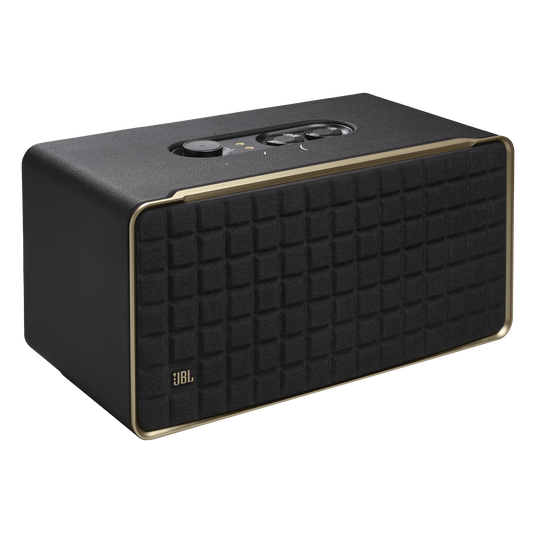
The JBL Authentics 500 suits home listeners who want a single mains-powered smart speaker with room-filling output, built-in Wi-Fi streaming, automatic room adjustment, and a bold retro design. Reviews support its engaging sound, balanced o
-
Bose SoundLink Max Portable Speaker, Black
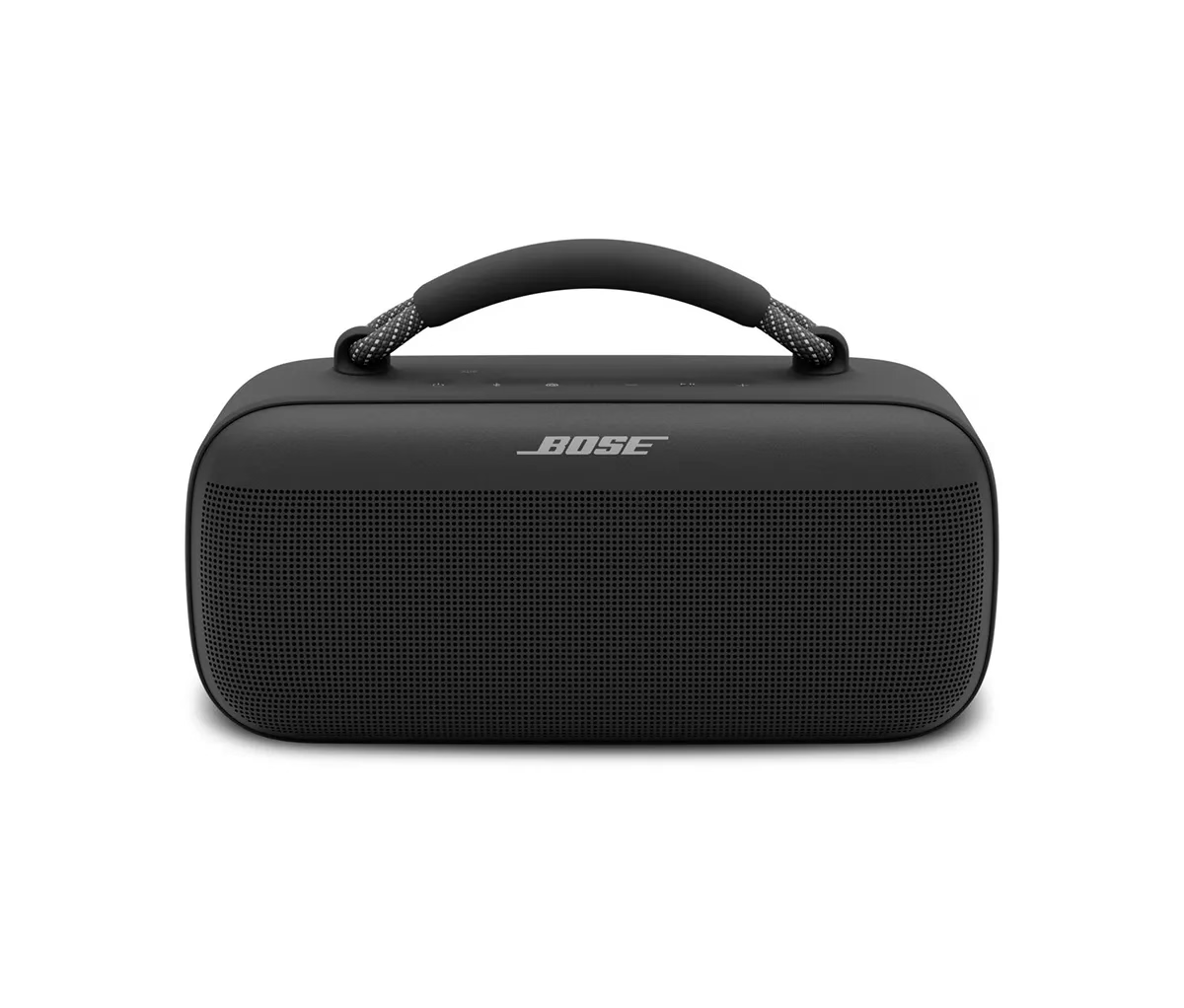
The Bose SoundLink Max suits buyers who want premium portable sound with strong bass, an IP67 enclosure and up to 20 hours of battery life. Its 2.13 kg weight and five-hour recharge make it more transportable than pocket-por
Sources and method
- Long-Term Review of Polk Audio Atrium 5ChoiceCheck · retrieved 2026-09-27Editorial review
- Polk Audio - Atrium 5 - Indoor / Outdoor SpeakersThe Audio Tailor · retrieved 2026-10-08Retailer listing
- Polk Audio Atrium 5 ReviewOuterAudio · retrieved 2026-09-27Editorial review
- Journey Into Mystery: Building a Sound System on my Back DeckCasa Cabeza · retrieved 2026-10-08Owner community
- Polk Audio Atrium 5 Indoor Outdoor Speakers ReviewThe Audio Tailor · retrieved 2026-09-27Editorial review
- How We Test ProductsOuterAudio · retrieved 2026-10-08Other source