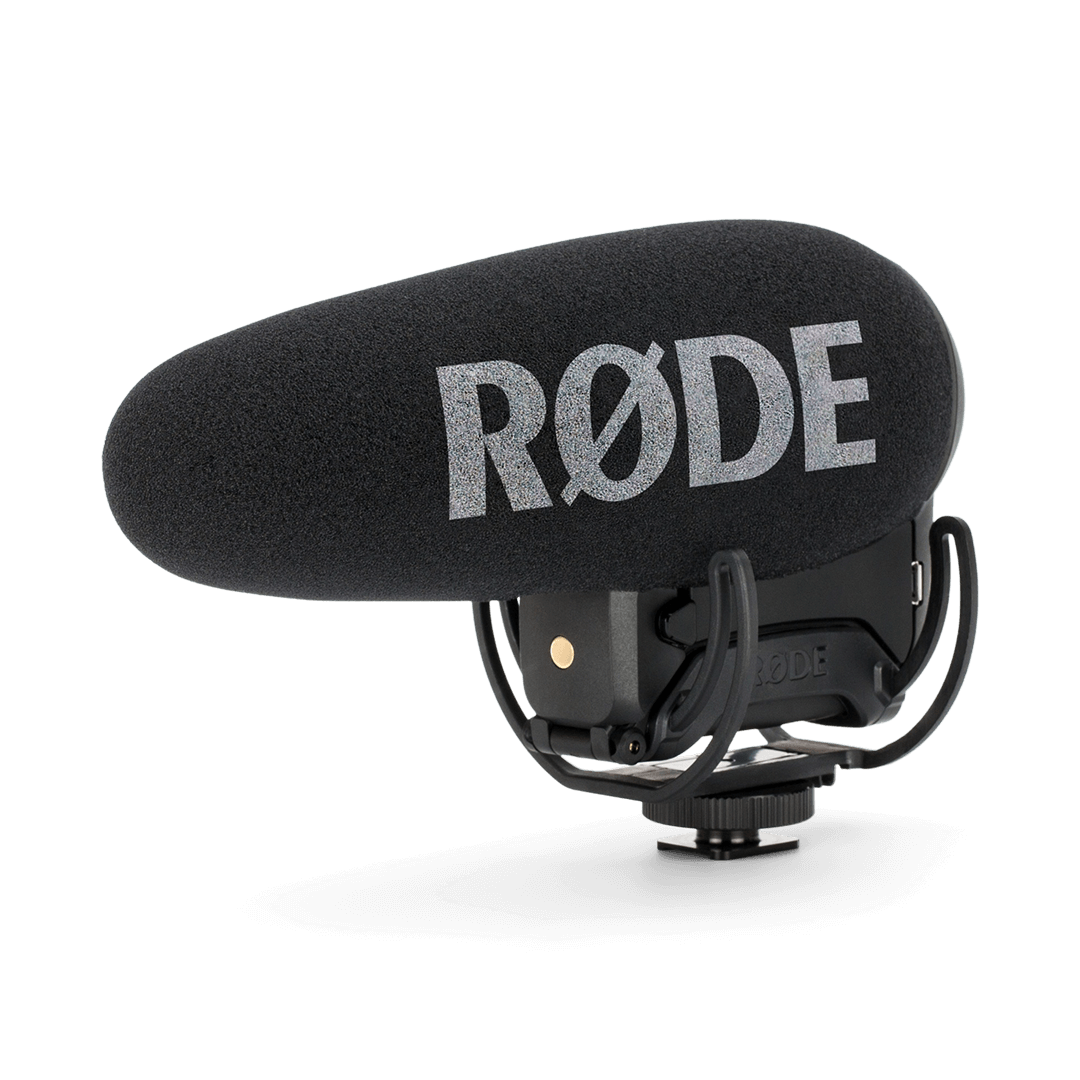
RØDE VideoMic Pro+ On-Camera Shotgun Microphone
The VideoMic Pro+ suits close camera-mounted speech, run-and-gun reference sound and occasional off-camera placement when you want analogue audio recorded with the picture. Its useful strengths are flexible power, conditional automatic switching and a lower-level safety output. It is less convincing as a solution for a distant speaker: placement remains critical, and the safety function is not an independent recording or a blanket clipping guarantee.
Updated 2026-10-04

We may earn a commission from qualifying purchases.
Prices and sellers
No price information yet
Conditions and limitations
Automatic power depends on the host
- Capability
- Automatic power-on when connected to a camera or portable recorder
- Limitations
- A 3.5mm socket alone does not prove automatic switching will work.
- Requirements
- The host must supply plug-in power at its 3.5mm microphone input and the microphone's automatic-power feature must be enabled.
A quieter right channel needs a two-channel recording path
- Capability
- Safety Channel provides a right-channel output 10 dB below the main signal
- Limitations
- This is the same mono signal at two output levels, not onboard backup recording.
- The retained documentation does not establish protection against overload before the output-level reduction.
- Requirements
- Enable Safety Channel and preserve left and right channels separately in the recorder and editor.
Output gain and filters require source-specific setup
- Capability
- Three output-gain choices, two high-pass settings and high-frequency boost adapt the signal for the camera and environment
- Limitations
- The controls change level and frequency balance; they do not establish a universally safe gain setting or replace suitable microphone placement.
- Requirements
- Set microphone output and camera input together using the loudest expected sound.
- Evaluate the tonal effect of low-frequency filtering and high-frequency boost with the intended wind protection.
Compatibility
Analogue camera or recorder connection
- Connection
- Use the detachable 3.5mm TRS audio cable.
- Functions
- Camera/recorder captures microphone audio.
- Automatic power-on is conditional on host plug-in power.
- Notes
- A Fujifilm X-T3 setup is documented in Photography News; no exhaustive camera compatibility matrix was found.
- Protocol
- Analogue unbalanced dual mono
- Result
- partial
- Source device
- RØDE VideoMic Pro+
- Target device
- Camera or portable recorder with compatible 3.5mm TRS microphone input
RØDE · RØDE · Photography News
Micro USB has a documented power role
- Connection
- Micro USB powers the microphone and charges an installed LB-1.
- Functions
- External power
- In-device LB-1 charging
- Notes
- The documented audio path is 3.5mm TRS. Do not infer the USB-audio functions of the separate VideoMic NTG model.
- Protocol
- USB power
- Result
- full
- Source device
- USB power source
- Target device
- RØDE VideoMic Pro+ Micro USB socket
Where sources differ
Reported issues and fixes
The retained original reviews describe use and handling, but do not establish a systematic fault history or quantified long-term failure rate.
Care and support
Replaceable battery and AA fallback
- Details
- The user can replace the LB-1 with two AA cells or use USB power. Rechargeable AAs need a separate charger; the battery door stays attached.
Detachable audio cable can be changed
- Details
- The 3.5mm audio lead detaches from the threaded socket, allowing cable replacement or a suitable longer run for closer placement. Future spare-part availability is not established.
Who it suits
Check the recording chain before choosing the Pro+
- Check before buying
- Confirm the camera's microphone input and plug-in-power behavior.
- Check that left and right can be retained separately.
- Confirm microphone and cable clearance on the rig.
- Constraints
- A compatible analogue microphone input is required.
- Automatic power needs host plug-in power.
- Needs
- Record microphone audio with the camera image.
- Keep a quieter channel available for unpredictable levels.
- Reason
- It fits this workflow when the host input, channel routing and power behavior are verified.
- Tradeoffs
- The safety channel needs separate channel handling in post-production.
- The documented USB connection supplies power and charging.
- Assessment
- conditional
Decide whether the microphone can be close enough
- Check before buying
- Try the intended camera-to-subject distance.
- Decide whether a stand, boom or lavalier is feasible.
- Constraints
- The camera may be farther from the speaker than the microphone should be.
- Needs
- Capture intelligible dialogue with a practical camera setup.
- Reason
- Close camera work fits the reviewed use cases; a distant interview needs a placement plan.
- Tradeoffs
- Off-camera mounting and a suitable cable add setup work.
- A closely placed lavalier or boom may suit a distant-camera composition better.
- Assessment
- conditional
Areas not yet researched (1)
No conclusion is available for these areas. This does not mean the Product has no limitations or reported issues.
- Ownership costs
Measured performance
Raw recording loudness
-21 LUFSReviewer-reported approximate loudness of raw VideoMic Pro+ clips recorded directly into a Sony PXW-X70 with manual camera audio and +20 dB microphone output; filter settings varied across demonstrations. · Approximate workflow observation. The examples were subsequently normalized to -16 LUFS. This is not a calibrated self-noise, SNR or off-axis rejection test.
Source [6]Reviewer consensus
Consensus rows require at least two distinct sources for the topic.
| Topic | Positive | Negative | Mixed | Reading | Evidence |
|---|---|---|---|---|---|
| Buyer fit | 2 | 0 | 0 | Agreed · 2/2 | [6], [5] |
| Frequency response and voicing | 2 | 0 | 0 | Agreed · 2/2 | [7], [4] |
Single-source notes
- Build weather and service: Agreed · 1/1 · [4]
- Connection and power: Agreed · 1/1 · [7]
- Efficiency: Agreed · 1/1 · [2]
- Limitations: Agreed · 1/1 · [7]
- Measured performance: Agreed · 1/1 · [6]
- Mounting and bundle identity: Agreed · 1/1 · [5]
- Polar pattern and off axis: Agreed · 1/1 · [2]
- Self noise and spl: Agreed · 1/1 · [2]
- Sustained performance: Agreed · 1/1 · [3]
- Wind and handling noise: Agreed · 1/1 · [3]
Alternatives
| Alternative | Where this Product wins | Where it loses | Pick it if |
|---|---|---|---|
| Preceding RØDE VideoMic Pro, as compared in Newsshooter's 2017 review | The Pro+ adds LB-1, AA and USB power choices, automatic switching and a detachable cable to the older model's 9V-only power workflow. [7], [4] | The older model's furry windscreen does not carry over to the larger Pro+ windshield, and the review characterizes the sound change as modest rather than transformative. [4] | Upgrade for power and handling conveniences you will actually use; the evidence does not establish a dramatic measured acoustic improvement. |
The review
RØDE VideoMic Pro+: practical camera audio, with setup conditions that matter
What this exact package is for
This is the VideoMic Pro+ / VMP+ standard package, identified by ASIN B0749GV5L3. It includes the LB-1 battery, detachable 3.5mm TRS audio lead and Micro USB cable. The appeal is straightforward: put directional audio into the camera recording while retaining several power and level-control options. [5], [2], [7]
The strongest fit is a nearby subject, supplementary sound or a shoot where a closer microphone is impractical. Both Newsshooter and ProVideo Coalition stress placement. For dialogue with a distant camera, use the threaded mount and a suitable longer lead to move the microphone closer, or consider a lavalier or closely positioned boom. [7], [4], [6]
Power, wind protection and handling in the field
Use the included LB-1, two AA cells or USB power. The LB-1 charges in the microphone; rechargeable AAs do not. RØDE advertises over 100 hours of continuous LB-1 use. Photography News reported two shooting days at IBC without recharging, but did not give controlled powered-on hours. Newsshooter did not test the advertised endurance. Keep those distinctions when planning a long shoot. [2], [7], [3], [4]
The high-pass filter offers 75 Hz or 150 Hz settings, plus off, to reduce low-frequency rumble. The high-frequency boost adds 5 dB above 7 kHz and is described as useful with wind protection. Listen to the resulting balance instead of enabling every control by default. Newsshooter found that the older VideoMic Pro's furry windscreen does not fit the larger Pro+ windshield, so check exact accessory fit. [7], [4]
Photography News reported less lens, internal and handling noise with the suspension mount. The retained battery door and detachable lead also make field changes more convenient. RØDE lists a 122 g net weight and dimensions of 111 mm high, 66 mm wide and 170 mm deep. Treat those as specified dimensions, and check how the microphone and cable sit on your own camera rig. [2], [4], [3]
Directional sound, with ratings kept in context
RØDE specifies a supercardioid line-gradient design, a 20 Hz to 20 kHz frequency range, 14 dBA equivalent noise and 133 dB SPL maximum input. These are manufacturer ratings. They describe the microphone's design and nominal limits; they do not establish how much background noise a particular room, camera or shooting distance will leave in the recording. [2], [6]
Newsshooter's listening impression was slightly warmer sound than the preceding VideoMic Pro, rather than a dramatic change in acoustic quality. The official documents also give slightly different sensitivity figures, both with a stated tolerance. That difference is preserved as a documentation uncertainty; it is not evidence of a distinct hardware revision. [2], [1], [4]
Check the input and the automatic-power trigger
Audio leaves through the 3.5mm TRS output as unbalanced dual mono. The Micro USB connection is documented for power and charging. Before buying for a computer or another host, verify the complete analogue recording path rather than assuming USB microphone functionality. Photography News used a Fujifilm X-T3, and ProVideo Coalition documented a direct Sony PXW-X70 connection; neither report is a compatibility guarantee for every camera. [2], [7], [3], [6]
Automatic power-on depends on the camera or recorder supplying plug-in power at its microphone input, with the feature enabled on the Pro+. A matching socket alone is insufficient evidence. Test the camera's actual power sequence and confirm that the microphone is active before a take. [7]
Set microphone output and camera input together
The output settings are 0 dB, -10 dB and +20 dB. A stronger microphone output can let you reduce the camera recording level and its preamp contribution, as Newsshooter explains. Start from the actual source and camera, then check the loudest expected passages; do not treat the boost setting as a universal recommendation. [7], [4], [2]
ProVideo Coalition provides a useful worked example: direct connection to a Sony PXW-X70, manual camera audio, and Pro+ demonstrations using +20 dB output gain with different filter settings. The raw Pro+ clips were reported at approximately -21 LUFS, and the demonstrations were later normalized to -16 LUFS. Those values describe that recording and post-production workflow, not a measured signal-to-noise improvement. [7], [6]
Understand what the safety channel can save
Safety Channel lowers the right side of the dual-mono output by 10 dB. To use that protection, the recorder and editing workflow must preserve the channels separately so you can select the quieter one when needed. It is a second output level of the same signal, not onboard backup recording. Do not assume it can undo overload earlier in the signal path. ProVideo Coalition explicitly did not test this function in its demonstrations. [7], [2], [6]
The purchase decision and remaining unknowns
Choose the Pro+ when its removable power options, analogue recording workflow and conditional safety features solve a real shooting need. Prioritize closer placement if your problem is distant dialogue. The retained evidence does not establish an independent self-noise test, controlled full-battery endurance, a weather-resistance rating, current regional warranty conditions or a systematic long-term fault rate. Those gaps should temper claims about laboratory superiority or all-weather durability. [2], [7], [4], [3], [6]
Buyer questions
Before you buy
Can I use it away from the camera for an interview?
Yes, the shoe mount includes a 3/8-inch thread and the audio cable is detachable. Use a suitable stand or boom and cable to bring it closer to the speaker. That placement change addresses distant dialogue more directly than simply raising gain. [7], [6]
Compatibility
Will it turn on automatically with my camera?
Only if the camera or recorder supplies plug-in power at its 3.5mm microphone input and the Pro+'s automatic-power feature is enabled. Check your host's behavior before relying on it for an unrepeatable take. [7]
Setup
Should I leave the microphone at its highest output gain?
No single setting is right for every source and camera. The choices are 0 dB, -10 dB and +20 dB. Raising microphone output can let you reduce camera gain, but check the loudest expected sound and the recorded result rather than assuming the boost is always safer or cleaner. [7], [4]
Everyday use
Is the safety channel an independent backup recording?
No. It is the same mono signal with the right output reduced by 10 dB. Record the channels separately and select the appropriate channel in editing. The feature does not establish protection against overload upstream of that level reduction. [7], [6]
Care and maintenance
Can AA batteries replace the LB-1, and will they charge inside?
Two AA cells are a supported alternative to the LB-1, and USB power is another option. Rechargeable AA cells can be used but will not recharge inside the microphone. The advertised over-100-hour LB-1 endurance is a manufacturer rating, not a controlled result from the retained reviews. [7], [2]
Product images
Facts and specifications
Manufacturer datasheet
| Specification | Value | Source |
|---|---|---|
| Acoustic Design | Line-gradient microphone with supercardioid directional pattern | [2] |
| Depth | 170 mm | [2] |
| Height | 111 mm | [2] |
| Width | 66 mm | [2] |
| Highest Frequency | 20 kHz | [2] |
| Lowest Frequency | 20 Hz | [2] |
| Impedance | 200 Ω | [2] |
| Interface | Unbalanced dual-mono analogue audio on a stereo 3.5mm TRS jack | [2] |
| Maximum SPL | 133 dB | [2] |
| Noise Level | 14 dBA | [2] |
| Option | Maximum output level 7.7 dBu at 1 kHz, 1% THD into a 1 kohm load | [2] |
| Weight | 122 g | [2] |
Manufacturer manual
| Specification | Value | Source |
|---|---|---|
| Battery Type | LB-1 recharges inside the microphone over Micro USB. Rechargeable AA cells can power the microphone but cannot be charged in it; runtime varies with conditions and battery type | [7] |
| Channels | Safety Channel reduces the right channel of the dual-mono output by 10 dB; otherwise both output channels carry the same level | [7] |
| Compatibility | Automatic power-on requires the connected camera or portable recorder to supply plug-in power at its 3.5mm microphone input; the feature can be disabled | [7] |
| Mount Type | Camera shoe mount with 3/8-inch thread; threaded 3.5mm TRS output socket and detachable cable | [7] |
| Option | High-frequency boost adds 5 dB above 7 kHz; the guide describes it as helpful with wind protection; High-pass filter can be disabled or set to 75 Hz or 150 Hz to reduce low-frequency rumble; Selectable microphone output gain: 0 dB, -10 dB or +20 dB | [7] |
| Ports | Micro USB is documented as the charging/power connection; the separately specified audio output is 3.5mm TRS | [7], [2] |
| Power Source | RØDE LB-1 rechargeable lithium-ion battery, two AA batteries, or Micro USB power | [7] |
Retailer listing
| Specification | Value | Source |
|---|---|---|
| Model | VideoMic Pro+ / VMP+; retailer pairs VMP+ with ASIN B0749GV5L3 US | [5] |
| Option | Standard package: VideoMic Pro+, LB-1 rechargeable lithium-ion battery, detachable 3.5mm TRS cable and Micro USB cable US | [5] |
Stated by reviewers
| Specification | Value | Source |
|---|---|---|
| Compatibility | Photography News used the VideoMic Pro+ with a Fujifilm X-T3 and valued the detachable cable for tailoring cable length; this is one reported setup, not universal camera validation; ProVideo Coalition connected the VideoMic Pro+ directly to a Sony PXW-X70's 3.5mm input after removing its XLR handle; no adapter was used for the reviewed recordings | [3], [6] |
Other facts
| Specification | Value | Source |
|---|---|---|
| Buyer Fit | Newsshooter recommends arm's-length vlogging and close placement, and cautions that an on-camera microphone does not replace a lavalier or closely boomed microphone for dialogue; ProVideo Coalition concludes that a microphone nearer the speaker remains preferable for dialogue; camera-mounted capture is useful for supplementary sound or when closer alternatives are impractical | [4], [6] |
| Limitation | The original VideoMic Pro's furry windscreen does not fit the larger Pro+ windshield, according to Newsshooter's review; The safety function is a lower-level output of the same mono signal, not an independent onboard recording. Recovery requires the receiving recorder to retain the two channels separately; the documentation does not establish immunity to capsule or upstream overload | [4], [7], [2] |
| Use Case | Intended for camcorders, DSLR cameras and portable recorders with a compatible 3.5mm microphone input | [5] |
KnowSpec analysis
Choose it for a flexible camera-audio workflow
The VideoMic Pro+ suits close camera-mounted speech, run-and-gun reference sound and occasional off-camera placement when you want analogue audio recorded with the picture. Its useful strengths are flexible power, conditional automatic switching and a lower-level safety output. It is less convincing as a solution for a distant speaker: placement remains critical, and the safety function is not an independent recording or a blanket clipping guarantee.
Method: Compared source roles, stated test conditions and the retained documentation discrepancy.Separate specifications from field observations
The evidence supports a practical workflow assessment more strongly than a laboratory performance ranking. Original reviewers report useful handling, tonal and battery observations, while the published loudness comparison describes one camera setup. Manufacturer noise and maximum-level ratings are not independent measurements, and the available sensitivity documents disagree slightly.
Method: Synthesis of official operating instructions and original camera-use reviews; no personal testing.Visible information gaps
Missing information is shown rather than guessed.
- Battery Lifenot found
- Water Resistancenot found
- Warrantynot found
- Noise Levelnot found
- Topic:Limitationsnot found
- Sensitivity Splconflicting
Products in this content
-
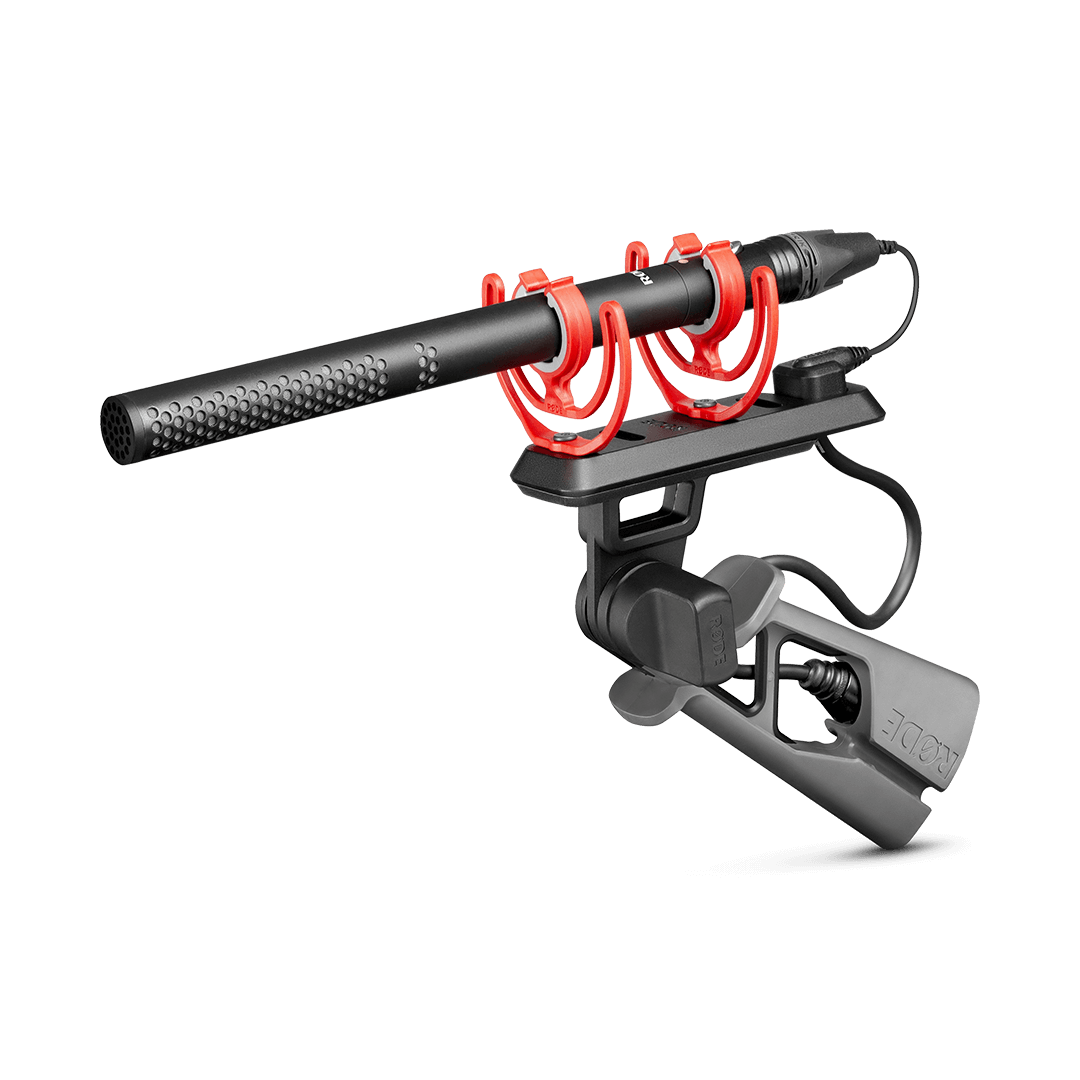
RØDE NTG5 Location Recording Kit (NTG5KIT, Black)
Choose the NTG5KIT when you want a compact microphone that can move between camera and boom duty, and you already have a phantom-powered XLR recording chain. Its low microphone mass and supplied grip and win
-
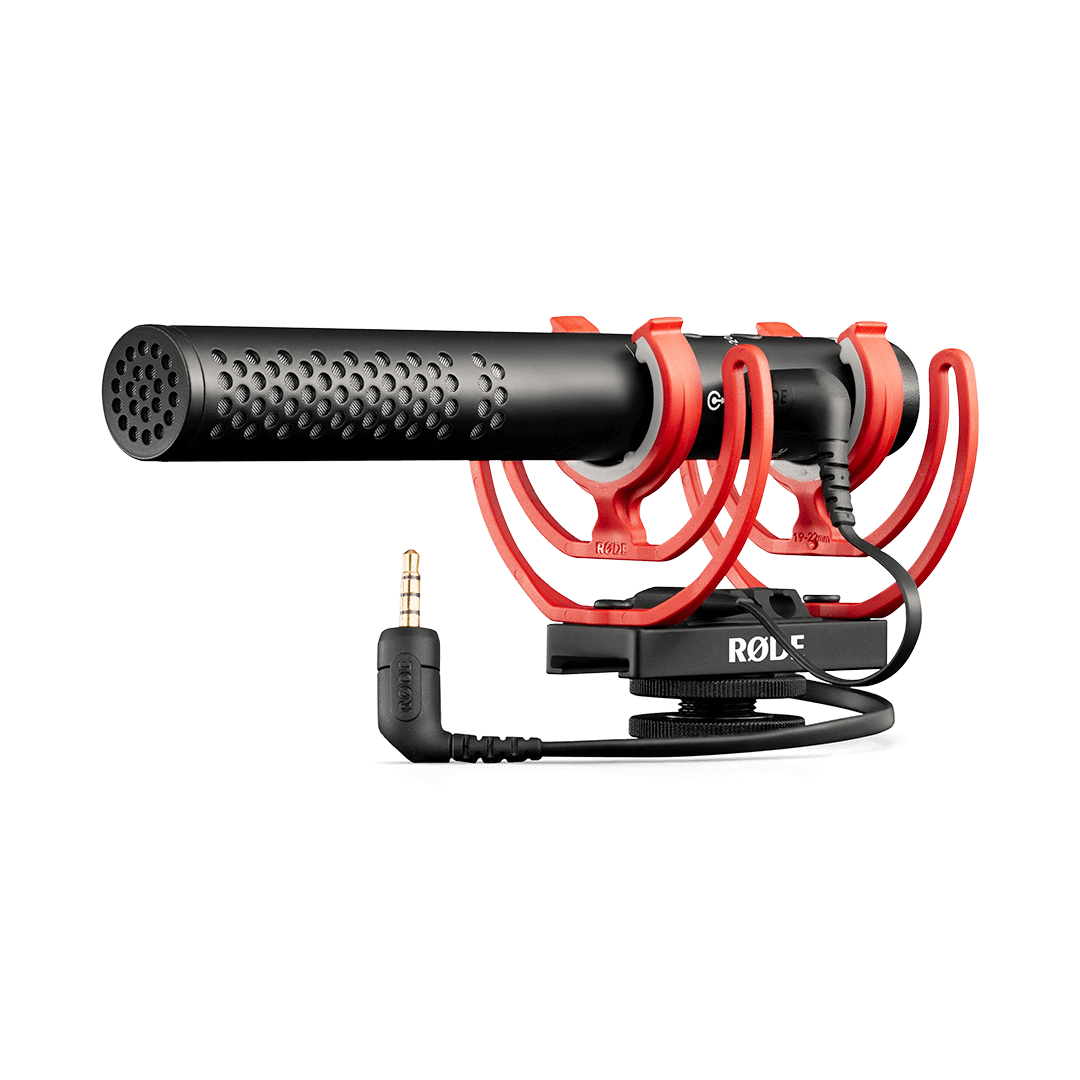
RØDE VideoMic NTG Hybrid Analog/USB On-Camera Shotgun Microphone
The VideoMic NTG suits a creator who wants to move between camera recording and USB voiceover with the same microphone. Its adjustable output and sliding mount make that wor
-
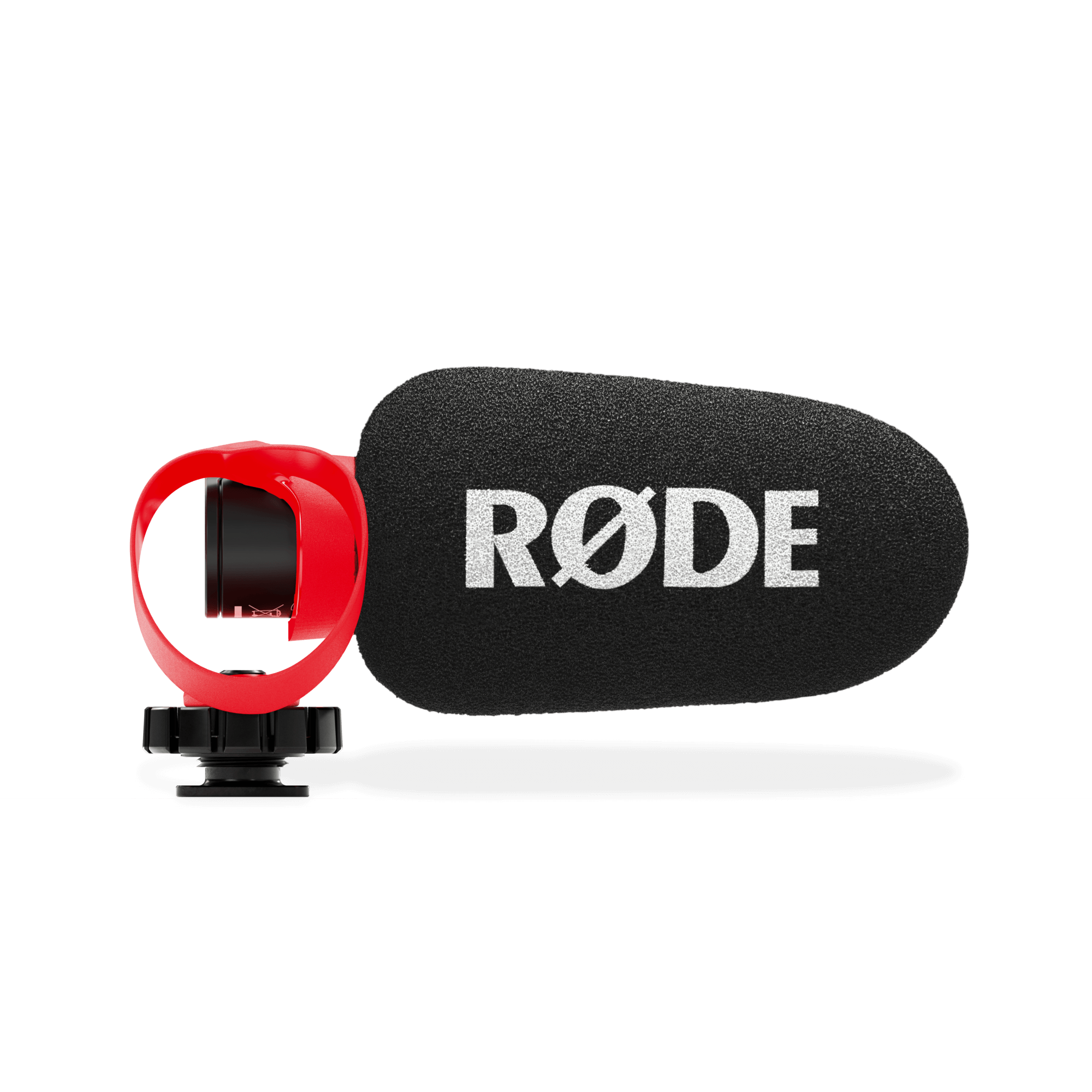
RØDE VideoMicro II On-Camera Shotgun Microphone, Black (VMICROII)
Choose the VideoMicro II when you want a lightweight camera microphone with useful wind accessories and no battery to maintain. Its analog-only connection and phone-adapter nee
Sources and method
- VideoMic Pro+ on-camera shotgun microphone datasheetRØDE · retrieved 2026-10-04DatasheetPDF
- VideoMic Pro+ datasheet 1.3RØDE · retrieved 2026-10-04DatasheetPDF
- Rode VideoMic Pro+ test: In the clear with audioPhotography News · retrieved 2026-10-04Editorial review
- RØDE VideoMic Pro+... Is it worth the upgrade?Newsshooter · retrieved 2026-10-04Editorial review
- Rode VideoMic Pro Plus On-Camera Shotgun MicrophoneUnique Photo · retrieved 2026-10-04Retailer listing
- Review: RØDE improves VideoMic Pro+ with several new featuresProVideo Coalition · retrieved 2026-10-04Editorial review
- VideoMic Pro+ quickstart guide 1.3RØDE · retrieved 2026-10-04ManualPDF