RØDE VideoMic NTG Hybrid Analog/USB On-Camera Shotgun Microphone
The VideoMic NTG suits a creator who wants to move between camera recording and USB voiceover with the same microphone. Its adjustable output and sliding mount make that workflow practical. Choose it with a plan for outdoor wind protection, an internal battery you cannot swap yourself, and the input requirements of your camera or phone.
Updated 2026-10-04

We may earn a commission from qualifying purchases.
Prices and sellers
No price information yet
Conditions and limitations
Safety track needs two recorded channels
- Capability
- A lower-level track can provide an editing fallback.
- Limitations
- Mono analog TRRS inputs lose the safety channel.
- This is not a live-stream limiter.
- Requirements
- Record both USB or stereo analog channels and preserve them for editing.
Compatibility
Camera auto-power is conditional
- Connection
- Connect the microphone to the camera microphone input.
- Functions
- Auto-power triggering when the input supplies plug-in power
- Manual on/off otherwise
- Notes
- A microphone input and an auto-power trigger are separate compatibility questions.
- Protocol
- Analog audio / plug-in power detection
- Result
- partial
- Source device
- VideoMic NTG
- Target device
- Camera with 3.5 mm microphone input
Where sources differ
Current datasheet specifications are preferred to old reproduced sensitivity and accessory lists. Exact historical ASIN bundle contents remain unresolved.
Reported issues and fixes
Wind limitations are observed in one unmeasured outdoor shoot; no systematic defect-rate or firmware issue investigation is established.
Care and support
Internal-battery serviceability is reported; current repair terms, battery-aging data and support-end commitments were not established.
Who it suits
Choose for a mixed camera and USB workflow
- Check before buying
- Confirm the supplied cables, camera power trigger and required windshield.
- Constraints
- Compatible inputs, cables and app routing
- Needs
- One microphone for camera capture and USB voiceover
- Reason
- The documented strengths concern flexible workflows; device-specific setup remains important.
- Tradeoffs
- Routing flexibility comes with an internal battery and additional outdoor wind-protection planning.
- Assessment
- conditional
Areas not yet researched (1)
No conclusion is available for these areas. This does not mean the Product has no limitations or reported issues.
- Ownership costs
The review
RØDE VideoMic NTG: useful hybrid routing, with conditions worth checking
Read the specifications and listening evidence separately
The manufacturer specifies a supercardioid electret design, a 20 Hz to 20 kHz range and a narrower tolerance-defined response in the datasheet. Specified equivalent noise is 15 dBA and maximum input is 120 dB SPL. These are manufacturer figures, not measurements from this research. High-pass options, a pad and high-frequency boost offer recording controls, but do not establish how well a particular room, voice or wind condition will be handled. [1]
Newsshooter compared the VideoMic NTG with an NTG5 at the same position and distance using a BMPCC 6K. Inputs and gain settings differed, and the reviewer explicitly identified the camera preamps as a limit on the comparison. Similar sound in that setup therefore does not establish equal microphones. ThruMyLens found a fixed workbench setup easier to use, but its early account covered only two videos and also changed post-processing. Treat these as useful workflow observations rather than controlled rankings. [5], [2]
Start with the recording chain
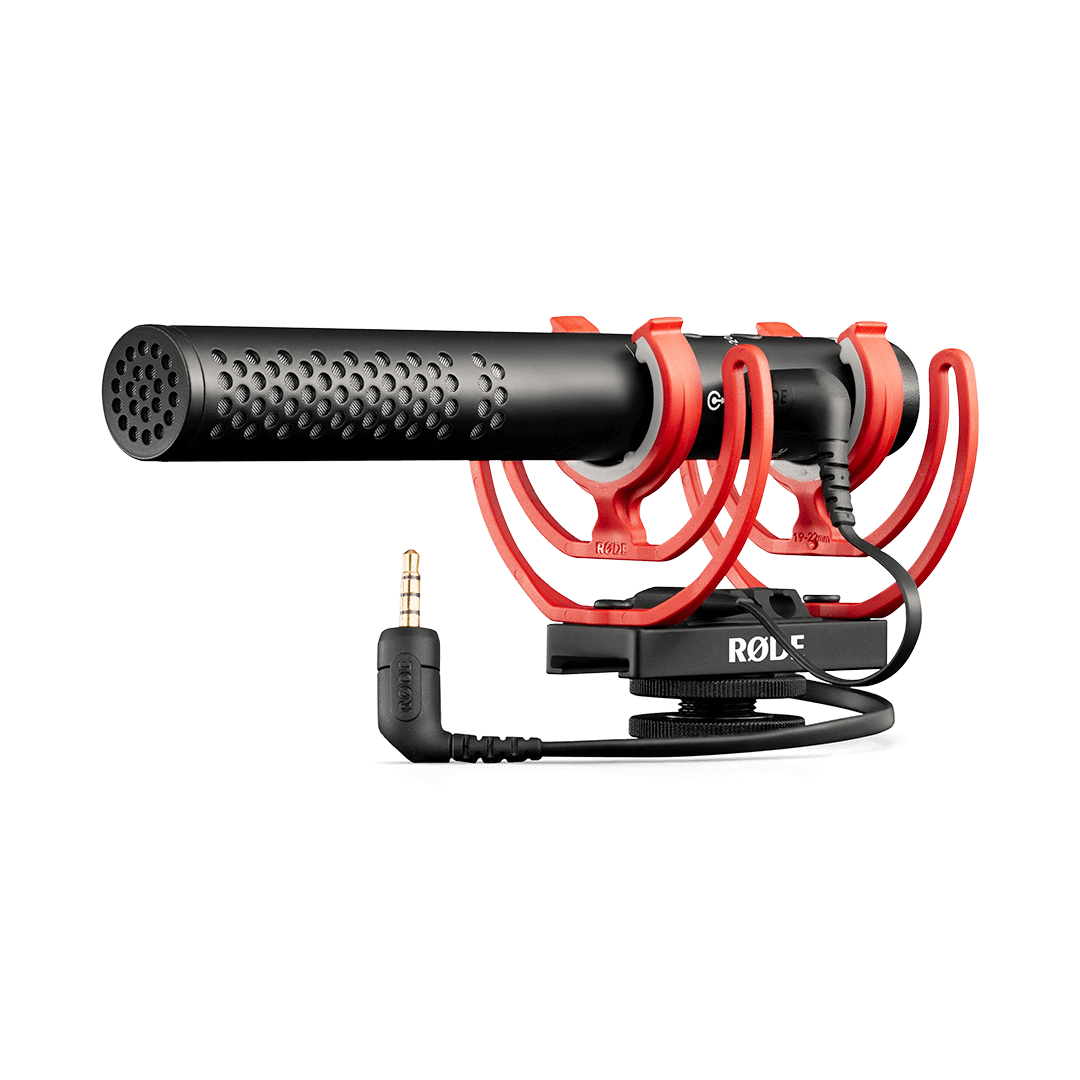
This is the black VideoMic NTG/VMNTG associated with B081S9BCHF. Its analog output automatically recognizes TRS/TRRS connections, while USB carries digital audio. That lets a camera microphone become a voiceover input without a separate interface. Historical hands-on testing includes Pixel XL with Android 10/Auphonic and macOS 10.14.6/Hindenburg, but those successes are not a guarantee for every current phone or app. Lightning operation was documented with updated firmware and the specific SC15 cable. [4], [1], [3], [6]
Camera-triggered power needs plug-in power at the camera input; manual switching remains available because the microphone has its own battery. For analog recording, lower the camera preamp gain and adjust the microphone output while checking the recorded level. The safety track can help recover a take when both channels are preserved, but a mono TRRS input cannot retain it. It is also not a live-stream limiter. Native balanced-XLR workflows need a different connection plan because this microphone's analog output is unbalanced. [3], [6], [5]
Allow for mounting, wind and battery service
The bare microphone weighs 94 g. Its sliding shoe mount helps clear a viewfinder or a wide lens, though Newsshooter found no angle adjustment in the supplied support. ProVideo Coalition had to repeat a Miami shoot when the basic foam screen could not cope with the wind; wind speed was not measured and the optional WS11 was not tested in that outing. Outdoor buyers should treat windshield choice as part of the setup, without assuming a specific attenuation result. [1], [5], [3]
Battery endurance is manufacturer-rated at 30+ hours, while a full independent endurance test remains a gap. The internal battery is not user-replaceable, so carrying a charged spare is not the same solution it is with a removable-battery microphone. Exact historical cable bundles, current repair terms and documented weather protection remain unresolved in this research. The clearest fit is someone who values moving between camera and USB work and is willing to verify the supporting accessories and device behavior. [4], [1], [6]
Buyer questions
Before you buy
Compatibility
Will it switch on automatically with my camera?
Only when the camera supplies plug-in power at its microphone input. Otherwise use the microphone's manual power control. Auto-power detection and the ability to accept analog audio are separate checks. [3]
Can I use it with a phone and monitor playback?
USB phone recording and playback return were demonstrated in specific historical tests. Select the microphone as the app or system playback device where needed. For a Lightning device, the evidence describes updated firmware and the SC15 cable; confirm your exact device and app before a critical session. [3], [6]
Everyday use
Does the safety channel prevent all clipping?
No. It is a lower-level track for editing when the recorder retains both channels. A mono TRRS input cannot preserve it, and it does not behave as a limiter for a live broadcast. [3]
Product images
Facts and specifications
Manufacturer datasheet
| Specification | Value | Source |
|---|---|---|
| Acoustic Design | Pressure-gradient electret condenser; supercardioid polar pattern | [1] |
| Battery Life | 30 hours | [1] |
| Control Type | 75/150 Hz high-pass filtering, pad, safety channel and high-frequency boost | [1] |
| Depth | 171 mm | [1] |
| Width | 21.6 mm | [1] |
| Highest Frequency | 20 kHz | [1] |
| Lowest Frequency | 20 Hz | [1] |
| Interface | Auto-sensing 3.5 mm TRS/TRRS analog output and USB-C digital audio; 24-bit, 48 kHz USB | [1] |
| Maximum SPL | 120 dB | [1] |
| Noise Level | 15 dBA | [1] |
| Signal-to-Noise Ratio | 79 dB | [1] |
| Weight | 94 g | [1] |
Retailer listing
| Specification | Value | Source |
|---|---|---|
| Model | VideoMic NTG / VMNTG; B081S9BCHF, black US | [4] |
Stated by reviewers
| Specification | Value | Source |
|---|---|---|
| Compatibility | Digital Filmmaker's update describes Lightning-device USB operation after a firmware update with the specific RØDE SC15 accessory cable; ordinary charging cables are not established equivalents; ProVideo Coalition tested USB recording on Pixel XL/Android 10/Auphonic and macOS 10.14.6/Hindenburg, with playback return requiring the app/system output to select VideoMic NTG. These are historical tested combinations, not current universal OS guarantees. | [3], [6] |
| Mount Type | Sliding camera-shoe shockmount helps eyepiece and wide-lens clearance; Newsshooter found no angle adjustment in the included support | [5] |
| Ports | 3.5 mm analog output is unbalanced; there is no native XLR connector | [5] |
Other facts
| Specification | Value | Source |
|---|---|---|
| Buyer Fit | Digital Filmmaker used the mic for handheld USB voiceover and favored moving one microphone between a small camera rig and a computer. Its praise for variable output gain is experiential, not a controlled noise measurement. | [6] |
| Limitation | Digital Filmmaker identifies the internal battery as not user-replaceable; a spare-battery swap is therefore not an available field workflow.; ProVideo Coalition describes a second track 20 dB lower through two-channel USB or stereo analog recording. Mono TRRS inputs cannot retain that safety track, and it is a post-production fallback rather than a live-stream limiter. | [3], [6] |
| Risk | ProVideo Coalition had to repeat a windy Miami shoot because the basic foam windscreen was insufficient; wind speed was not measured and optional WS11 was not tested in that shoot. | [3] |
| Setup Requirement | Camera-triggered auto-power requires plug-in power at the camera input. The internally powered microphone also has manual on/off control; the trigger requirement is distinct from operating power.; Digital Filmmaker describes reducing camera preamp gain and adjusting the microphone output for the desired recording level; the appropriate setting depends on the camera and source, so meter and listen rather than copy a universal dial position. | [3], [6] |
| Use Case | ThruMyLens reported easier production after fixing the VideoMic NTG above a workbench with an accessory arm and extension cable. Only two videos had been recorded, and concurrent Final Cut Pro processing changes confound any sound-quality comparison with DJI Mic 2. | [2] |
KnowSpec analysis
One microphone across camera and computer
The VideoMic NTG suits a creator who wants to move between camera recording and USB voiceover with the same microphone. Its adjustable output and sliding mount make that workflow practical. Choose it with a plan for outdoor wind protection, an internal battery you cannot swap yourself, and the input requirements of your camera or phone.
Method: Synthesis of verified manufacturer and original hands-on evidence; no listening test performed by KnowSpec.Convenience does not erase recording-chain limits
The evidence supports flexible routing more strongly than universal sound-quality superiority. A camera-based comparison was preamp-limited, the safety track requires two recorded channels, and the analog output is unbalanced. Match the microphone to the actual recording chain instead of treating its shared NTG name as proof of equivalence.
Method: Distinguish specified capability, reviewer experience and unmeasured outcomes.Visible information gaps
Missing information is shown rather than guessed.
- Topic:Sustained Performancenot found
- Water Resistancenot found
- Softwarenot public
- Topic:Measured Performancerights restricted
Products in this content
-
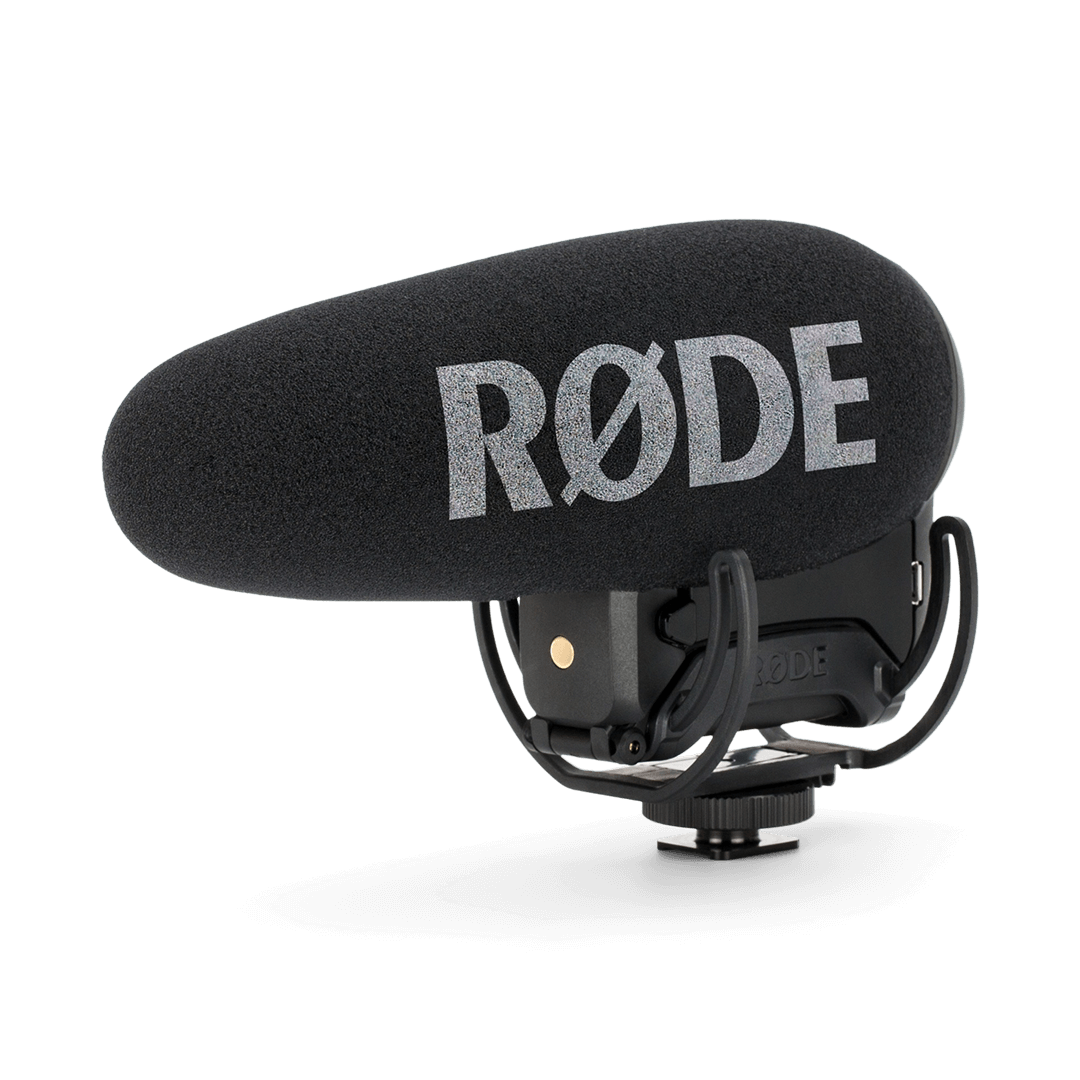
RØDE VideoMic Pro+ On-Camera Shotgun Microphone
The VideoMic Pro+ suits close camera-mounted speech, run-and-gun reference sound and occasional off-camera placement when you want analogue audio recorded with the picture. Its useful strengths are flexible p
-
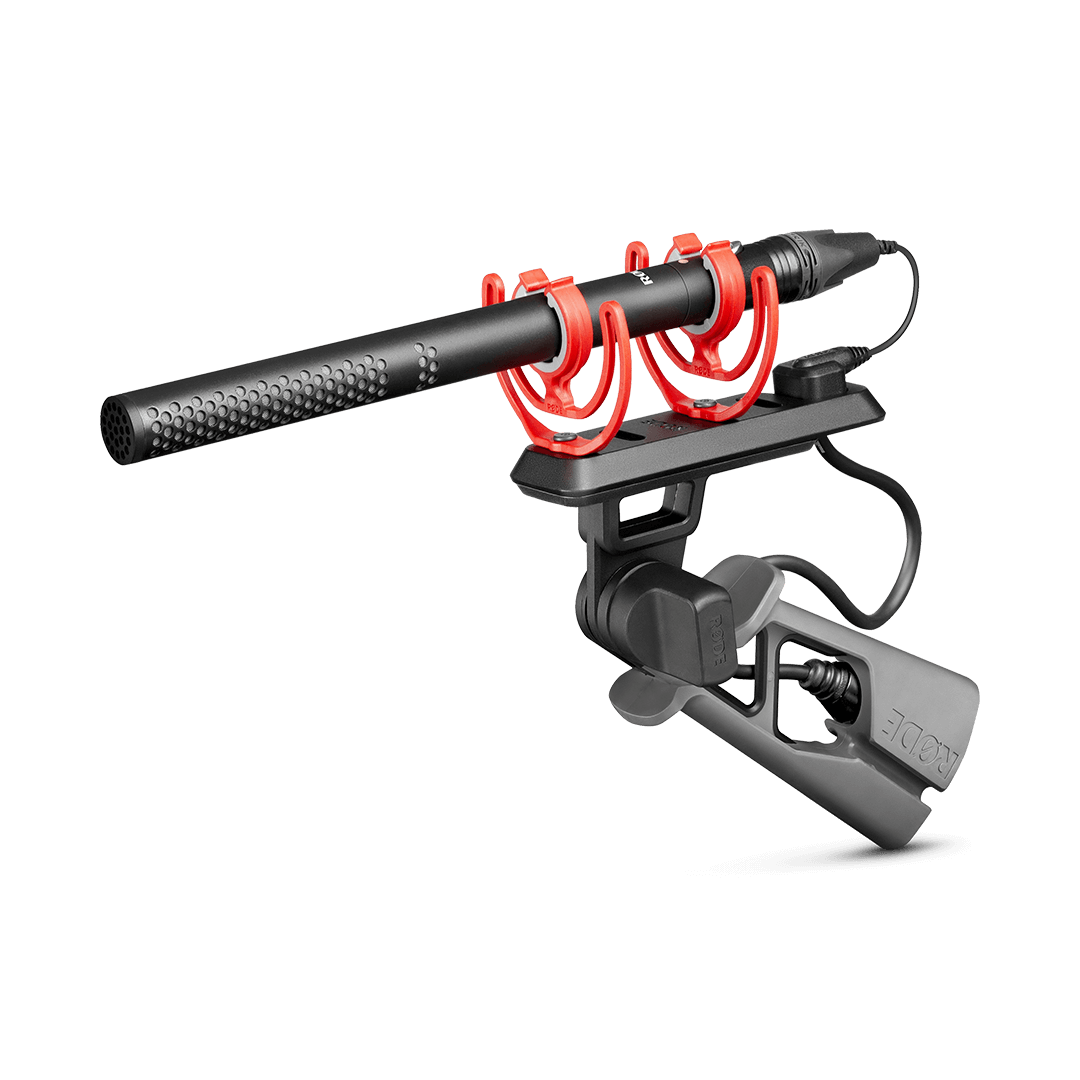
RØDE NTG5 Location Recording Kit (NTG5KIT, Black)
Choose the NTG5KIT when you want a compact microphone that can move between camera and boom duty, and you already have a phantom-powered XLR recording chain. Its low microphone mass and supplied grip and win
-
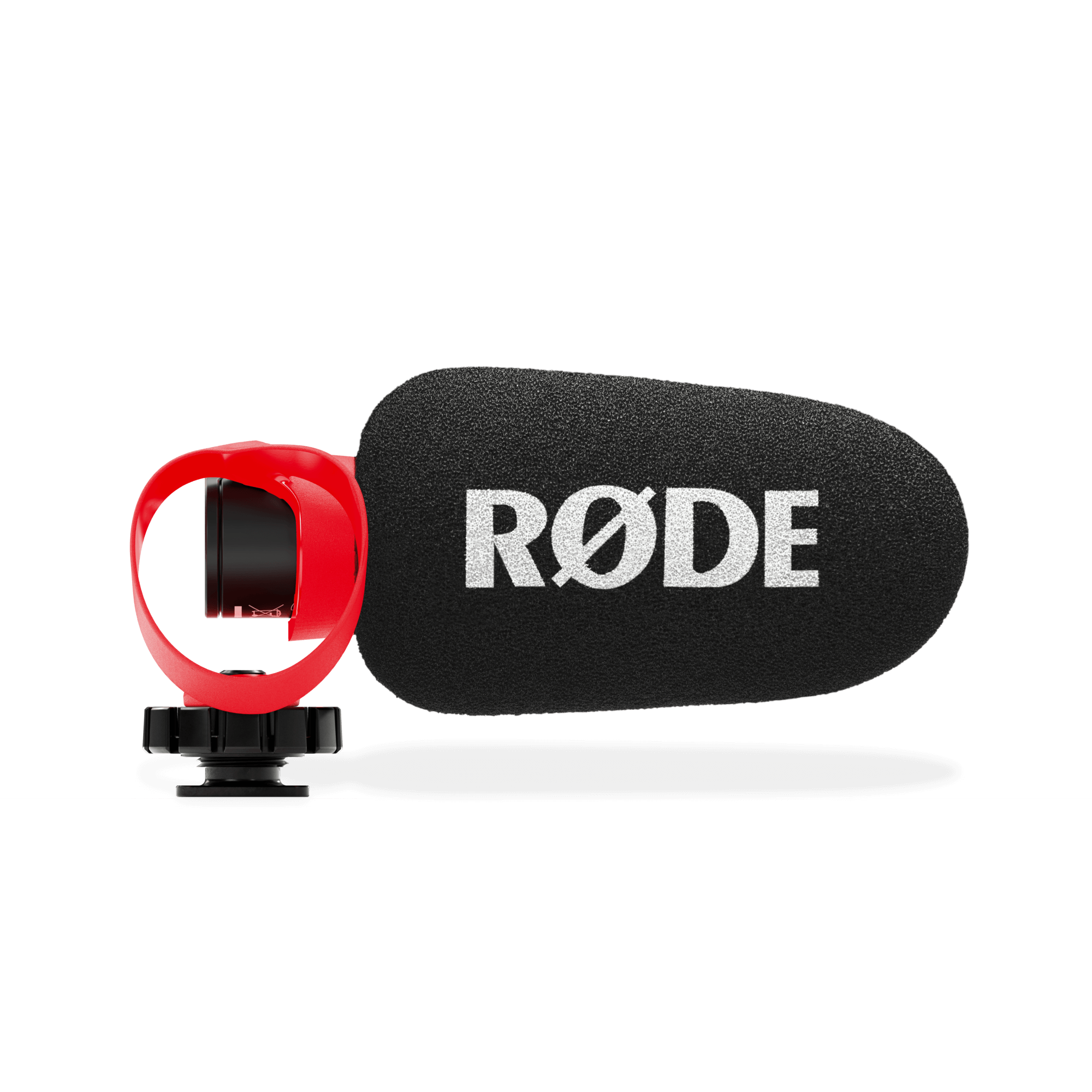
RØDE VideoMicro II On-Camera Shotgun Microphone, Black (VMICROII)
Choose the VideoMicro II when you want a lightweight camera microphone with useful wind accessories and no battery to maintain. Its analog-only connection and phone-adapter nee
Sources and method
- VideoMic NTG datasheet, VMNTG DS 02RØDE · retrieved 2026-10-04DatasheetPDF
- Review of the Rode VideoMic NTGThruMyLens · retrieved 2026-10-04Editorial review
- Review: RØDE VideoMic NTG hybrid shotgun microphone with extraordinary versatilityProVideo Coalition · retrieved 2026-10-04Editorial review
- Rode VideoMic NTG Camera-mount Shotgun Microphone, Black VMNTGDevice.report · retrieved 2026-10-04Other source
- RØDE VideoMic NTG ReviewNewsshooter · retrieved 2026-10-04Editorial review
- Rode VideoMic NTG ReviewDigital Filmmaker · retrieved 2026-10-04Editorial review