RØDE Interview PRO Wireless Handheld Condenser Microphone
Choose Interview PRO when you want to pass a handheld microphone between speakers and either already have a compatible RØDE receiver or are happy to edit onboard audio afterward. The standalone package does not complete a wireless recording chain. Its useful backup workflow comes with a critical operating rule: wireless mute leaves internal recording running.
Updated 2026-10-04

We may earn a commission from qualifying purchases.
Prices and sellers
No price information yet
Conditions and limitations
Wireless capture requires a receiver
- Capability
- Send live audio through a compatible RØDE Series IV receiver or console.
- Limitations
- A 2.4 GHz radio from another ecosystem is not automatically compatible.
- Requirements
- Obtain and pair a compatible receiver or console separately.
Onboard recording is a separate capture path
- Capability
- Record 32-bit float audio internally without a receiver, or retain it alongside wireless capture.
- Limitations
- Wireless mute leaves the internal recording running.
- The documented 32-bit float format belongs to the onboard recorder; do not assume the receiving device records that format.
- Requirements
- Start onboard recording and verify its status separately from the receiving device.
RØDE · Newsshooter · RØDE
Timecode depends on the paired receiver
- Capability
- Use the documented timecode feature with a compatible receiver.
- Limitations
- Standalone operation does not establish a timecode workflow; the documented owner instead synchronized with a clap.
- Requirements
- Confirm the receiver's timecode support and verify synchronization in the intended recording workflow.
Compatibility
Existing Series IV receiver setup
- Connection
- Pair the handheld microphone wirelessly to the receiver, then use the receiver's supported connection to the recording device.
- Functions
- Live wireless microphone audio
- Notes
- The microphone package excludes the receiver; host connection and additional features depend on the receiver.
- Protocol
- RØDE Series IV
- Result
- full
- Source device
- RØDE Interview PRO
- Target device
- RØDE Wireless PRO, Wireless ME or Wireless GO II receiver
Standalone recording and later computer export
- Connection
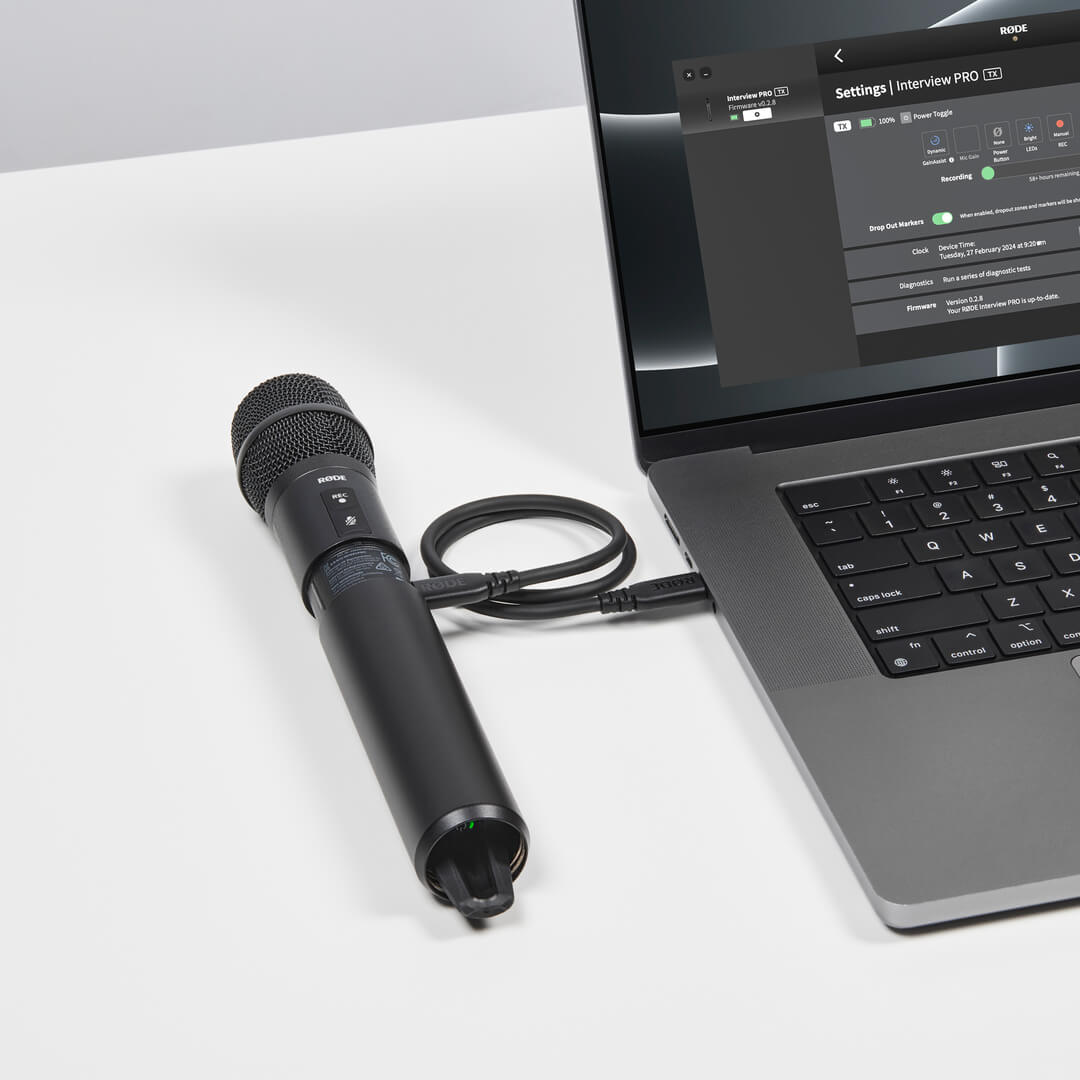
- Record internally, then connect by USB-C to export audio for editing.
- Functions
- Onboard recording export
- Settings and firmware management
- Notes
- This documents file export rather than direct USB microphone operation; current OS requirements were not resolved in the retained evidence.
- Protocol
- USB-C
- Result
- partial
- Source device
- RØDE Interview PRO
- Target device
- Computer running RØDE Central
RØDE · Newsshooter · RØDE · Linux Renaissance
Where sources differ
One official datasheet gives two battery ratings
- Explanation
- No test conditions or explanation reconcile the two ratings. Neither is a verified continuous-runtime result; plan charging conservatively and confirm current guidance before long sessions.
- Status
- unresolved
Care and support
Firmware and settings are managed in RØDE Central
- Details
- The quickstart documents USB-C access and RØDE Central firmware updates. It does not promise a support end date, warranty period or a user battery-replacement procedure.
Who it suits
Choose the complete recording path first
- Check before buying
- Verify the exact receiver and its connection to your recording device.
- Constraints
- The package has no wireless receiver.
- Needs
- Handheld speech capture with live output or later editing
- Reason
- The microphone suits either path, but the buyer must deliberately choose which one the rest of the equipment supports.
- Tradeoffs
- An existing compatible receiver enables live capture; standalone recording avoids that purchase but adds export and synchronization work.
- Assessment
- conditional
Use onboard backup with an off-record procedure
- Check before buying
- Practice stopping saved and transmitted audio during private breaks.
- Constraints
- Wireless mute does not stop the onboard recorder.
- Needs
- A saved recording alongside the wireless take
- Reason
- Adopt the backup workflow only with a clear start, stop and verification routine for both paths.
- Tradeoffs
- A second capture path is useful, but it creates another recording state to manage.
- Assessment
- conditional
RØDE · The Podcast Host · RØDE
Areas not yet researched (2)
No conclusion is available for these areas. This does not mean the Product has no limitations or reported issues.
- Reported issues and fixes
- Ownership costs
Measured performance
Review voice loudness
-28 LUFSThe Podcast Host voice recording with Interview PRO transmitting to a RØDECaster Pro II in Auto and Dynamic modes. · n=1 · Approximate reviewer-reported loudness from one supplied review sample and voice/setup. Measurement duration, calibrated protocol and repeatability were not supplied; this is not a fixed microphone output target.
Source [5]The review
RØDE Interview PRO: check the receiver, separate the recording paths
What this package adds to your setup
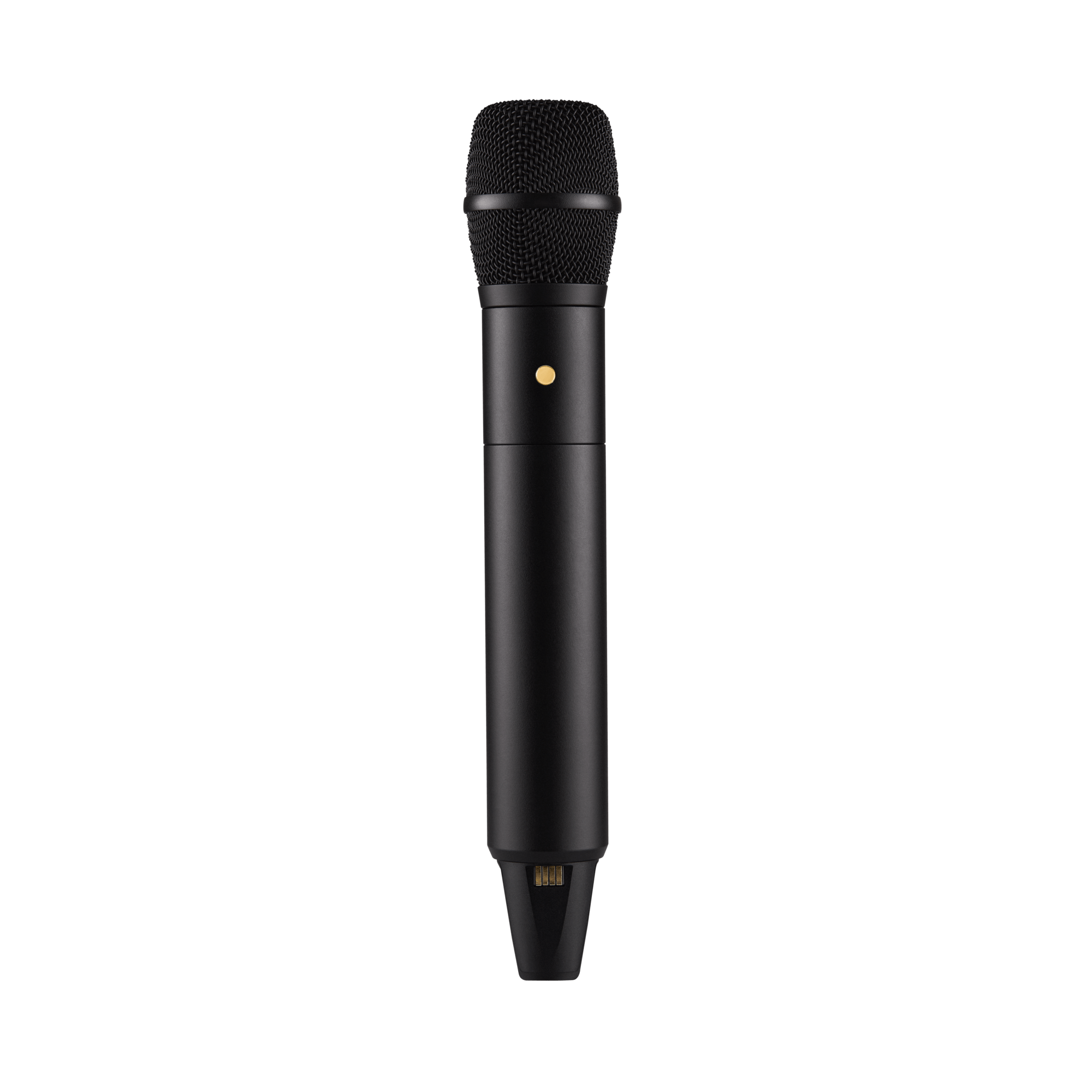
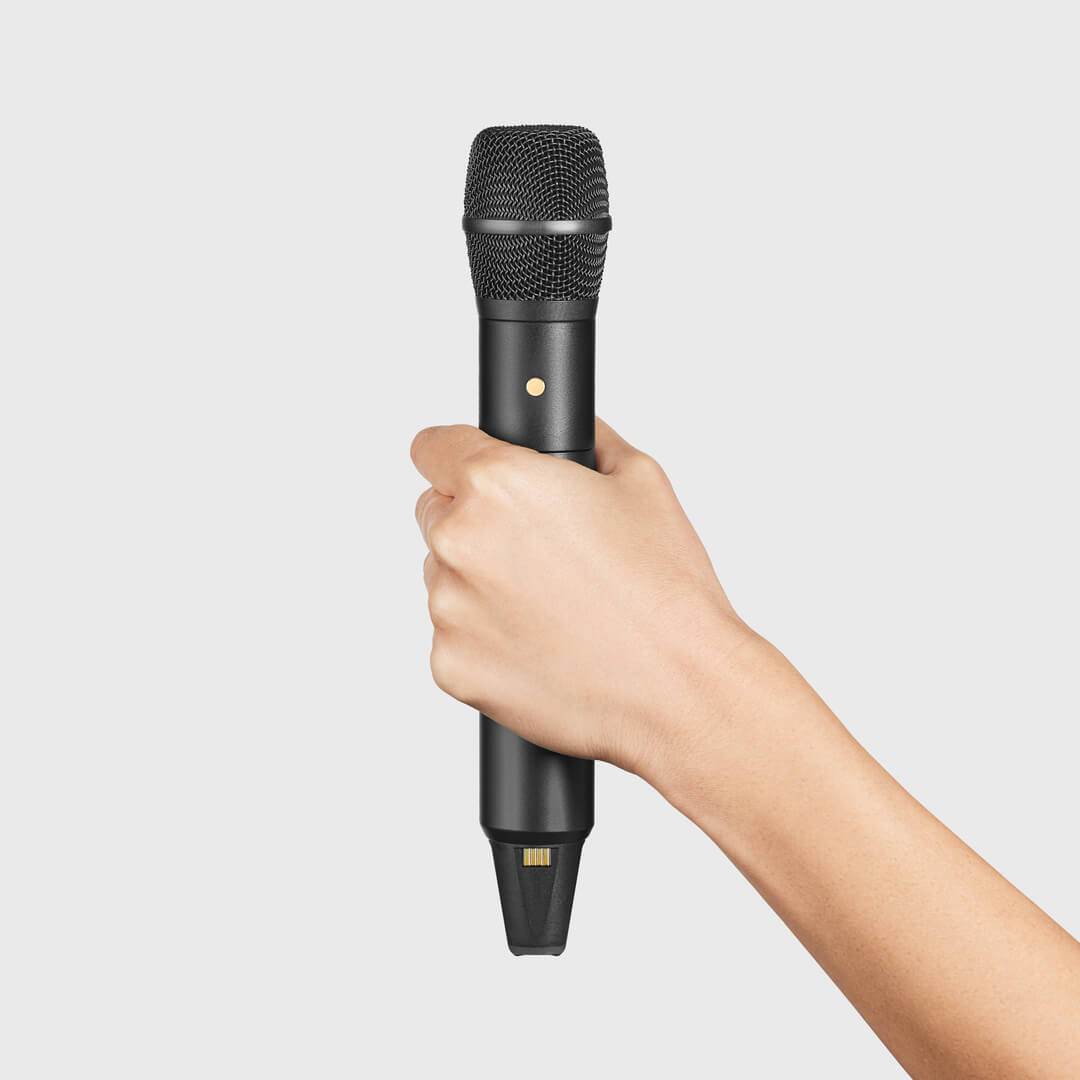
This is the black Interview PRO/INTERVIEWPRO associated with B0D1FQS8X4. The package includes the microphone, RM3 holder, SC34 cable, windshield and ZP2 case. A wireless receiver is separate. That distinction matters more than the word wireless on the box: an existing Series IV owner can add a handheld input, while a first-time buyer still needs a receiving path. [1], [4]
Compatible options include Wireless PRO, Wireless ME and Wireless GO II receivers, plus supported RØDECaster Pro II and Duo consoles. Pro Moviemaker's mini test emphasized the ecosystem restriction. If you only need recorded audio, onboard capture remains usable without any receiver; the practical tradeoff is exporting and editing instead of sending live sound directly into the receiving device. [1], [6], [7], [3]
What the hands-on evidence actually shows
The Podcast Host heard a neutral voice tone, little off-axis change and no handling noise during its simulated interviewer-to-guest movements. Its foam-covered plosive sample also pleased the reviewer. RØDE supplied that sample. These are useful listening observations, not a laboratory response curve or proof that taps, wind and poor placement cannot enter the recording. Pro Moviemaker likewise found the omnidirectional pattern forgiving of imperfect aim. [4], [5], [3]
In the Podcast Host's RØDECaster Pro II voice test, Auto and Dynamic produced around -28 LUFS. Treat that as a result from that speaker and setup, not a universal target. Pro Moviemaker separately found automatic adjustment between quiet and louder speakers unobtrusive. Together, those observations support convenience when levels vary, while leaving a reason to listen to your own test recording. [5], [3]
RØDE's range statement is a line-of-sight rating. The more concrete obstructed example is the Podcast Host's test at 20 feet with a wall and other wireless devices streaming, where no dropouts or hum were reported. The review did not establish a maximum distance or a total test duration. Use that as a successful example, then test your actual route and keep onboard capture available rather than treating it as a site-wide guarantee. [4], [5], [6]
Treat wireless audio and onboard files separately
The internal recorder uses 32-bit float, while GainAssist is described for the signal sent to the receiver. These are different parts of the capture chain. Start the internal recording deliberately and verify the receiving device separately. Do not assume a camera file gains the onboard recorder's format or recovery behavior merely because the microphone offers both features. [4], [6], [7]
The quickstart gives an unusually important distinction: Mute stops wireless audio while the internal recording continues. REC controls that saved recording. If someone asks to go off record, silence at the receiver is not enough. Build a check of both states into the interview routine, especially when onboard audio is intended as a backup. [7]
Decide how you will synchronize the result
Timecode capability depends on a compatible receiver, so check that complete workflow before a multicamera shoot. A Linux Renaissance owner took a simpler route: record microphone and camera separately, make a clap, and align the recordings later. That self-funded first-week account illustrates standalone convenience, but it tested neither a wireless receiver nor timecode and says nothing about long-term reliability. [4], [2]
The clearest fit is someone who values a pass-around handheld microphone and either owns the right receiving equipment or accepts an edit-afterward workflow. The practical pre-shoot checks are receiver pairing, intended recording path, mute behavior, battery state and export. For a first stationary studio setup, the Podcast Host's conclusion was more cautious; the handheld and onboard features should solve a real need rather than simply add unused options. [4], [5], [6], [7]
Plan power and export before the interview
Battery documentation is inconsistent: the V06 specification table says up to 25 hours, but a feature bullet on that same page says up to 30 hours. Neither figure is an independently timed endurance result in the retained evidence. There is no justified reason to silently select the longer one. Charge before an important session and leave margin until you have checked the microphone under your own workload. [4]
The USB-C socket is reached by unscrewing and sliding the handle sleeve. The quickstart describes charging indications and RØDE Central for export, settings and firmware updates, recommending the included SuperSpeed cable. This establishes a file-management route, not a promise of direct USB microphone operation. Warranty duration, battery-service arrangements and an announced support horizon were not established in the retained documentation. [4], [7]
Buyer questions
Before you buy
Setup
How do I use the audio with separately recorded video?
Export onboard files with RØDE Central and synchronize them in editing. One owner used a clap for alignment. For the microphone's timecode capability, a compatible receiver is a prerequisite; confirm its settings and your editing workflow before the shoot. [7], [2], [4]
Everyday use
Will pressing Mute stop the onboard backup?
No. The official quickstart says onboard recording continues while wireless audio is muted. Use REC to stop the saved recording and verify both states when the conversation must be off record. [7]
Limitations
Does 32-bit float protect the audio recorded by my camera?
The documented 32-bit float feature is the microphone's onboard recorder. GainAssist manages the receiver-bound signal separately. Check the camera and receiver recording chain; do not assume its file has the onboard format or the same recovery behavior. [4], [6]
Can I rely on the advertised range through walls?
No site-wide guarantee follows from the evidence. The manufacturer rating assumes line of sight. One review succeeded at 20 feet with a wall and competing wireless activity, but did not measure a maximum obstructed range. Test the actual location and use onboard capture when appropriate. [4], [5]
Care and maintenance
Is the battery rating 25 or 30 hours?
The official V06 datasheet contains both: up to 25 hours in its table and up to 30 hours in a feature bullet. The inconsistency remains unresolved, and no timed endurance test was established. Plan charging conservatively rather than treating either rating as guaranteed runtime. [4]
Product images
Facts and specifications
Manufacturer datasheet
| Specification | Value | Source |
|---|---|---|
| Acoustic Design | Omnidirectional electret condenser; pre-polarised pressure transducer | [4] |
| Battery Life | 25 hours conflicting evidence; 30 hours conflicting evidence | [4] |
| Battery Type | Integrated rechargeable lithium-ion battery, charged through USB | [4] |
| Brand | RØDE | [4] |
| Compatibility | Manufacturer transmission rating: up to 200 m with line of sight; not a measured indoor range | [4] |
| Depth | 258 mm | [4] |
| Height | 47 mm | [4] |
| Width | 47 mm | [4] |
| Highest Frequency | 20 kHz | [4] |
| Lowest Frequency | 20 Hz | [4] |
| Functions | 32-bit float onboard recording at 48 kHz; manufacturer rates internal capacity at over 40 hours; Timecode capability requires a compatible receiver | [4] |
| Interface | USB-C; USB SuperSpeed 5 Gbps for computer connectivity | [4] |
| Maximum SPL | 122 dB | [4] |
| Signal-to-Noise Ratio | 74 dB | [4] |
| Storage Capacity | 32 GB | [4] |
| Weight | 250 g | [4] |
| Wireless Standard | RØDE Series IV, 2.4 GHz digital wireless | [4] |
Manufacturer manual
| Specification | Value | Source |
|---|---|---|
| Control Type | REC starts and stops onboard recording; power-button short press enters pairing and long press powers on/off | [7] |
| Functions | Unscrew and slide down the handle sleeve for USB-C charging; charge LED flashes green and becomes steady green when full, with amber/red low-battery indications during use | [7] |
| Software | RØDE Central exports onboard recordings, manages settings and runs firmware updates; manufacturer recommends the included SuperSpeed USB-C cable | [7] |
Retailer listing
| Specification | Value | Source |
|---|---|---|
| Compatibility | RØDE Series IV receivers including Wireless PRO, Wireless ME and Wireless GO II; compatible RØDECaster Pro II and Duo consoles | [1] |
| Model | Interview PRO / INTERVIEWPRO; ASIN B0D1FQS8X4 US | [1] |
| Option | Black microphone with RM3 holder, SC34 USB-C cable, windshield and ZP2 carry case; receiver excluded US | [1] |
Stated by reviewers
| Specification | Value | Source |
|---|---|---|
| Functions | GainAssist automatically adjusts the signal sent to the wireless receiver; Newsshooter describes 32-bit float separately as onboard recording | [6] |
Other facts
| Specification | Value | Source |
|---|---|---|
| Buyer Fit | The Podcast Host favored Interview PRO for live and location work and advised considering other options for a first stationary studio setup. RØDE supplied its review sample. | [5] |
| Limitation | Muting wireless audio does not stop the onboard recording; stop the internal recording separately when speech must not be saved.; Wireless use is tied to compatible RØDE systems; matching the 2.4 GHz band alone is not evidence of interoperability with another brand. | [7], [3] |
| Setup Requirement | Obtain a compatible Series IV receiver or console for wireless capture; this standalone package does not include a receiver. | [4] |
| Use Case | Use the onboard recorder without a wireless receiver, then transfer the recorded audio for editing. | [6] |
KnowSpec analysis
A handheld addition to a receiver setup, or a self-contained recorder
Choose Interview PRO when you want to pass a handheld microphone between speakers and either already have a compatible RØDE receiver or are happy to edit onboard audio afterward. The standalone package does not complete a wireless recording chain. Its useful backup workflow comes with a critical operating rule: wireless mute leaves internal recording running.
Method: Separate manufacturer ratings, short reviewer trials and source inconsistencies; retain unresolved gaps.Practical convenience is better established than maximum endurance
The evidence supports straightforward handheld capture, receiver compatibility and useful level automation. It does not establish a guaranteed obstructed range or all-day endurance under a defined workload. The official datasheet even contains conflicting battery ratings, so plan around your own recording and charging checks rather than one headline number.
Method: Synthesis of accepted manufacturer documentation, original review observations and a separately labeled first-week owner account; no new hardware test performed.Visible information gaps
Missing information is shown rather than guessed.
- Battery Lifeconflicting
- Topic:Sustained Performancenot found
- Topic:Wireless Range And Interferencenot found
- Topic:Onboard Recording And Processingrights restricted
- Warrantynot found
- Topic:Timecode And Export Workflowrights restricted
Products in this content
-
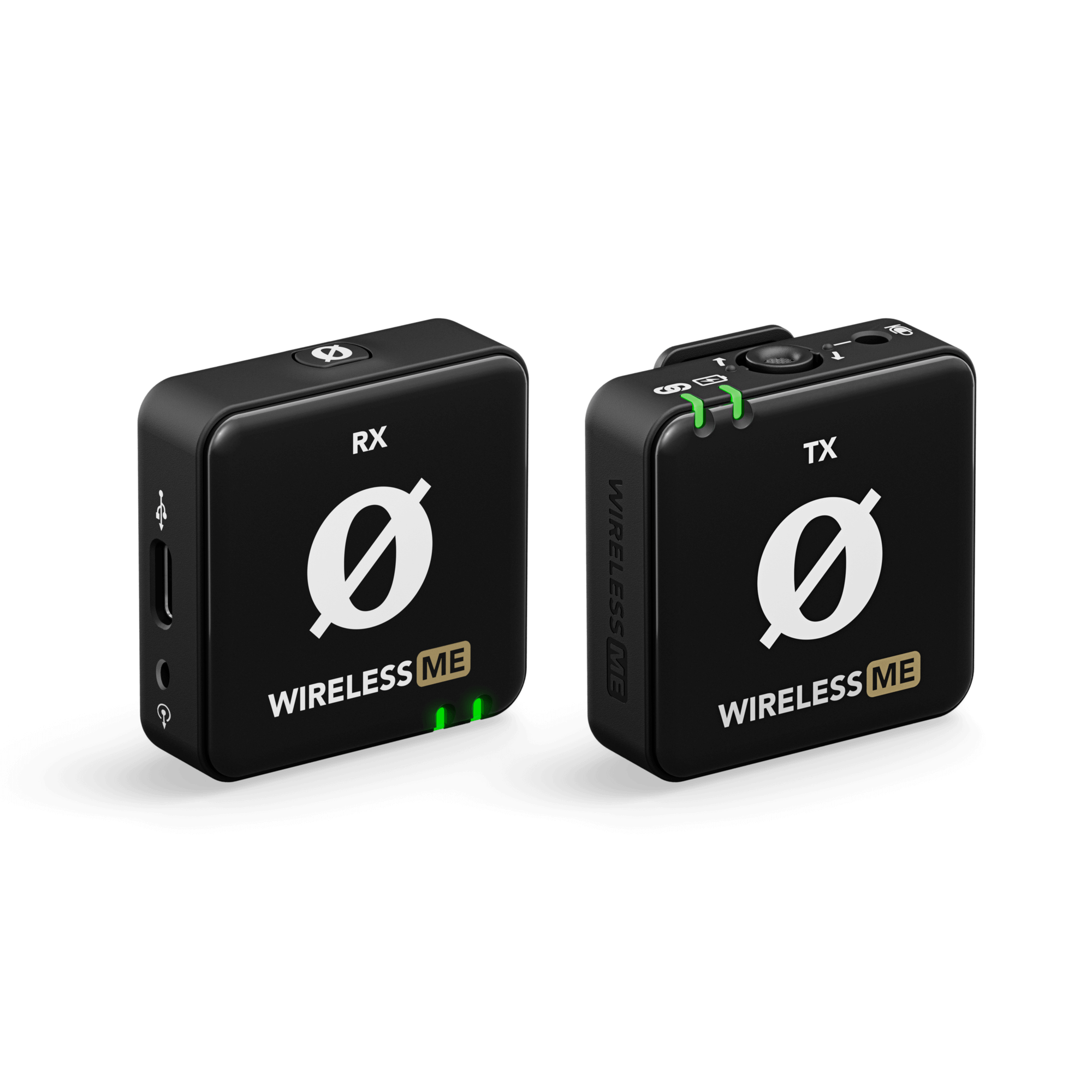
RØDE Wireless ME Compact Wireless Microphone System
The single-transmitter Wireless ME suits a presenter or a guest with an interviewer behind the camera. Its receiver microphone adds a second voice without another remote transmitter, and the i
Sources and method
- Rode Interview Pro Wireless Handheld MicrophoneUnique Photo · retrieved 2026-10-04Retailer listing
- Rode Interview ProLinux Renaissance · retrieved 2026-10-04Owner community
- Mini test: Rode Interview ProPro Moviemaker · retrieved 2026-10-04Editorial review
- Interview PRO datasheet V06RØDE · retrieved 2026-10-04DatasheetPDF
- Rode Interview PRO Review: A Handheld Wireless MicThe Podcast Host · retrieved 2026-10-04Editorial review
- RØDE releases The Interview PRO handheld condenser microphone. A new addition to the Series IV wireless systemNewsshooter · retrieved 2026-10-04Other source
- Interview PRO Quick Start Guide 0927-0837-02-04RØDE · retrieved 2026-10-04ManualPDF