Focusrite Scarlett 18i20 4th Generation USB-C Audio Interface
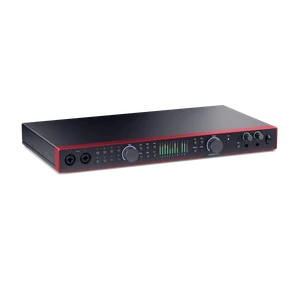
The Focusrite Scarlett 18i20 4th Gen is a strong fit for project studios that record several microphones, integrate digital hardware, and need flexible monitor routing from desktop or mobile control. Its preamps, converter design, dependable drivers, and upgraded headphone monitoring support demanding sessions, while buyers who prioritize the lowest possible native monitoring latency should weigh the documented limitation against higher-tier interfaces.
Updated 2026-09-27

We may earn a commission from qualifying purchases.
Reviewer consensus
Single-source notes
- Analogue io and routing: Agreed · 1/1 · [1]
- Build quality and warranty: Agreed · 1/1 · [2]
- Buyer fit: Agreed · 1/1 · [2]
- Control software and remote operation: Agreed · 1/1 · [1]
- Converter dynamic range: Agreed · 1/1 · [1]
- Digital io and expansion: Agreed · 1/1 · [1]
- Efficiency: Agreed · 1/1 · [2]
- Headphone monitoring: Agreed · 1/1 · [3]
- Latency and driver stability: Agreed · 1/1 · [3]
- Limitations: Weak point · 1/1 · [3]
- Measured performance: Agreed · 1/1 · [3]
- Preamps and gain range: Agreed · 1/1 · [1]
- Rack mounting and power: Agreed · 1/1 · [3]
- Sample rates and bit depth: Agreed · 1/1 · [3]
- Sustained performance: Agreed · 1/1 · [3]
The review
Focusrite Scarlett 18i20 4th Gen review: a flexible studio hub
Who it is for
The Scarlett 18i20 is aimed at bedroom producers, smaller studios, and electronic musicians who need flexible routing and clean recording. Independent testing also supports stable operation during demanding multi-microphone work. [3], [2]
Its extensive inputs, microphone preamps, and outputs make it a practical studio hub when several performers or destinations must be managed together. [1]
Preamps and conversion
The remote-controlled preamps provide a wide gain range, while the RedNet-derived conversion platform is specified with substantial dynamic range. An independent review also reports competitive microphone-input performance for this category. [3], [1]
Auto Gain can establish a useful starting level for incoming audio, which can make initial setup more efficient before the engineer performs a final level check. [2]
Routing and expansion
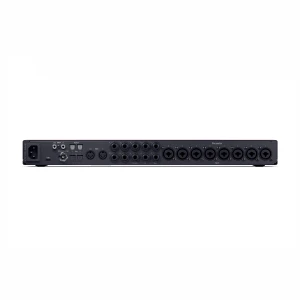
Analogue connectivity is joined by MIDI, S/PDIF, and ADAT input and output. Dual ADAT expansion supports different channel capacities as the chosen sample rate changes. [1], [3]
Focusrite Control 2 provides complex routing from desktop and mobile devices, allowing the engineer to manage the interface away from the front panel. [1]
Monitoring and reliability
The upgraded headphone outputs improve voltage swing and resolution at low listening levels. Review evidence also reports reliable driver behavior during extended sessions. [3]
These traits support long recording sessions in which performers need separate monitoring and the engineer needs confidence in the computer connection. [1], [3]
Limitations and verdict
Latency is solid but does not match the ultra-low benchmark set by higher-tier interfaces. That matters most for performers who monitor through demanding native effects rather than through a simpler routing path. [3]
For a rack-based project studio, the studio-oriented finish, visible metering, flexible routing, and broad connectivity form a coherent package. The documented latency trade-off should still be tested against the buyer's own workflow. [3], [1], [2]
Buyer questions
Before you buy
Compatibility
Everyday use
Can it handle multi-microphone recording?
Yes. Review evidence reports stable operation during demanding multi-microphone tracking, and the interface provides extensive analogue input and output routing. [3], [1]
Can routing be controlled remotely?
Focusrite Control 2 supports complex routing from desktop and mobile devices, so key routing tasks do not require constant access to the front panel. [1]
How is headphone monitoring improved?
The headphone outputs are upgraded for increased voltage swing and improved resolution at low listening levels. [3]
Limitations
What is the main performance limitation?
Latency is reported as solid but below the ultra-low benchmark of higher-tier interfaces, although driver behavior remained reliable during extended sessions. [3]
Product images
Facts and specifications
Manufacturer datasheet
| Specification | Value | Source |
|---|---|---|
| Interface | Eighteen inputs, eight microphone preamps, and twenty outputs. US; Focusrite Control 2 supports complex routing from desktop and mobile devices. US; MIDI, S/PDIF, and ADAT input/output connectivity. US; Remote-controlled preamps with 69 dB of gain. US | [1] |
Stated by reviewers
| Specification | Value | Source |
|---|---|---|
| Interface | Dual ADAT supports sixteen channels at 44.1/48 kHz and eight at 88.2/96 kHz through SMUX. US; One-rack-unit rackmount form factor. US | [3] |
Other facts
| Specification | Value | Source |
|---|---|---|
| Buyer Fit | Bedroom producers, smaller home studios, and electronic musicians needing clean sound and flexible routing. US | [2] |
| Limitation | Latency is solid but below the ultra-low benchmark of higher-tier interfaces. US | [3] |
| Use Case | Stable operation during demanding multi-microphone recording. US | [3] |
KnowSpec analysis
Who the Scarlett 18i20 suits
The Focusrite Scarlett 18i20 4th Gen is a strong fit for project studios that record several microphones, integrate digital hardware, and need flexible monitor routing from desktop or mobile control. Its preamps, converter design, dependable drivers, and upgraded headphone monitoring support demanding sessions, while buyers who prioritize the lowest possible native monitoring latency should weigh the documented limitation against higher-tier interfaces.
Method: Synthesis of verified setup-efficiency and control-software claims.A capable multichannel recording hub
The interface combines extensive analogue routing with MIDI, S/PDIF, and ADAT connectivity, making it suitable as the center of a studio that must capture multiple performers and connect external digital equipment.
Method: Synthesis of verified manufacturer and independent-review evidence.Routing and setup efficiency
Auto Gain can establish a useful starting level, while Focusrite Control 2 handles complex routing from desktop and mobile devices. This pairing reduces repetitive setup work without removing the need to verify levels and routing for each session.
Method: Cross-reading of verified routing, expansion, and sustained-performance claims.The main trade-off
Extended-session driver stability is reported as reliable, but latency does not reach the ultra-low benchmark associated with higher-tier interfaces. Musicians monitoring through demanding native effects should test their complete computer and software chain before committing.
Method: Synthesis of the verified latency limitation and driver-stability claims.Products in this content
-
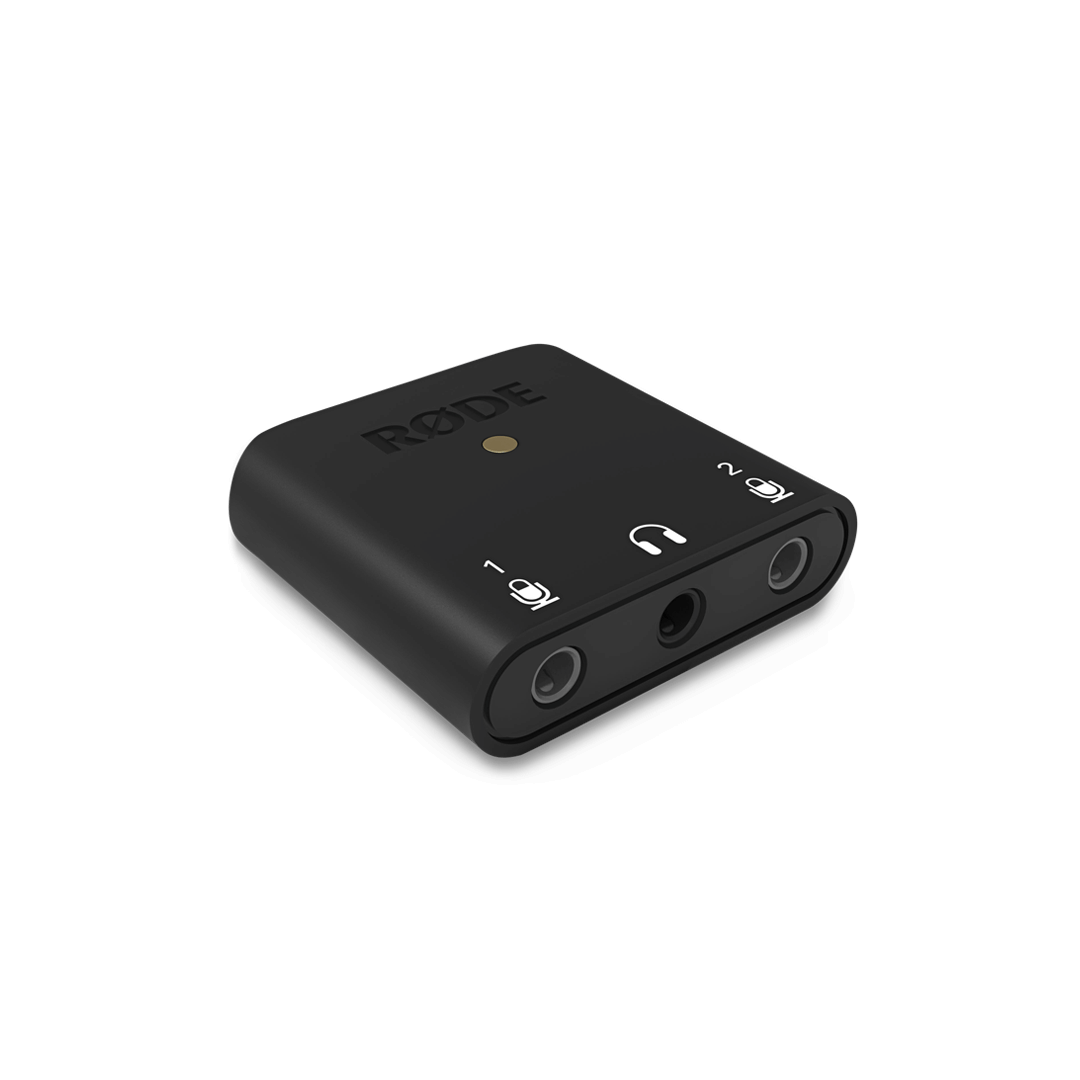
RØDE AI-Micro Ultracompact USB Audio Interface
The AI-Micro suits mobile interviews and voice recording when you already have compatible analog microphones and can manage levels in software. It combines two microphone inputs, host cables and headphone mo
Sources and method
- Introducing the new Scarlett 16i16, 18i16, and 18i20Focusrite · retrieved 2026-09-27Manufacturer
- Review: Focusrite Scarlett 18i20 4th GenDJ TechTools · retrieved 2026-09-27Editorial review
- Focusrite Scarlett 18i20 4th GenTwister6 Reviews · retrieved 2026-09-27Editorial review