Shure SM7B Cardioid Dynamic Vocal Microphone
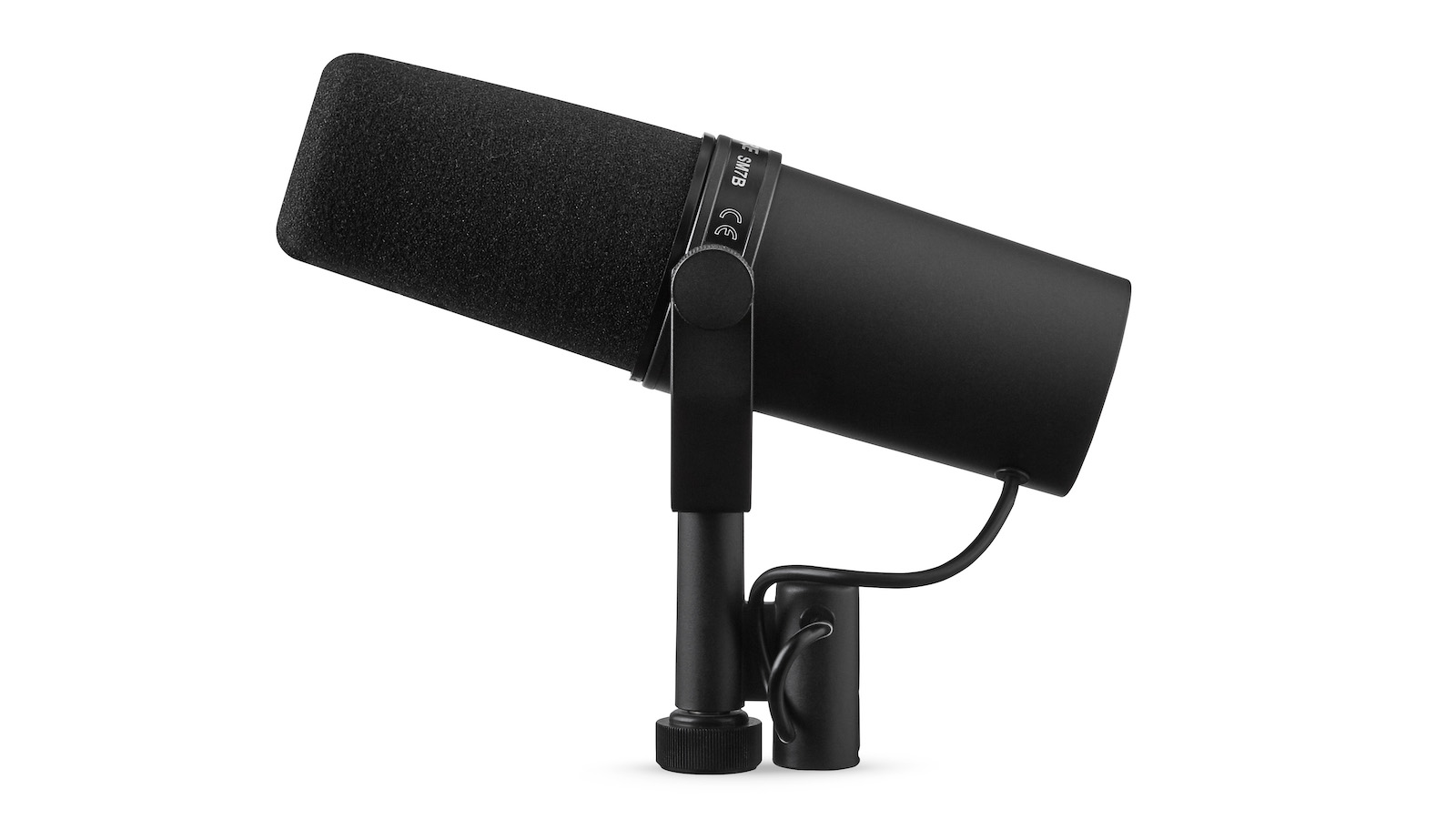
The SM7B is a sensible choice for close-miked speech and source-dependent studio recording when you can provide a suitable stand and enough clean preamp gain. Its yoke, foam and filters are useful capture tools, but this is not a direct-USB package or a guarantee of a quiet room. Check your voice, distance and existing interface before adding a booster.
Updated 2026-10-05

We may earn a commission from qualifying purchases.
Prices and sellers
No price information yet
Conditions and limitations
Close speech with suitable gain
- Capability
- Close-miked speech with distance-dependent bass response.
- Limitations
- Foam does not make every speaker's plosives disappear.
- No controlled equal-level room-noise rejection result was verified.
- Requirements
- Speak into the microphone end and keep a reasonably consistent distance.
- Provide a clean XLR microphone-preamp signal path.
Filters and foam change the recorded tone
- Capability
- Bass rolloff, presence boost and interchangeable foam offer different capture choices.
- Limitations
- Reducing low-frequency popping can also thin a voice.
- The windscreen's treble effect is a reviewer observation, not a measured attenuation curve.
- Requirements
- Compare settings on the actual voice or instrument before recording.
Compatibility
Computer recording requires an XLR interface
- Connection
- Connect the microphone to a mic-preamp input through XLR, then connect the interface to the computer.
- Functions
- Analog mono microphone capture
- Notes
- The microphone has no direct USB output. Overall performance depends on preamp gain/noise, the source and distance. Phantom power for an optional booster is separate from power for the passive microphone.
- Protocol
- Analog balanced XLR
- Result
- partial
- Source device
- Shure SM7B
- Target device
- Computer through an XLR microphone audio interface
Shure · Unique Photo · Shure · Soundref
Check boom payload and physical clearance
- Connection
- Use the integrated yoke and the supplied thread adapter when required.
- Functions
- Microphone support and angle adjustment
- Notes
- Official microphone net weight is 764 g; allow for cable loading and 197.1 mm body length. No particular arm's payload capacity was tested here.
- Protocol
- Mechanical 5/8-inch or adapted 3/8-inch mount
- Result
- partial
- Source device
- Shure SM7B integrated yoke
- Target device
- Microphone stand or boom arm
Where sources differ
Small published weight discrepancy
- Explanation
- Use the manufacturer's 764 g specification while preserving the retailer discrepancy. No measured unit weight or variant explanation was verified.
- Status
- unresolved
Reported issues and fixes
Strong plosives can remain
- Status
- reported
- Symptom
- Home Brew Audio reported residual popping in its vocal test.
- Workaround
- Try the larger A7WS and adjust technique. Bass rolloff may help, but the reviewer also heard reduced vocal richness.
Care and support
Named replacement wear and mounting parts
- Details
- The manual identifies replacement cartridge, windscreen and yoke hardware. Availability and service duration were not confirmed for a particular country.
Who it suits
Keep an existing interface or add gain?
- Check before buying
- Record the quietest passage you actually need at the planned microphone position.
- Check level and hiss, then verify any proposed booster's gain and phantom-power requirements.
- Constraints
- The existing preamp may have limited clean gain.
- Needs
- A usable recording level from the intended voice and distance.
- Reason
- The evidence supports testing the current chain before assuming a booster is mandatory.
- Tradeoffs
- An inline booster adds another device and can have its own power requirement.
- Assessment
- conditional
Will the microphone fit the desk workflow?
- Check before buying
- Compare the arm's payload range with the microphone mass plus attached cable load.
- Check microphone length, yoke width and connector clearance at the intended position.
- Constraints
- The arm must support the microphone and reach the speaking position.
- Needs
- Repeatable close speech without the support or cable getting in the way.
- Reason
- The yoke and adapter are documented, but arm-specific fit was not tested.
- Tradeoffs
- Mounting flexibility does not remove the need to check payload and physical clearance.
- Assessment
- conditional
Areas not yet researched (1)
No conclusion is available for these areas. This does not mean the Product has no limitations or reported issues.
- Ownership costs
Compatibility
| Use | Verdict | Evidence |
|---|---|---|
| An existing XLR microphone interface | maybe | The connector path fits, but usable gain and noise depend on the interface and recording situation; a connector match is not a performance guarantee. [3], [4] |
| Direct connection to a computer USB port | no | The SM7B needs an XLR audio interface or suitable XLR-to-USB interface between its analog output and the computer. [4] |
Reviewer consensus
Consensus rows require at least two distinct sources for the topic.
| Topic | Positive | Negative | Mixed | Reading | Evidence |
|---|---|---|---|---|---|
| Build and service | 2 | 0 | 0 | Agreed · 2/2 | [1], [3] |
| Buyer fit | 2 | 0 | 0 | Agreed · 2/2 | [6], [3] |
| Connection and phantom power | 1 | 1 | 0 | Debated · 1 v 1 | [3], [4] |
| Frequency response and voicing | 1 | 0 | 1 | Mixed · 1/2 | [6], [3] |
| Mounting and bundle identity | 2 | 0 | 0 | Agreed · 2/2 | [5], [3] |
Single-source notes
Alternatives
| Alternative | Where this Product wins | Where it loses | Pick it if |
|---|---|---|---|
| Shure SM7dB | The standard SM7B keeps a passive microphone signal path when you already own a suitable external preamp; no added onboard gain stage is needed for that workflow. [3], [4], [6] | The SM7dB incorporates a preamp, whereas the SM7B relies on the external signal chain for that gain. This is a setup difference, not evidence of a universal sound-quality winner. [3], [4] | Consider the SM7B with an adequate existing XLR preamp; consider the separate SM7dB when integrated gain would simplify the intended setup. Both still need an XLR recording path. |
| Neumann TLM 103-MT Black XLR Microphone with RØDE PSA1 Studio Boom Arm | The SM7B has an onboard bass-rolloff switch, while the TLM 103 microphone in the listed bundle has no high-pass filter. The SM7B itself is passive; the TLM 103 requires 48 V phantom power. [3], [6] | The SM7B microphone weighs 764 g against 450 g for the TLM 103 microphone. These are microphone weights, not the total weight of either recording setup or the Neumann boom-arm bundle. [3] | Compare the required signal chain and source before choosing. These are documented technical tradeoffs, not a level-matched listening or self-noise comparison; the named Neumann listing also includes a boom arm. |
| Specification | Shure SM7B Cardioid Dynamic Vocal Microphone | Neumann TLM 103-MT Black XLR Microphone with RØDE PSA1 Studio Boom Arm |
|---|---|---|
| Limitation | Home Brew Audio still heard some plosives in its own vocal recordings despite improved pop control. Windscreens do not guarantee a pop-free recording for every voice or technique. [2] | The microphone has no pad or high-pass filter. |
| Voltage | Not stated | 48 V |
| Weight | 0.764 kg [3] | 0.45 kg |
The review
Shure SM7B: check the signal chain before you buy
A close-miked XLR microphone
This is the standard Shure SM7B: a passive moving-coil microphone with a fixed cardioid pattern and an analog XLR output. The manufacturer specifies a frequency range from 50 Hz to 20000 Hz. The listing is the microphone rather than a complete computer-recording setup, so plan the interface, cable and support along with it. [5], [3], [4], [6]
The independent evidence is useful but bounded. Home Brew Audio recorded a repeated vocal script through a Focusrite 2i2, changing windscreens and bass rolloff; its author later described the distance and unprocessed signal. Soundref reported pleasing results on saxophone, trumpet and acoustic guitar. Those are listening experiences with disclosed sources, not calibrated measurements of noise rejection, distortion or long-term reliability. [2], [6]
Distance, foam and filters work together
Speak into the end and keep a repeatable position. Shure's close-talk guidance links a shorter distance with more bass and a longer distance with less. Begin with the standard windscreen and flat setting, then compare the larger A7WS, bass rolloff or presence boost against the problem you actually hear. The rear switches can be adjusted with a pen, pencil or screwdriver. [3]
Foam and filtering are tradeoffs rather than a cure for every recording. Home Brew Audio still heard some popping, while bass rolloff reduced the fullness of that reviewer's voice. Soundref heard slight high-frequency damping when comparing the windscreens with the uncovered microphone. Make a short comparison at a consistent position before committing to a setting; none of these observations means that low electrical sensitivity automatically removes room sound. [3], [2], [6]
Allow for the microphone and its support
Shure lists a net weight of 764 g and a body length of 197.1 mm. Check the arm's working payload range, extension and cable clearance rather than assuming that any desk arm will hold it. The reversible yoke and supplied thread adapter support different stand arrangements. Shure describes the internal shockmount as optimized for stand vibrations, which is a design feature rather than a measured guarantee against every desk bump. [3], [1]
The manual names replacement cartridge, windscreen and yoke-hardware parts, giving an owner concrete starting points for maintenance. Current local availability, warranty duration and a support-end date were not verified. A small retailer weight discrepancy was retained, with the official manufacturer value used above. Treat the robust construction and spare-part information as ownership context, not a quantified reliability promise. [3], [5]
Check gain and power separately
The SM7B has a low voltage output, so an XLR socket alone does not settle whether your recording chain is suitable. Shure recommends more than 60 dB of preamp gain and suggests an inline booster or stronger preamp when the interface falls short. This is manufacturer guidance, not a universal requirement to buy a booster. Test your usual voice at the intended distance and listen for hiss at the recording level you need. [5], [3], [6]
The microphone itself is passive and does not need phantom power. An optional inline activator may need phantom power to operate, which is a separate requirement. For computer use, audio conversion and gain come from a suitable interface rather than from the microphone. Do not confuse the manual's electromagnetic hum-pickup figure with an acoustic self-noise measurement; the latter was not established in the retained evidence. [3], [4], [6]
Is it for you?
Do you already have a suitable XLR recording chain?
Yes, and levels are usable Evaluate the microphone on your actual voice and preferred distance before adding an inline booster. [3], [6]
Yes, but the signal is too weak Check the current preamp's gain and noise performance, then consider a stronger preamp or compatible inline booster. [3], [6]
No, I need direct USB Allow for a separate XLR interface and mounting hardware, or choose a different direct-USB solution. [5], [3], [4]
Buyer questions
Before you buy
What should I check before buying a boom arm?
The microphone's official net weight is 764 g. Check the arm's working payload range and reach, the thread arrangement, and space for the yoke and cable. The included thread adapter helps with mounting, but no specific arm was tested for this research. [3]
Compatibility
Setup
Do I need an inline booster?
Not automatically. Shure recommends a high-gain preamp path, and an inline booster is one option if your current setup falls short. Check recording level and noise with your actual voice and distance first. The retained review reports good results can be possible without a booster, but it does not test every interface. [3], [6]
Everyday use
Limitations
Will the included foam remove all popping?
No universal result is established. The larger A7WS is intended for close-talk plosives and wind, but Home Brew Audio still heard some pops. Try position and windscreen changes; bass rolloff can help with low-frequency popping while also reducing vocal fullness. [3], [2]
Product images
Facts and specifications
Manufacturer manual
| Specification | Value | Source |
|---|---|---|
| Acoustic Design | Moving-coil dynamic microphone with a cardioid pickup pattern | [3] |
| Brand | Shure | [3] |
| Depth | 197.1 mm | [3] |
| Height | 149.2 mm | [3] |
| Width | 97.4 mm | [3] |
| Highest Frequency | 20 kHz | [3] |
| Lowest Frequency | 50 Hz | [3] |
| Impedance | 150 Ω | [3] |
| Materials | Dark gray enamel aluminum and steel housing with foam windscreen | [3] |
| Mount Type | Integrated reversible yoke for boom or stand mounting; supplied 5/8-inch to 3/8-inch thread adapter | [3] |
| Option | Manual lists RPM106 replacement cartridge, RK345 windscreen and RPM604 yoke nut/washer; a replacement-parts listing does not promise current local stock; Rear bass-rolloff switch reduces low-frequency response relative to the default flat setting; Rear presence-boost switch increases midrange brightness; switches can be moved with a pen, pencil or screwdriver; Standard windscreen for general use and larger A7WS windscreen for close-talk plosives and wind | [3] |
| Power Source | Passive moving-coil microphone; external phantom power is not required for the standard SM7B itself | [3], [6] |
| Weight | 0.764 kg | [3] |
Retailer listing
Other facts
| Specification | Value | Source |
|---|---|---|
| Limitation | Home Brew Audio still heard some plosives in its own vocal recordings despite improved pop control. Windscreens do not guarantee a pop-free recording for every voice or technique. | [2] |
| Setup Requirement | Shure recommends a preamp with more than 60 dB of gain, or an inline booster/stronger preamp when that gain is unavailable. This is setup guidance, not a test proving that every user needs a booster.; Shure recommends speaking into the end from 1–6 inches. Moving closer adds bass; increasing distance reduces bass. | [3] |
| Use Case | Soundref's reviewer used the SM7B on saxophone, trumpet and acoustic guitar, reporting a rounded top end and warm guitar tone. These are one reviewer's source-dependent impressions, not measured fidelity or maximum-SPL results. | [6] |
KnowSpec analysis
Best suited to a planned XLR recording setup
The SM7B is a sensible choice for close-miked speech and source-dependent studio recording when you can provide a suitable stand and enough clean preamp gain. Its yoke, foam and filters are useful capture tools, but this is not a direct-USB package or a guarantee of a quiet room. Check your voice, distance and existing interface before adding a booster.
Method: Comparison of disclosed vocal and windscreen listening methods, without inventing measurements.Separate signal gain from microphone power
The passive microphone still needs amplification in an interface or mixer. Shure's gain guidance and the reported booster comparison justify checking the whole signal chain, rather than treating an inline preamp as an automatic purchase. If you add an activator, its phantom-power requirement belongs to that accessory. A weak recording level and audible room sound need separate investigation.
Method: Manufacturer signal-path guidance, inspected passive circuit and scoped reviewer setup observations.Try the voice before choosing the filter
Home Brew Audio's repeated vocal script makes the filter tradeoff concrete: reducing popping also removed some richness from that voice, and some plosives remained in other samples. Soundref heard a slight treble change from the windscreens. These listening reports support a short trial with your own voice; they do not establish a universal tonal winner or a measured rejection advantage.
Method: Synthesis of manufacturer setup instructions and two bounded original-use reports.The support arm is part of the decision
Check the arm's payload range, reach and connector clearance using the microphone's official dimensions and mass, then allow for its cable. The included yoke and thread adapter help with mounting, while the manual's replacement-part codes provide a repair starting point. Neither the parts list nor the metal housing establishes a failure rate, local stock or a promised service lifetime.
Method: Official dimensional drawing, mounting instructions and replacement-parts list.Visible information gaps
Missing information is shown rather than guessed.
- Compatibilitynot found
- Power Sourcenot found
- Noise Levelnot found
- Risknot found
- Warrantynot found
Products in this content
-
RØDE K2 Variable-Pattern Studio Tube Condenser Microphone with Dedicated Power Supply
The K2 is worth auditioning when you want continuously variable pickup and the warm, detailed vocal character described in spec
-
Shure MV7X XLR Podcast Microphone, Black
Choose the black MV7X if you want a passive cardioid microphone for an XLR recorder or interface and are comfortable controlling the recording elsewhere. It fits an established multi-microphone podcast setup. A first-time bu
-
Neumann TLM 103-MT Black XLR Microphone with RØDE PSA1 Studio Boom Arm
The documented fixed cardioid pattern, presence voicing and quiet-source suitability give this bundle a coherent studio role. Rick Chinn's guitar audition ad
Sources and method
- The Shure SM7B AKA The SM57 on Steroids: The History and the FactsShure · retrieved 2026-10-04Manufacturer
- Review Of The Shure SM7B Dynamic Vocal MicrophoneHome Brew Audio · retrieved 2026-10-04Editorial review
- SM7B Cardioid Dynamic Vocal Microphone, User Guide version 2.6Shure · retrieved 2026-10-04ManualPDF
- SM7B or SM7dB: Which Microphone is Right for You?Shure · retrieved 2026-10-04Manufacturer
- Shure SM7B Vocal MicrophoneUnique Photo · retrieved 2026-10-04Retailer listing
- The Definitive Shure SM7B ReviewSoundref · retrieved 2026-10-04Editorial review