Shure MV7X XLR Podcast Microphone, Black
Choose the black MV7X if you want a passive cardioid microphone for an XLR recorder or interface and are comfortable controlling the recording elsewhere. It fits an established multi-microphone podcast setup. A first-time buyer must also plan for a cable, support and recording hardware; direct USB use and microphone-side mute controls are absent.
Updated 2026-10-05

We may earn a commission from qualifying purchases.
Prices and sellers
No price information yet
Conditions and limitations
Computer recording needs an external XLR signal chain
- Capability
- Provides an analog microphone signal to compatible XLR recording equipment.
- Limitations
- No direct USB connection is provided.
- The evidence does not establish a universal required preamp-gain setting or a measured noise floor for every interface.
- Requirements
- Use an XLR cable and an XLR microphone input on a recorder, mixer or interface.
- Set recording gain and monitoring on the external equipment; the microphone has no onboard controls.
Shure Incorporated · Shure Incorporated · Movies Games and Tech
Close-microphone speech and demonstrated musical uses
- Capability
- Documented for close vocal recording, with original comparison clips also covering guitar amplifiers, acoustic guitar, harmonica and male singing.
- Limitations
- The musical comparison used a Camden EC2 preamp and Genelec monitoring; it does not establish a universal ranking against the SM57.
- No calibrated plosive-rejection, room-noise attenuation or maximum-SPL result is established here.
- Requirements
- Use suitable XLR recording equipment and evaluate placement with the intended voice or instrument.
Shure Incorporated · Shure Incorporated · Movies Games and Tech · Kitarablogi
Compatibility
Analog XLR recording path
- Connection
- Connect with an XLR microphone cable to an appropriate microphone input.
- Functions
- Analog vocal or instrument capture
- Notes
- The microphone itself does not need phantom power. This is a documented connection class, not a bench-tested guarantee for every interface or gain setting.
- Protocol
- Analog microphone-level XLR audio
- Result
- full
- Source device
- Shure MV7X
- Target device
- XLR microphone-input mixer, recorder or audio interface
Shure Incorporated · Shure Incorporated · Movies Games and Tech
Direct computer USB connection
- Connection
- The MV7X has no direct USB audio connection; insert a suitable XLR audio interface or recorder.
- Functions
- Direct digital microphone capture
- Notes
- USB functionality described for the original MV7 is not an MV7X feature. Computer compatibility belongs to the external recording device.
- Protocol
- USB audio
- Result
- unsupported
- Source device
- Shure MV7X
- Target device
- Computer USB port without an audio interface
Where sources differ
No unresolved factual disagreement is asserted between the retained sources. Rejected snapshots and visibly unreliable review specifications were excluded rather than used as evidence.
Reported issues and fixes
No microphone-side gain or mute controls
- Status
- confirmed
- Symptom
- A speaker cannot change gain or mute using buttons on the microphone. This is a design limitation, not a reported hardware defect.
- Workaround
- Choose external recording hardware or software that provides the required gain, mute and processing controls.
Care and support
Documented replacement windscreen
- Details
- The manual identifies AMV7-K-WS as the black replacement windscreen. Current local stock and a guaranteed future supply period were not established.
Published yoke reassembly procedure
- Details
- The manual explains how to restore the yoke with the specified washer order if detached. Avoid fully removing adjustment screws during routine positioning.
Who it suits
An established podcast recording chain
- Check before buying
- Confirm the input and support hardware.
- Test the intended voice and placement.
- Constraints
- A suitable microphone input, support and cable must be available
- Needs
- Another analog microphone for an XLR podcast setup
- Reason
- The documented connection and intended use fit an existing XLR recording workflow.
- Tradeoffs
- The recording device handles gain, mute and monitoring
- Assessment
- suitable
Shure Incorporated · Shure Incorporated · Movies Games and Tech
A computer-only setup without extra hardware
- Check before buying
- Decide whether adding an XLR interface is acceptable.
- Constraints
- No additional recorder or audio interface
- Needs
- Direct computer recording without an external XLR device
- Reason
- The required direct-computer connection is absent from the microphone.
- Tradeoffs
- The MV7X leaves digital connection and controls to other equipment
- Assessment
- unsuitable
Areas not yet researched (1)
No conclusion is available for these areas. This does not mean the Product has no limitations or reported issues.
- Ownership costs
Compatibility
| Use | Verdict | Evidence |
|---|---|---|
| XLR microphone-input recording hardware | yes | The manual documents passive XLR output to mixers and interfaces. Gain sufficiency still depends on the external setup. [6], [4] |
| Direct USB microphone use | no | The MV7X is XLR-only. USB connection and computer support must be supplied by an external recording device. [4] |
Reviewer consensus
Consensus rows require at least two distinct sources for the topic.
| Topic | Positive | Negative | Mixed | Reading | Evidence |
|---|---|---|---|---|---|
| Build and service | 2 | 0 | 0 | Agreed · 2/2 | [6], [2] |
| Buyer fit | 3 | 0 | 0 | Agreed · 3/3 | [1], [2], [4] |
| Capsule and polar pattern | 2 | 0 | 0 | Agreed · 2/2 | [6], [1] |
| Connection and phantom power | 2 | 1 | 0 | Debated · 2 v 1 | [3], [6], [4] |
| Frequency response and voicing | 3 | 0 | 0 | Agreed · 3/3 | [3], [6], [2] |
| Mounting and bundle identity | 3 | 0 | 0 | Agreed · 3/3 | [3], [6], [5] |
Single-source notes
Alternatives
| Alternative | Where this Product wins | Where it loses | Pick it if |
|---|---|---|---|
| Shure MV7 (original USB/XLR model) | The original MV7 provides USB as well as XLR; the MV7X provides XLR only and needs external recording equipment for a computer connection. [4] | Pick the MV7X when you have chosen an XLR workflow; consider the original MV7 when its documented USB connection solves your setup requirement. | |
| Shure SM57 | In Berka's Camden EC2/Genelec comparison, the MV7X sounded broadly similar to the SM57 but somewhat warmer in the lower mids and softer in presence. This is a possible preference advantage, not an objective win. [2] | Audition the MV7X if that tonal direction appeals; this listening report cannot rank it above the SM57 for every voice or instrument. | |
| Neumann TLM 103-MT Black XLR Microphone with RØDE PSA1 Studio Boom Arm | The MV7X itself needs no phantom supply; the TLM 103 microphone requires 48 V phantom power. This is an electrical-setup difference, not a sound-quality ranking. [6], [3] | The MV7X's listed net weight is 550 g, versus 450 g for the TLM 103 microphone alone. The rival listing includes a PSA1 arm, so its complete bundle must not be compared using the microphone-only weight. [6], [5] | Use the connection and support requirements to compare these different packages; the available claims do not establish an equal-level acoustic performance winner. |
The review
Shure MV7X: an XLR microphone whose fit depends on the rest of your setup
Know which MV7-family microphone you are buying
This record covers the black Shure MV7X, ASIN B09BZZCGC8. It is a moving-coil cardioid microphone with a passive XLR output. Choose it around an XLR recording workflow: the computer connection requires an external recorder or interface, and the microphone has no onboard controls. [6], [5], [4], [3]
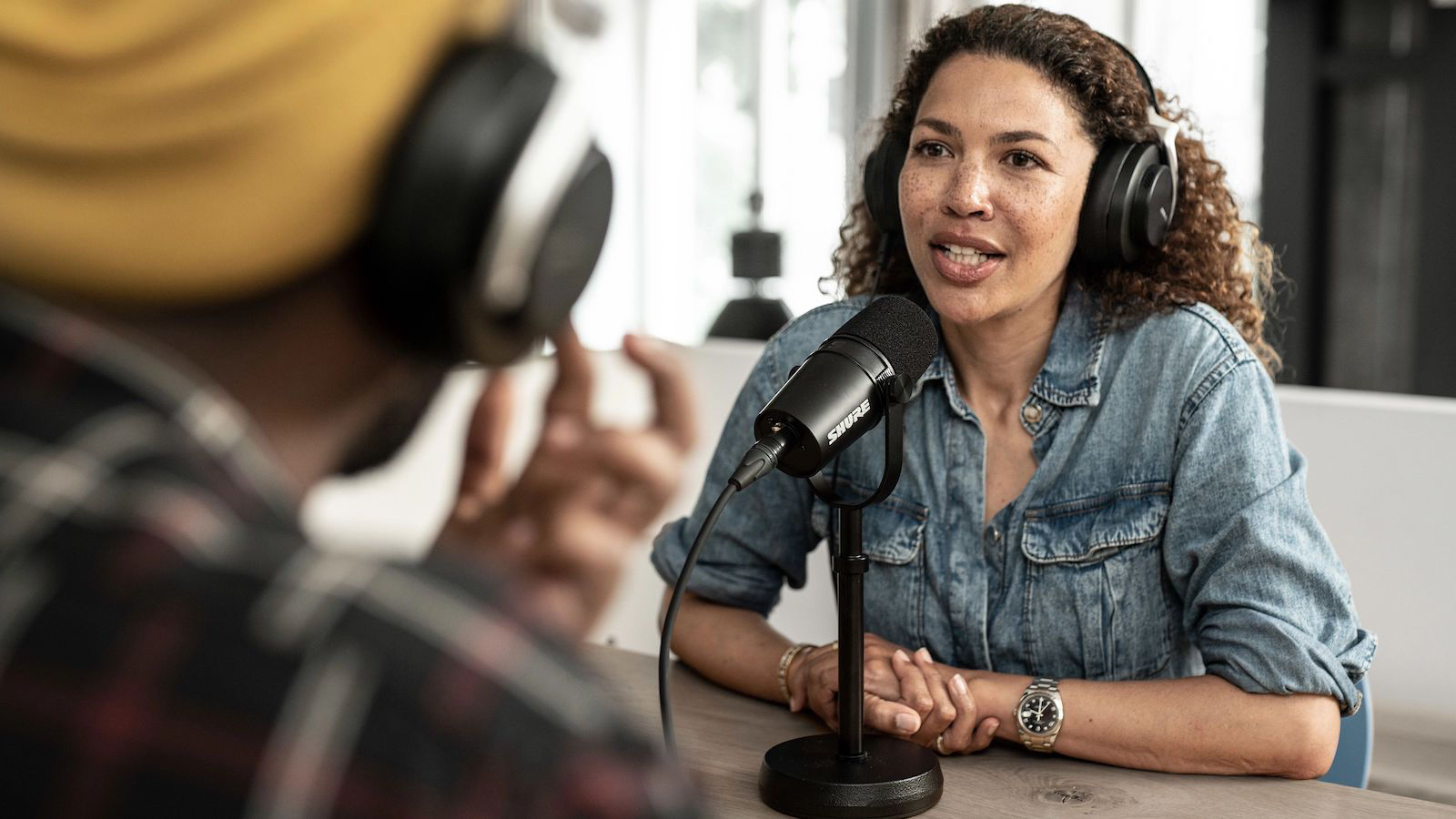
Check the whole setup rather than treating the microphone box as a complete recording kit. The exact listing names the microphone and thread adapter; a stand and interface are not listed, and the reviewed package did not include an XLR cable. Photographs showing those items in use should not be read as bundle contents. [5], [3]
Published response and listening evidence answer different questions
Shure specifies a response range from 50 Hz to 16,000 Hz. This manufacturer rating does not describe a ruler-flat response or establish independently measured performance. Voice Isolation combines the capsule, rear rejection and shock mounting; its passive construction should not be mistaken for automatic digital removal of everything around the speaker. [6], [4], [1]
Daniel Waite liked his voice recordings, although his article omits the setup detail needed to reproduce a measurement. Martin Berka used a Camden EC2 preamp and Genelec monitors for guitar amps, acoustic guitar, harmonica and singing. His comparative listening notes describe somewhat warmer lower mids and a softer presence emphasis in the MV7X. That is a subjective, setup-specific result, not a calibrated response measurement or universal ranking. [3], [2]
The retained evidence leaves calibrated noise, maximum-SPL and plosive-control results unresolved. It also does not establish long-duration stability or efficiency measurements. A short test in your own setup is therefore important, especially if your room is noisy or your close-speaking technique makes pop control a deciding requirement. [4], [3], [2]
Allow for the yoke and support hardware
The manual lists a net weight of 550 g. Its drawing shows an overall size including the yoke of 90.2 mm wide, 164 mm high and 153.6 mm front-to-back. These are manufacturer figures, useful for planning desk clearance and choosing a support rather than independent measurements of a review sample. [6]
The adjustable yoke uses a 5/8-27 mount, and the supplied adapter serves a compatible 3/8-inch thread. Keep the adjustment screws in place during routine repositioning; if the yoke is detached, follow Shure's washer-order instructions. The all-metal housing and favorable build impression are reassuring observations, but they do not amount to a durability test. [6], [3], [2]
Gain, monitoring and mute live in the recording chain
Connect the MV7X to an appropriate XLR microphone input. The passive microphone does not need phantom power. Its electrical sensitivity describes the voltage produced under the manufacturer's stated test conditions; it is not proof that every interface will achieve the same recording level or noise performance. Choose the external hardware with your speaking level and workflow in mind. [6], [4], [3]
Gain and mute must be handled outside the microphone, along with any signal processing. That division is useful when a recorder or mixer already manages the session, but it is a practical drawback when a speaker expects a button on the microphone. Include a reachable mute control and a monitoring path in your setup checklist. [6], [1], [3]
What to check before committing to the setup
For an existing XLR podcast rig, the main checks are the available microphone input, support hardware and external controls. For a laptop-only buyer, add the recorder or interface and cable to the plan before choosing the microphone. Shure identifies AMV7-K-WS as a replacement windscreen, but current local stock and long-term spare availability remain unverified. [6], [5], [4], [1], [3]
Is it for you?
Do you already have an appropriate XLR recording input?
Yes Check the available gain, cable, stand and external controls before adding the MV7X. [6], [5], [3]
No Include an XLR recorder or interface in your plan; the MV7X cannot provide a direct USB connection by itself. [4]
Must the speaker be able to mute from the microphone itself?
Yes The MV7X does not meet that requirement. Arrange a reachable external mute control or choose a microphone with the required control. [3]
No Its control-free body can fit a workflow where the recorder, mixer or software manages the session. [6], [1], [3]
Buyer questions
Before you buy
Compatibility
Setup
Everyday use
Where do I mute the microphone or change its gain?
Use the external recording hardware or software. There is no gain knob or mute button on the MV7X itself. [3]
Limitations
Will Voice Isolation guarantee a silent room or remove every pop?
No such result is established by the retained evidence. Shure describes a passive acoustic design; quantified room-noise and plosive-control results are missing. Test the intended room, voice and placement rather than assuming complete suppression. [4], [3]
Product images
Facts and specifications
Manufacturer manual
| Specification | Value | Source |
|---|---|---|
| Acoustic Design | Moving-coil dynamic capsule with a unidirectional cardioid polar pattern | [6] |
| Depth | 153.6 mm | [6] |
| Height | 164 mm | [6] |
| Width | 90.2 mm | [6] |
| Form Factor | Overall dimensions include the integrated yoke: 90.2 mm wide, 164 mm high and 153.6 mm front-to-back | [6] |
| Highest Frequency | 16 kHz | [6] |
| Lowest Frequency | 50 Hz | [6] |
| Impedance | 252 Ω | [6] |
| Interface | Passive analog XLR output for XLR mixers and interfaces | [6] |
| Materials | All-metal housing | [6] |
| Mount Type | Integrated adjustable yoke with a 5/8-27 threaded mount | [6] |
| Weight | 0.55 kg | [6] |
Retailer listing
| Specification | Value | Source |
|---|---|---|
| Brand | Shure | [5] |
| Model | MV7X | [5] |
| Option | Black microphone; exact ASIN B09BZZCGC8; The exact-ASIN listing's In the Box section lists the MV7X microphone and a 3/8-inch thread adapter; it does not list a stand or audio interface. | [5] |
Stated by reviewers
| Specification | Value | Source |
|---|---|---|
| Control Type | No onboard buttons or control switches; gain, mute and signal processing must be managed elsewhere in the recording chain | [3] |
| Option | Supplied 3/8-inch Euro threaded adapter for compatible stands or boom arms | [3] |
| Power Source | The passive dynamic microphone does not require phantom power | [3] |
Other facts
KnowSpec analysis
A fit for an existing XLR podcast setup
Choose the black MV7X if you want a passive cardioid microphone for an XLR recorder or interface and are comfortable controlling the recording elsewhere. It fits an established multi-microphone podcast setup. A first-time buyer must also plan for a cable, support and recording hardware; direct USB use and microphone-side mute controls are absent.
Method: Distinguish manufacturer mechanism descriptions and bounded reviewer impressions from missing calibrated performance evidence.Choose the input and controls before accessories
The microphone's passive output does not require phantom power, but that does not remove the need for microphone gain in the recording chain. The manual's electrical rating is a manufacturer specification, not a universal preamp-gain prescription. Confirm that your recording device provides the gain, monitoring and accessible mute control your workflow needs.
Method: Synthesis of verified manufacturer connection guidance, exact-ASIN identity and documented control limitations.Voice Isolation is not a room-silencing guarantee
Shure's Voice Isolation description concerns passive acoustic design. It does not establish active noise-removal processing or a measured amount of room rejection. The retained voice review is favorable but lacks test conditions. Evaluate your own voice, placement and room before relying on the microphone for an untreated recording space.
Method: Manufacturer mechanical specifications and service instructions, checked against exact-listing contents.Plan the stand as part of the setup
The integrated yoke provides adjustment, but it is not a desktop stand. Match the support to the microphone's documented weight and mount, and account for the yoke when checking clearance. Shure documents a replacement windscreen and yoke reassembly; neither establishes a guaranteed service lifetime.
Method: Electrical-output and connection synthesis; no calibrated gain sufficiency is inferred for a particular interface.Visible information gaps
Missing information is shown rather than guessed.
- Topic:Sustained Performancenot found
- Topic:Self Noise And Splnot found
- Topic:Measured Performancenot found
- Topic:Efficiencynot found
- Topic:Limitationsrights restricted
Products in this content
-
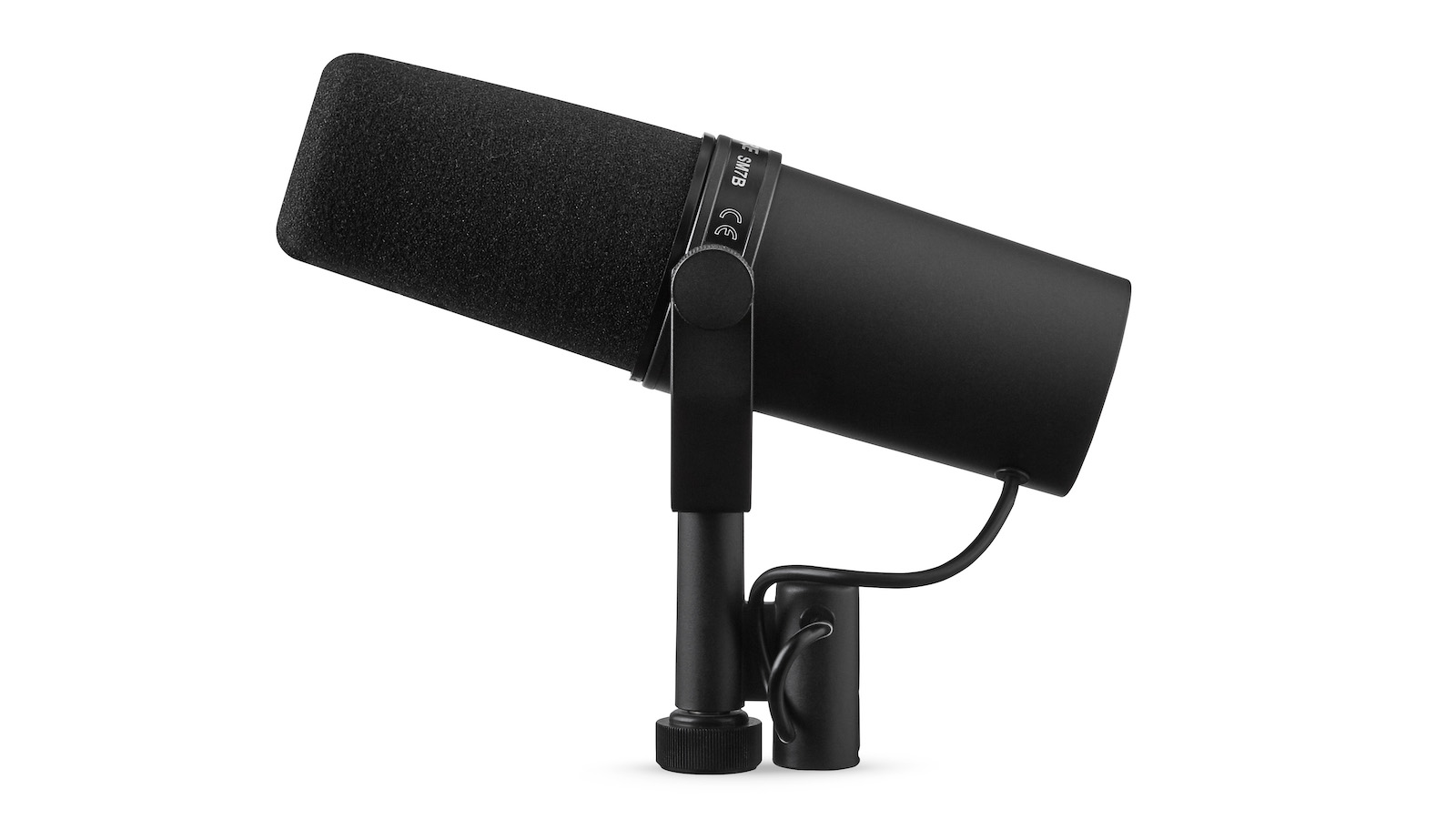
Shure SM7B Cardioid Dynamic Vocal Microphone
The SM7B is a sensible choice for close-miked speech and source-dependent studio recording when you can provide a suitable stand and enough clean preamp gain. Its yoke, foam and filters are useful capture to
-
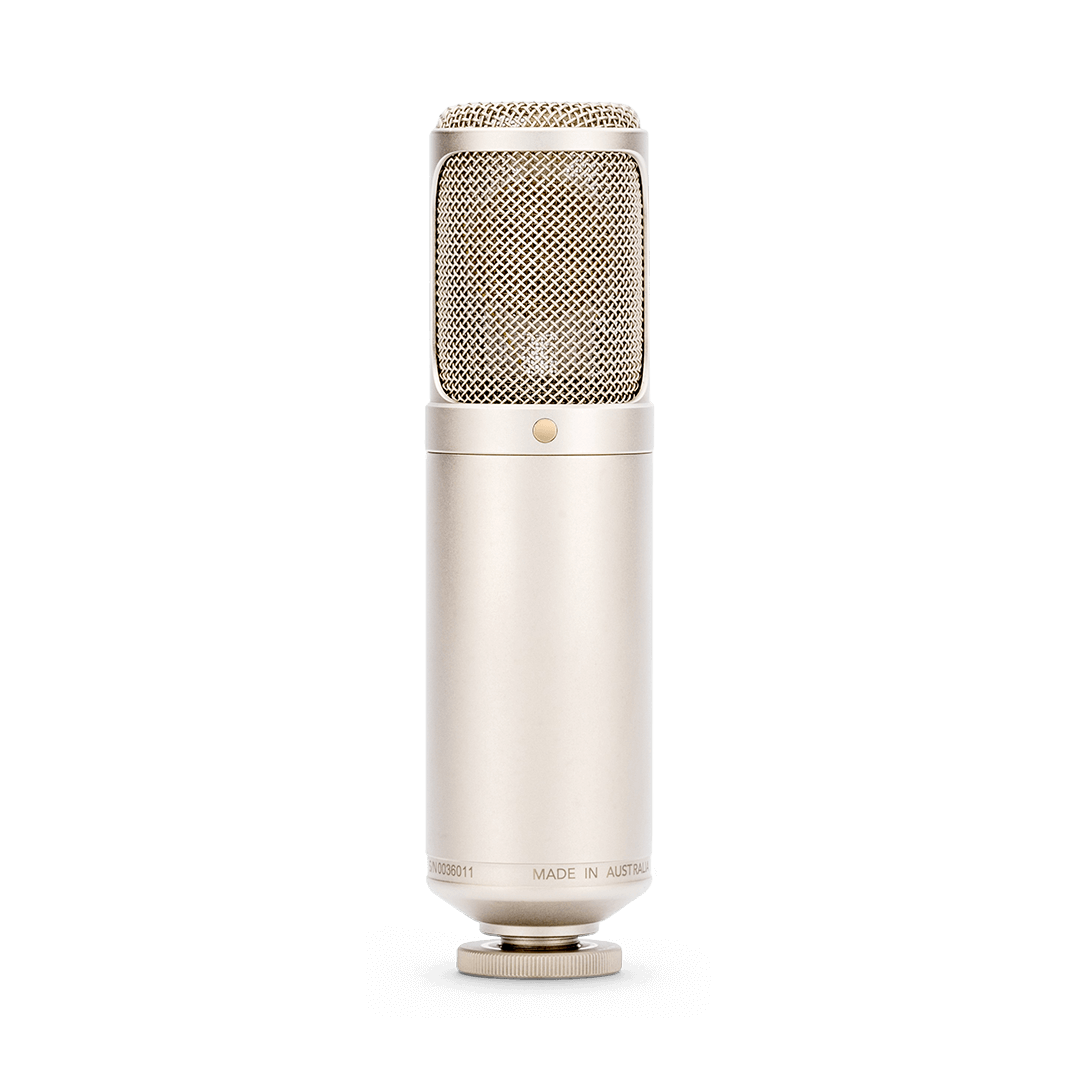
RØDE K2 Variable-Pattern Studio Tube Condenser Microphone with Dedicated Power Supply
The K2 is worth auditioning when you want continuously variable pickup and the warm, detailed vocal character described in spec
-
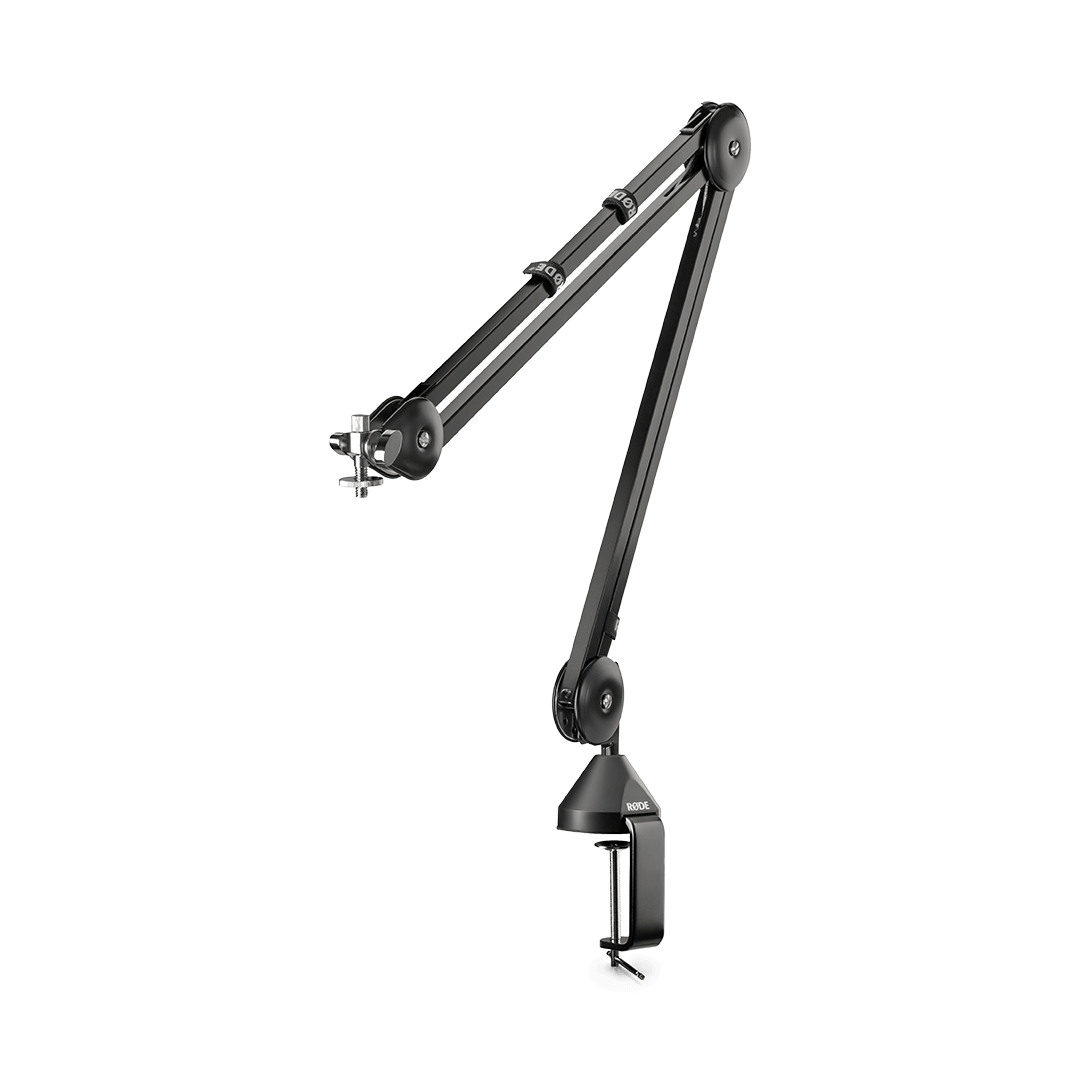
Neumann TLM 103-MT Black XLR Microphone with RØDE PSA1 Studio Boom Arm
The documented fixed cardioid pattern, presence voicing and quiet-source suitability give this bundle a coherent studio role. Rick Chinn's guitar audition ad
Sources and method
- MV7X - XLR Podcast MicrophoneShure Incorporated · retrieved 2026-10-05Manufacturer
- Testipenkissä: Shure MV7XKitarablogi · retrieved 2026-10-05Editorial review
- Review: Shure MV7XMovies Games and Tech · retrieved 2026-10-05Editorial review
- MV7 or MV7X: Which Mic is Right for You?Shure Incorporated · retrieved 2026-10-05Manufacturer
- Shure MV7X Podcast MicrophoneUnique Photo · retrieved 2026-10-05Retailer listing
- MV7X Podcast Microphone User Guide, version 1.2 (2021-J)Shure Incorporated · retrieved 2026-10-05ManualPDF