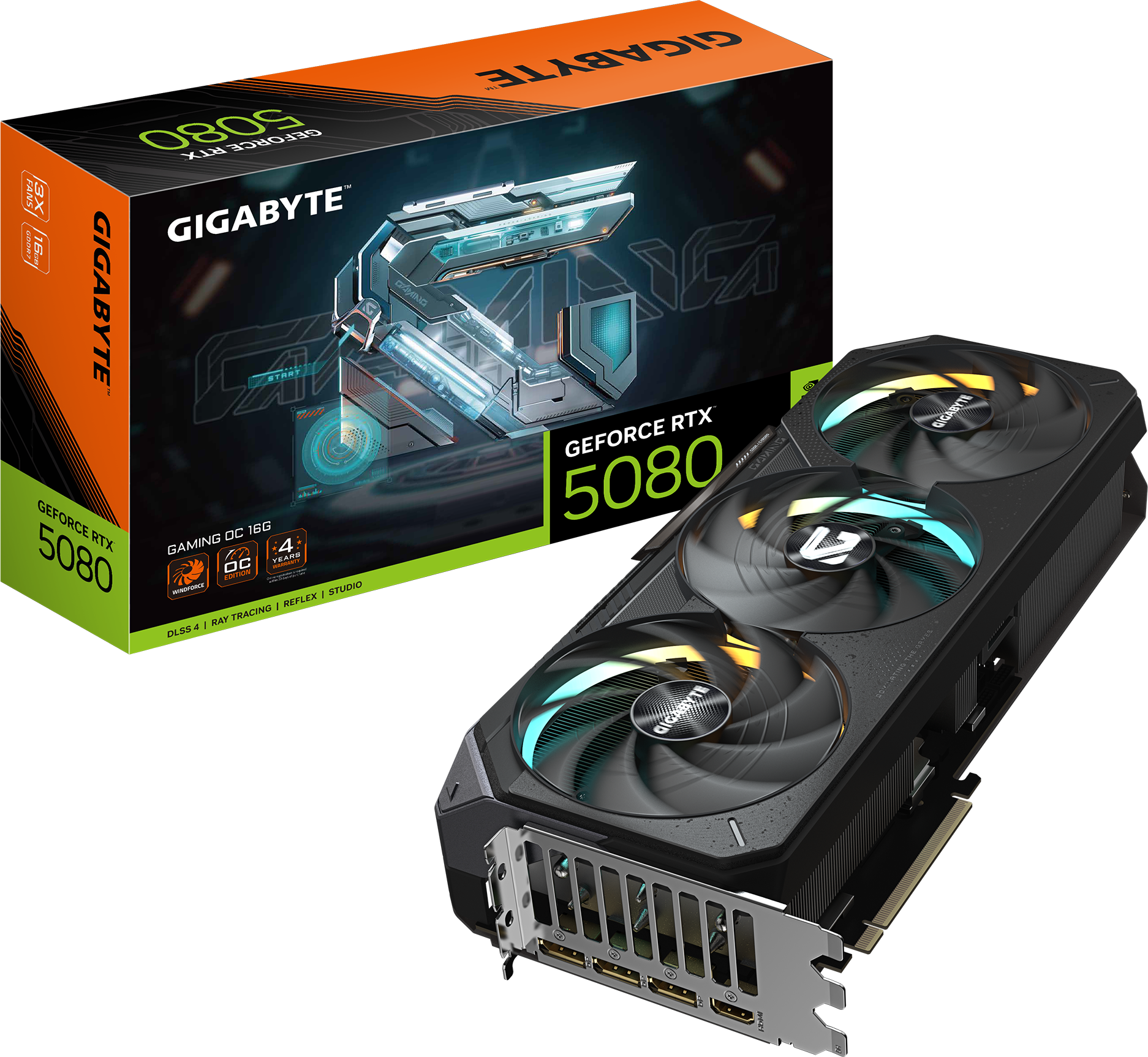
Gigabyte GeForce RTX 5080 Gaming OC 16G Graphics Card - 16GB GDDR7, 256bit, PCI-E 5.0, 2730MHz Core Clock, 3 x DisplayPort, 1 x HDMI, GV-N5080GAMING OC-16GD
The Gigabyte RTX 5080 Gaming OC suits buyers building a spacious performance-focused gaming PC who want strong rasterized results, DLSS frame generation, and substantial overclocking headroom. Its cooling results were favorable, but the long card, high board power, and software-specific overclocking workflow require planning before purchase.
Updated 2026-10-14

We may earn a commission from qualifying purchases.
Prices and sellers
No price information yet
Areas not yet researched (7)
No conclusion is available for these areas. This does not mean the Product has no limitations or reported issues.
- Conditions and limitations
- Compatibility
- Where sources differ
- Reported issues and fixes
- Care and support
- Ownership costs
- Who it suits
Measured performance
Boost clock
2730 MHzMeasured average boost clock during sustained gaming benchmarks · n=1 · Observed boost frequency under sustained gaming test loads.
Source [3]Noise level
46.5 dBAAcoustic sound pressure measurement at full benchmark load · n=1 · Recorded 46.5 dBA fan noise during Time Spy stress testing.
Source [5]Reviewer consensus
Single-source notes
- Buyer fit: Agreed · 1/1 · [4]
- Cooler and case fit: Weak point · 1/1 · [4]
- Display output capabilities: Agreed · 1/1 · [1]
- Driver and software stability: Weak point · 1/1 · [4]
- Limitations: Weak point · 1/1 · [4]
- Measured performance: Agreed · 1/1 · [4]
- Overclocking headroom: Agreed · 1/1 · [4]
- Power draw and transients: Weak point · 1/1 · [3]
- Rasterization performance: Agreed · 1/1 · [4]
- Ray tracing performance: Weak point · 1/1 · [4]
- Thermals and noise: Agreed · 1/1 · [5]
- Upscaling and frame generation: Agreed · 1/1 · [4]
- Vram adequacy: Agreed · 1/1 · [1]
“RTX 5080 sporting a 360W TGP”
Alternatives
| Alternative | Where this Product wins | Where it loses | Pick it if |
|---|---|---|---|
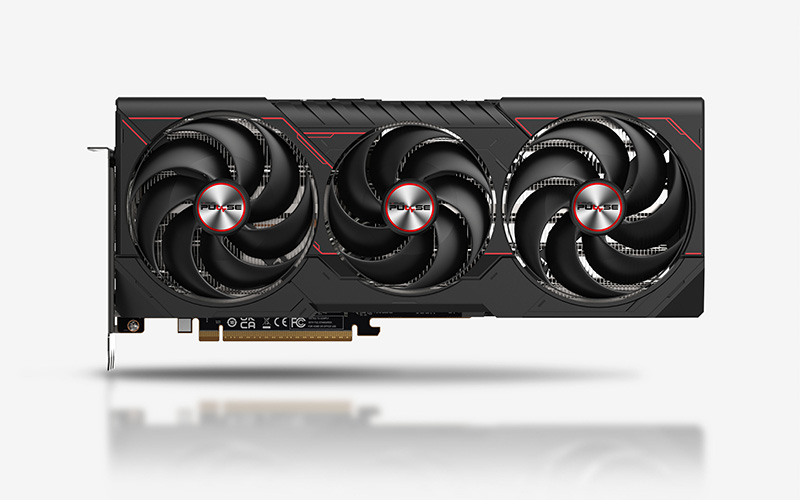
| SAPPHIRE PULSE Radeon RX 9070 XT | Both cards carry 16 GB of graphics memory, while this model documents three DisplayPort outputs and one HDMI output. [1] | At 340 mm and 360 W, this card is longer and has higher board power than the rival at 320 mm and 304 W. [3], [4] | Compare case clearance, board power, display outputs, and software features before choosing. |
| Specification | Gigabyte GeForce RTX 5080 Gaming OC 16G Graphics Card - 16GB GDDR7, 256bit, PCI-E 5.0, 2730MHz Core Clock, 3 x DisplayPort, 1 x HDMI, GV-N5080GAMING OC-16GD | SAPPHIRE PULSE AMD Radeon RX 9070 XT 16GB GDDR6 Graphics Card |
|---|---|---|
| Memory Capacity | 14.9011611938 GB US [1] | 14.9011611938 GB |
| Display Outputs | 3 x DisplayPort and 1 x HDMI US [1] | Two DisplayPort 2.1a and two HDMI 2.1 outputs |
| Card Length | 340 mm US [4] | 320 mm |
| TDP | 360 W US [3] | 304 W |
The review
Gigabyte GeForce RTX 5080 Gaming OC review: performance, cooling, and fit
Gaming performance
In independent gaming benchmark testing of conventional rasterized titles, the Gigabyte GeForce RTX 5080 Gaming OC demonstrated robust high-resolution rendering capabilities across demanding modern game engines. At native 4K resolution without ray tracing enabled, the tested graphics card delivered fluid performance across nearly all titles in the benchmark suite, with only Alan Wake 2 dipping below the 60 frames per second threshold. For gamers targeting high-refresh-rate 1440p displays or fluid 4K gaming on standard high-resolution display panels, this level of rasterization throughput ensures that modern graphics pipelines remain stable without immediate necessity for aggressive rendering compromises. However, when demanding ray tracing workloads were enabled at native 4K resolution, the computational load escalated significantly. Under full ray tracing conditions, only two of the tested benchmark titles managed to sustain an average performance figure above 60 frames per second. This clear divergence highlights that while the card's native raster performance provides a solid foundation for top-tier visual fidelity, intensive ray tracing at ultra-high resolutions introduces notable performance penalties that require careful expectation management for prospective buyers. Consequently, buyers committed to playing heavy ray-traced titles at native 4K will find that hardware-accelerated upscaling or selective visual adjustments become necessary to maintain fully fluid presentation. [4]
To bridge the demanding performance gap introduced by heavy ray tracing and native 4K computational overhead, NVIDIA's DLSS technologies play a decisive role in the overall performance profile of the RTX 5080 Gaming OC. In benchmark testing utilizing DLSS 4 frame generation and neural upscaling, title performance saw substantial transformation. In Cyberpunk 2077, for example, frame rates surged from an unplayable native average of 17.7 frames per second up to an impressively smooth 119.5 frames per second when DLSS 4 was engaged. This dramatic increase illustrates how advanced reconstruction algorithms redefine playable boundaries on the Blackwell architecture. Furthermore, the hardware demonstrated significant manual overclocking headroom above its factory settings, achieving an additional 425 MHz boost on the graphics core alongside a 2000 MHz effective increase on video memory clocks. This combination of architectural upscaling efficiency and tuning headroom ensures that enthusiasts who engage modern frame generation features can unlock exceptional sustained performance in even the most punishing visual environments. Players can thus comfortably leverage enhanced reconstruction to achieve high frame rates while retaining crisp image quality across current and upcoming titles. [4]
Cooling, power, and noise
Acoustic and thermal performance represent vital criteria for any high-wattage enthusiast graphics card, and the Gigabyte RTX 5080 Gaming OC addresses these demands through its substantial multi-slot cooling assembly. During rigorous synthetic stress testing in Time Spy, acoustic measurements recorded a noise level of 46.5 dBA while the triple-fan cooling system operated at 41 percent fan duty cycle, corresponding to approximately 1400 RPM. This acoustic profile demonstrates that the cooling apparatus can dissipate substantial thermal loads without forcing the fans into maximum acoustic ranges during typical intensive sessions. The underlying board power target for this RTX 5080 model is rated at a 360 W Total Graphics Power (TGP), representing a substantial energy requirement that translates into concentrated heat output under sustained operation. To maintain thermal stability over extended sessions, the triple-fan apparatus and large heatsink work in tandem to keep component temperatures disciplined. Prospective builders should ensure their chassis provides continuous airflow to expel warm exhaust air promptly, preventing internal ambient thermal saturation when running prolonged heavy workloads. Adequate case ventilation is therefore essential to preserve these favorable acoustic levels and prevent fan speeds from ramping up unnecessarily. [5], [3]
Case fit and connectivity
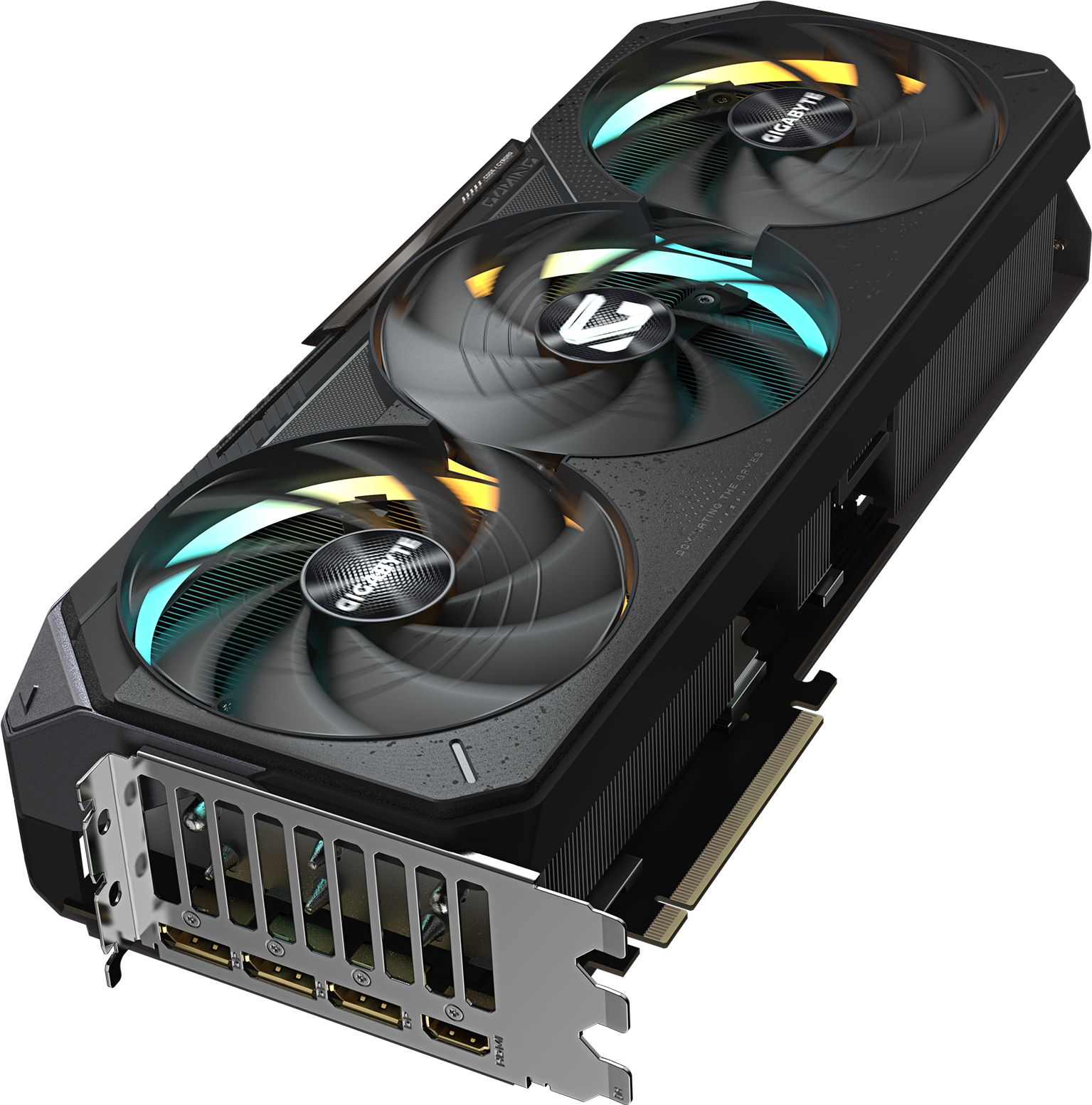
The physical footprint of the Gigabyte GeForce RTX 5080 Gaming OC is massive, requiring thorough pre-purchase case clearance verification. The card measures 340 millimeters in total length, 140 millimeters in width, and 70 millimeters in depth, requiring more than three full PCI expansion slots inside the host system chassis. In compact cases or crowded mid-tower enclosures, a card of this length can easily interfere with front-mounted liquid cooling radiators, reservoir mounts, or internal drive cages. Builders must account not only for horizontal length clearance but also for structural support, as the substantial weight of the heatsink assembly warrants the use of the included anti-sag bracket or support pillar to avoid long-term strain on the motherboard PCIe slot. In terms of display connectivity and memory architecture, the card is equipped with 16 GB of high-speed graphics memory as verified in technical specifications. For display output, the rear I/O bracket provides three DisplayPort connections alongside a single HDMI output port. This output configuration enables comprehensive multi-monitor workstation setups or high-refresh gaming displays connected via modern digital display standards, ensuring versatile connectivity across contemporary display ecosystems. Overall, physical dimensions and connectivity must be thoroughly verified against the buyer's planned enclosure and monitor hardware. [4], [1]
Tuning considerations
Software configuration and overclocking workflow for this custom graphics card presented specific practical considerations during hands-on evaluation. During reviewer testing, popular universal tuning utilities such as MSI Afterburner did not function correctly with this particular RTX 5080 board. As a result, the reviewer was required to utilize the proprietary Gigabyte Control Centre utility to execute clock adjustments and fan curve modifications. While Gigabyte Control Centre provided the necessary interface to apply the 425 MHz core and 2000 MHz memory overclocks, reliance on vendor-specific software can be a notable constraint for users who prefer unified third-party tuning suites. Prospective buyers should be prepared to work within the manufacturer's software ecosystem for low-level performance adjustments. Synthesizing the broader evidence, the review considers the Gaming OC a good choice within the series for enthusiasts building a spacious, high-performance PC. When paired with capable platform components and appropriate enclosure airflow, it delivers dependable high-end execution across modern gaming and creative demands. Enthusiasts seeking maximum stability should ensure their system firmware and control utilities are kept up to date, while taking full advantage of the card's generous clock margins through the supported vendor tuning interface. [4]
Buyer questions
Before you buy
Product images
Facts and specifications
Retailer listing
| Specification | Value | Source |
|---|---|---|
| Display Outputs | 3 x DisplayPort and 1 x HDMI US | [1] |
| Memory Capacity | 14.9011611938 GB US | [1] |
Measured by a lab
Other facts
| Specification | Value | Source |
|---|---|---|
| Buyer Fit | The review considers the Gaming OC a good choice within the series. US | [4] |
| Limitation | The card is long and occupies more than three PCI slots. US | [4] |
| Risk | At 4K with ray tracing, only the final two tested titles averaged above 60 fps. US; Time Spy fan testing recorded 41%, 1400 RPM, and 46.5 dBA. US | [4], [5] |
| Setup Requirement | The reviewer used Gigabyte Control Centre because MSI Afterburner did not work with the card. US; The tested card was overclocked by 425 MHz on the core and 2000 MHz on memory. US | [4] |
| Use Case | At 4K rasterized settings, only Alan Wake 2 fell below 60 fps in this test set. US; DLSS 4 raised Cyberpunk from 17.7 fps to 119.5 fps in the cited test. US | [4] |
KnowSpec analysis
Who should buy the Gigabyte RTX 5080 Gaming OC
The Gigabyte RTX 5080 Gaming OC suits buyers building a spacious performance-focused gaming PC who want strong rasterized results, DLSS frame generation, and substantial overclocking headroom. Its cooling results were favorable, but the long card, high board power, and software-specific overclocking workflow require planning before purchase.
Method: evidence_synthesisPerformance and platform tradeoffs
The evidence points to capable conventional rendering and a large uplift from DLSS in the tested title, while native ray-tracing results at the highest tested resolution were less consistent. Case clearance, power supply capacity, and the control utility used for tuning are practical constraints.
Method: evidence_synthesisVisible information gaps
Missing information is shown rather than guessed.
- Topic:Value Per Framenot found
- Source.Manufacturernot public
- Topic:Coil Whinenot found
- Topic:Efficiencynot found
- Topic:Sustained Performancenot found
Products in this content
-
ASRock Intel Arc B580 Challenger 12GB OC Graphics Card (B580 CL 12GO)
The ASRock Intel Arc B580 Challenger 12GB OC is a practical match for a compact gaming PC when you want a short card, 12 GB of memory, modern display outputs, and Intel XeSS features. Independent testing supports stable sustained operation,
-
SAPPHIRE PULSE AMD Radeon RX 9070 XT 16GB GDDR6 Graphics Card
The Sapphire Pulse RX 9070 XT offers a feature set centered on FSR 4 support, substantial video memory and four modern display outputs. Evidence also places it among the slower
-
ASUS TUF Gaming GeForce RTX 5070 Ti 16GB GDDR7 OC Edition Graphics Card
The ASUS TUF Gaming GeForce RTX 5070 Ti OC is a sensible fit for buyers who want substantial graphics memory, a quiet Q-mode cooler and DLSS Multi Frame Genera
Sources and method
- GIGABYTE GeForce RTX 5080 GAMING OC 16G Grafische KaartMegekko · retrieved 2026-09-28Retailer listingPDF
- Gigabyte GeForce RTX 5080 Gaming OC ReviewTechPowerUp · retrieved 2026-10-14Lab review
- RTX 5080 Roundup: MSI, Gigabyte, and PalitKitGuru · retrieved 2026-09-28Lab review
- Test Gigabyte GeForce RTX 5080 Gaming OCCHIP.pl · retrieved 2026-09-28Lab review
- GIGABYTE Geforce RTX 5080 Gaming OC 16G ReviewNoticias3D · retrieved 2026-09-28Lab review
- Gigabyte GeForce RTX 5080 Gaming OC Review - Thermal PerformanceTechPowerUp · retrieved 2026-10-14Lab review