Klipsch RP-8000F II 7.1 Home Theater System with 100FT of Speaker Cable
The RP-8000F II remains a plausible music and theater choice for buyers seeking passive towers and horn dynamics. The independent sensitivity result supports discussing amplifier efficiency, but it does not justify promising a particular output in every room. Allocate time for placement: the reviewer favored strong toe-in, while the broader evidence describes response unevenness. Audition at the intended seats before deciding whether the balance suits you.
Updated 2026-10-08

We may earn a commission from qualifying purchases.
Prices and sellers
No price information yet
Conditions and limitations
Passive main-speaker operation
- Capability
- Main-channel passive playback with optional separate elevation-speaker connections.
- Limitations
- The elevation connection requires separate speakers; it does not establish an integrated elevation driver.
- Requirements
- External amplification and suitable speaker wiring.
Compatibility
The manufacturer documents bi-wiring, bi-amping and separate RP-500SA connections. No new exact amplifier compatibility case was independently verified.
Where sources differ
The 98 dB manufacturer rating carries a half-space and in-room footnote; Spinorama reports 91.7 dB under a stated average. This identifies a method difference without asserting a corrected universal value.
Reported issues and fixes
Reviews were examined for limitations. Response unevenness and placement sensitivity are documented; no verified failure prevalence or issue-resolution history was found.
Care and support
Product documentation and reviews were examined, but exact ASIN-region service terms, spare-part availability and repair costs were not independently confirmed.
Ownership costs
Passive operation requires external amplification, but no verified running-cost or repair inputs support an ownership-cost calculation; prices are outside this update.
Who it suits
Choose with placement and amplification in mind
- Check before buying
- Confirm amplifier compatibility and listen with several practical orientations.
- Constraints
- External amplification and positions that allow an audition.
- Needs
- Passive floorstanding main speakers and horn dynamics.
- Reason
- The evidence supports this output-oriented use case, while placement observations justify a room-specific audition.
- Tradeoffs
- High measured sensitivity does not remove the need to check tonal balance at the intended seats.
- Assessment
- conditional
Secrets of Home Theater and High Fidelity · Frieve Audio Review · Spinorama
Reviewer consensus
Single-source notes
The review
Klipsch RP-8000F II: efficient towers that reward careful setup
What the evidence supports
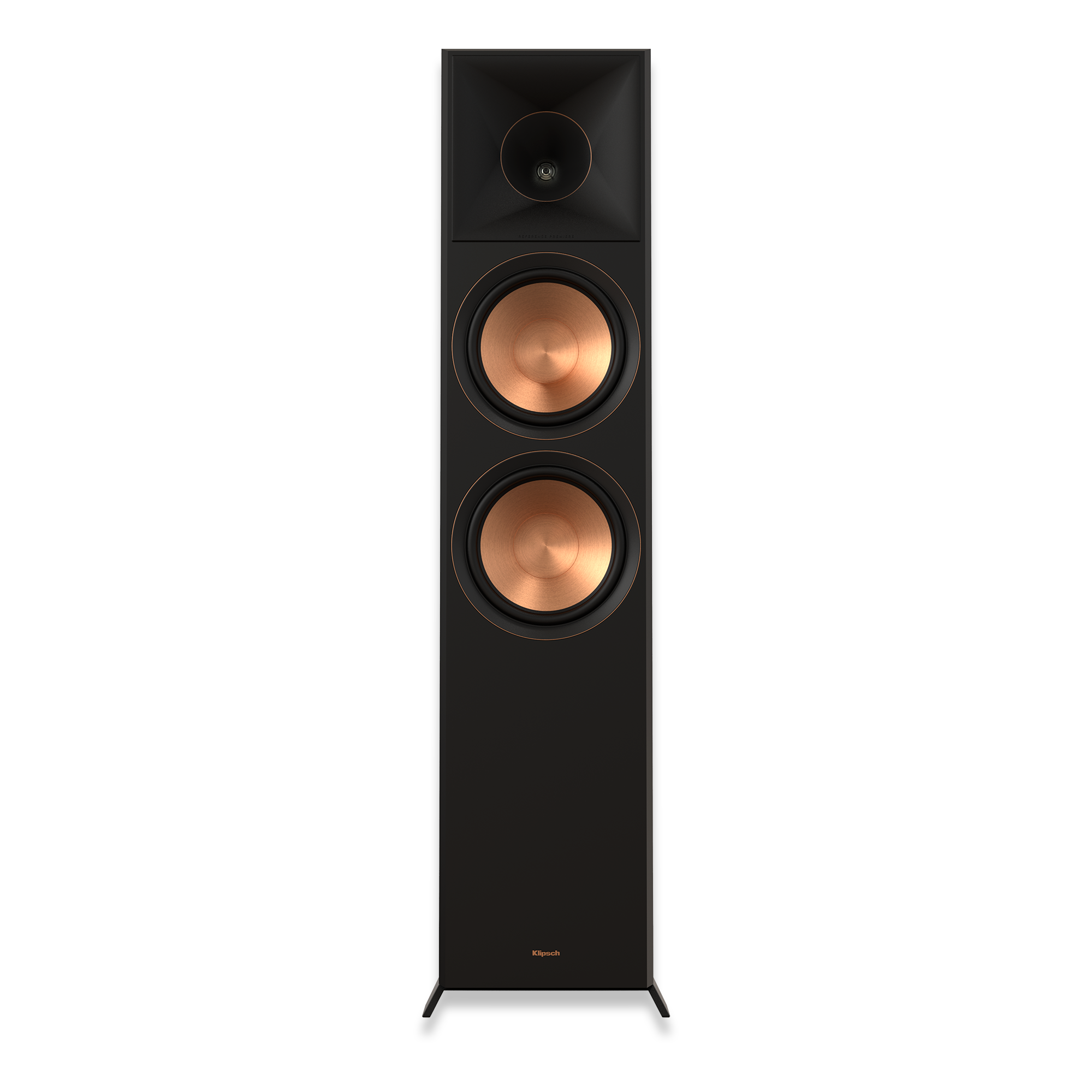
The Klipsch RP-8000F II is a passive floorstanding speaker, so the purchase belongs in a system plan that includes external amplification. It uses two 8-inch woofers and a rear-ported enclosure. These details establish its format and intended role, rather than guaranteeing how it will sound in an unfamiliar room. The existing independent buyer-fit assessment favors listeners seeking elevated output from modest amplification and the character of horn speakers. For a buyer, that makes an audition with the intended amplifier more useful than choosing from a specification headline alone. A passive tower is a sensible candidate when the goal is a pair of main speakers for music or a wired theater. The available evidence does not turn that role into a promise that every amplifier, listening distance, or room will work equally well. Treat the product's efficiency and its installation requirements as parts of the same decision. [2], [1], [5]
The earlier review evidence also describes musicality and favorable value. Those are editorial judgments, not physical quantities, and they do not establish a current financial comparison. Their useful implication is narrower: a listener interested in this presentation has a reason to audition the speaker, while a listener whose priority is uniform neutrality should examine the response and placement evidence closely. An appealing review conclusion should not replace checking the actual system fit. This assessment therefore preserves the positive listening context while treating the documented limitations as decision-relevant information. [3], [2]
Sound and efficiency
Spinorama reports measured sensitivity of 91.7 dB, averaged across 300 Hz to 3 kHz for 2.83 V at 1 m. The manufacturer specification gives 98 dB, and its footnote describes half-space anechoic input conditions together with in-room sensitivity. The numbers refer to different reporting contexts and should remain separate. Use the independent figure with its stated conditions when assessing the measurement evidence, and use the manufacturer figure as a labeled specification. Do not silently replace one with the other or treat their difference as a universal correction for your room. Erin's original measurement used a Klippel Near-Field Scanner, with the reference plane at the tweeter and the grille removed. That information helps identify what was tested. It does not say that an installed speaker at your sofa will reproduce exactly the same level or frequency balance. Amplifier matching still requires considering the intended installation. [1], [4], [5]
Jim Clements reported low distortion and a flat response in his bench evaluation. One explicit physical result is 0.14% total harmonic distortion at 1 kHz and 90 dB, measured with the microphone tip 1 m from the driver under test. Keeping the frequency, level, and microphone arrangement attached to that result makes it informative without overstating it. A low result at one frequency is evidence about that test, not a rating for every musical passage or a maximum output guarantee. Likewise, the reviewer's positive response description should be read as a finding under his setup rather than a declaration that all listening positions are flat. This distinction allows the favorable bench evidence to remain useful while leaving room for the different response behavior documented by other measurements and setup observations. [3]
Wiring options and elevation speakers
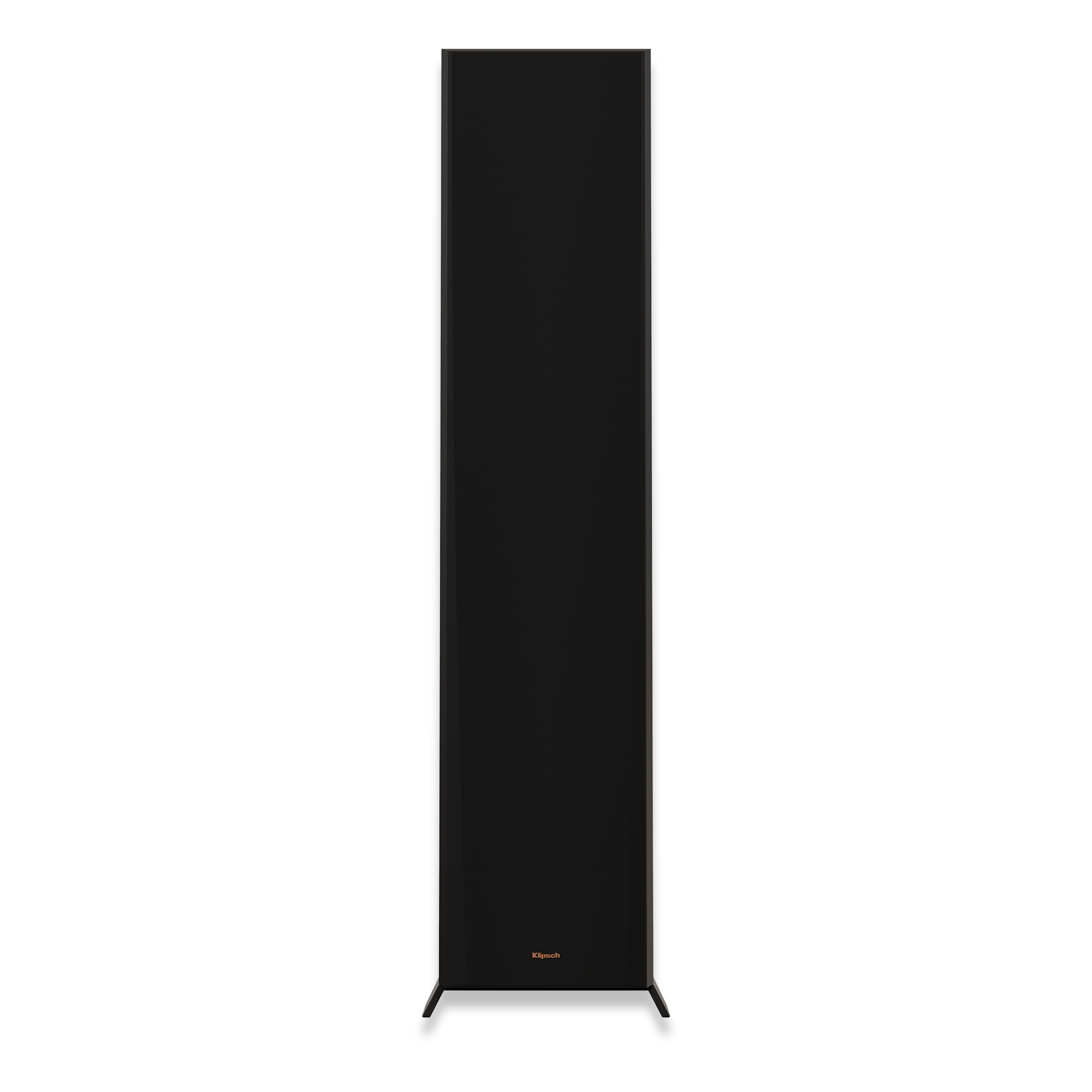
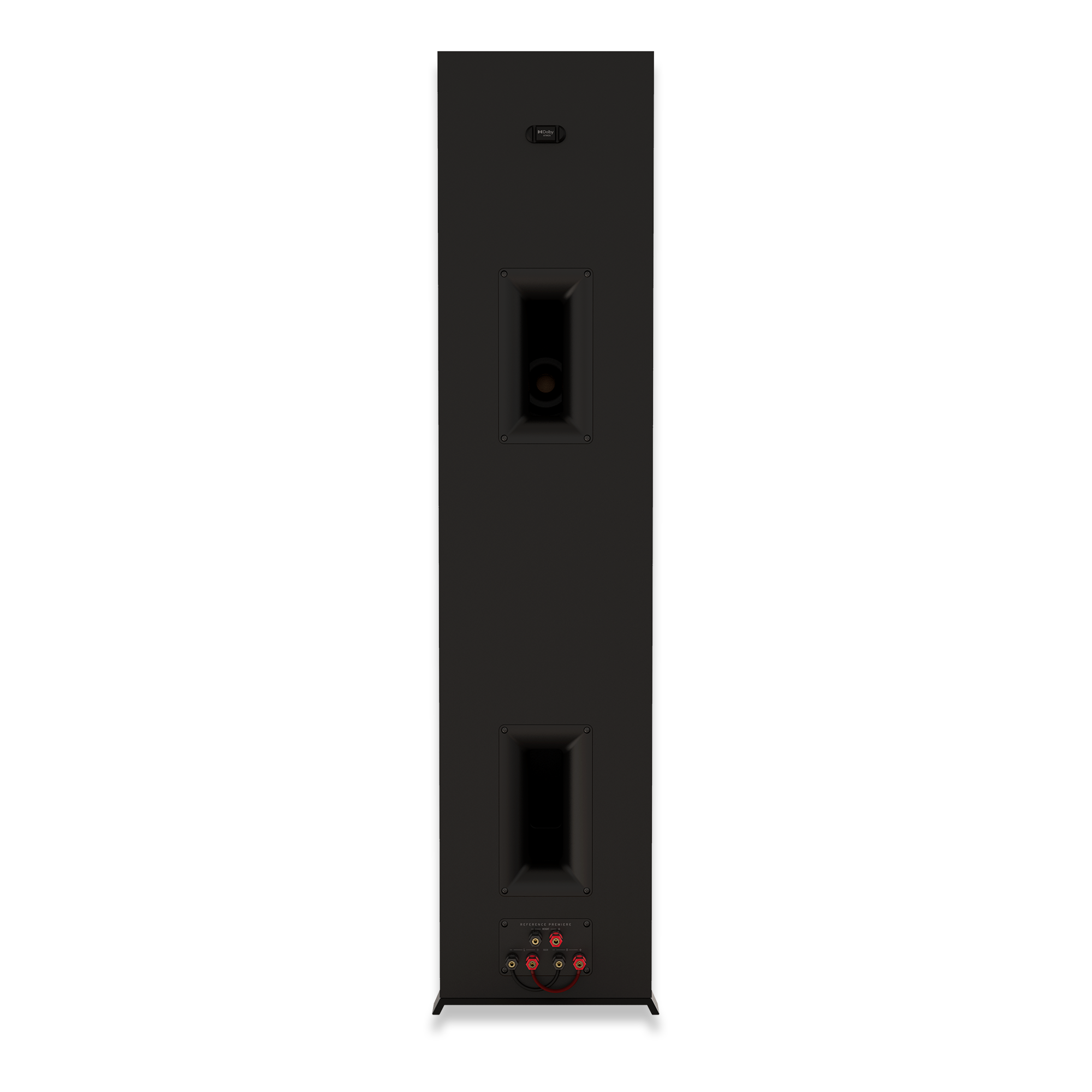
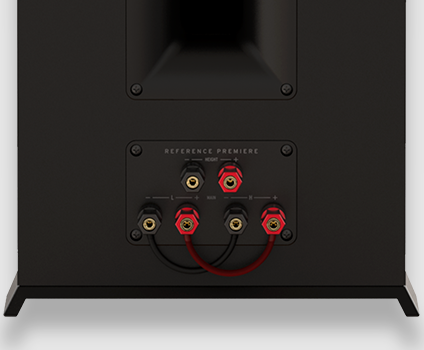
The manufacturer documents dual input terminals for bi-wiring and bi-amping. These are connection options for a passive speaker and should not be mistaken for built-in amplification. Choosing a more elaborate wiring arrangement also does not establish an audible improvement in the available evidence. Verify the amplifier's intended connection method before deciding which option belongs in your system. The product page additionally describes hidden rear connections for adding separate RP-500SA Dolby Atmos elevation speakers. This is an integration provision, not evidence that the RP-8000F II contains its own elevation driver or supplies an additional powered channel. For a buyer planning immersive audio, distinguish the main towers from the extra elevation speakers and the amplification needed by the complete arrangement. That distinction prevents an attractive feature label from becoming an incorrect assumption about what the tower itself includes. [1], [6]
Choose around your listening needs
The strongest case for the RP-8000F II remains its documented fit for listeners who want the output and character associated with this horn-speaker design in a passive floorstanding format. The measured sensitivity gives that discussion more substance than a headline specification alone. The main qualification is equally practical: allow time and space to establish a satisfactory orientation and response at the intended listening positions. Buyers seeking a simple decision should make the audition specific to those needs, rather than asking whether the speaker is universally good. The original NFS conditions and the separate setup observations also show why one favorable response description cannot stand in for every room. No long-term failure rate, universal amplifier match, or guaranteed room-correction outcome is established by this research. Those remain boundaries on the recommendation rather than reasons to invent stronger conclusions. [3], [2], [1], [4]
Bass data do not eliminate system planning
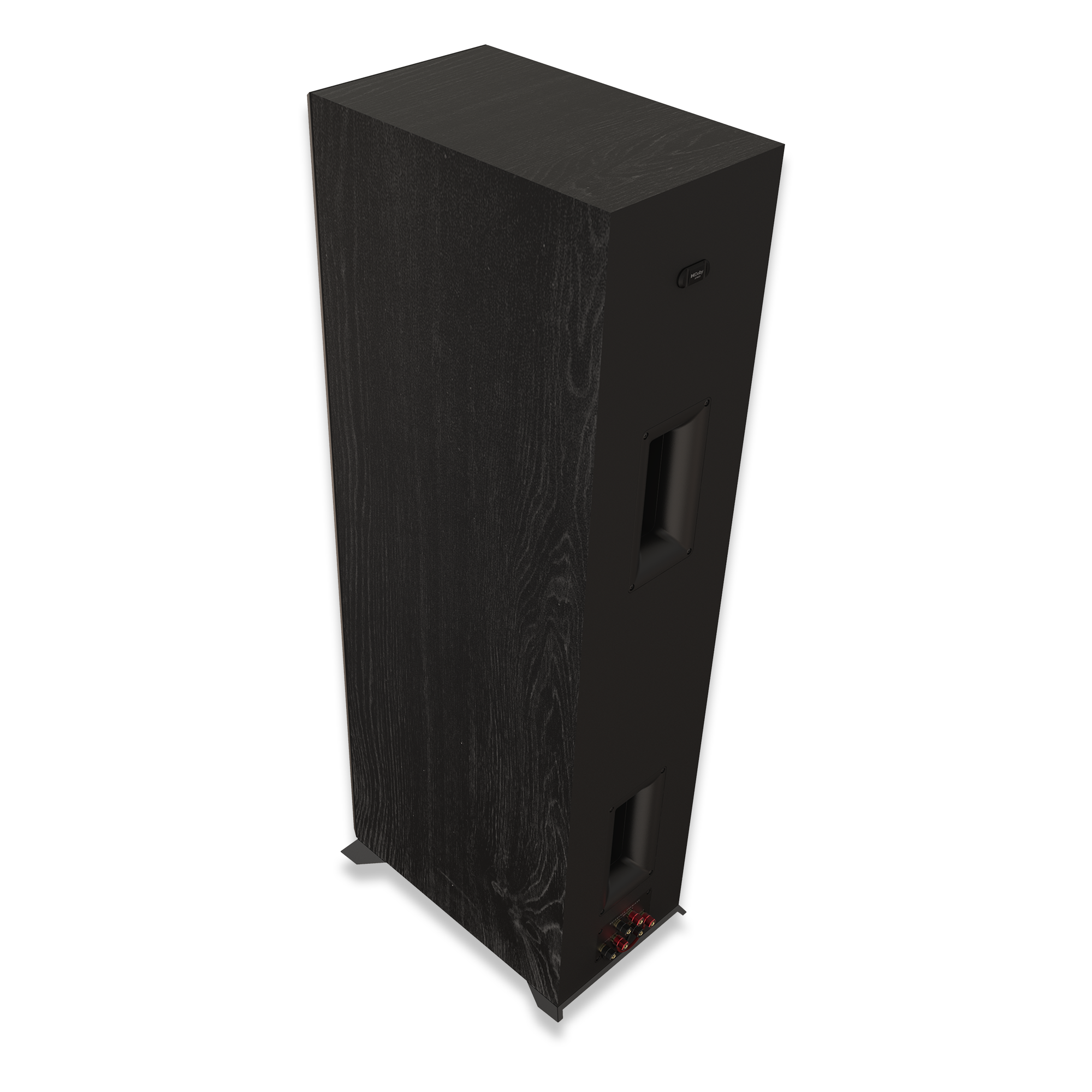
Spinorama's summary places the minus 6 dB point at 42.5 Hz relative to its reference. That is a reference-dependent result from the measurement data, rather than a guarantee of bass extension at every seat. It is useful because it adds a concrete boundary to a discussion that would otherwise rely on broad descriptions of bass performance. A buyer should still decide what low-frequency role the towers need to fill and whether the system includes separate bass support. The dual-chamber rear-ported construction identifies the enclosure approach, but that construction alone does not prove output capacity across the deepest bass frequencies. When evaluating a theater installation, keep extension, desired playback level, and the intended amplifier in the same conversation. An efficient main speaker and a particular low-frequency measurement are complementary pieces of evidence; neither establishes the complete bass performance of an untested room. [2], [5], [1]
Placement matters
The setup evidence deserves attention before deciding where these towers will stand. Clements found that stronger toe-in worked well and ended with the speakers aimed approximately at the main listening position. The broader review evidence describes response unevenness that can benefit from careful placement and room correction. These observations support experimentation, not a single compulsory angle for every room. Begin with a practical position, listen at the seats that matter, and compare orientation changes before treating one reviewer's arrangement as your final answer. The rear-firing ports are another reason to consider the installation as a whole rather than placing the cabinets solely for appearance. No exact universal wall clearance is established here. If furniture fixes the available positions, test those positions during an audition where possible. A buyer unable to adjust placement should give this documented sensitivity to setup particular weight. [3], [2], [5]
Measured performance
Sensitivity
91.7 dBKlippel NFS data summarized by Spinorama · ANSI/CTA-2034-A R-2020 · Average 300Hz–3kHz; 2.83V at 1 m. Erin used the tweeter reference plane with grille removed.
Manufacturer specification, not a measurement.
Source [1]Total harmonic distortion
0.14 %Single-frequency THD bench test · 1 kHz at 90 dB; microphone tip 1 m from the driver under test. Reviewer's bass tests were amplifier-limited; this is not a maximum-output rating.
Source [3]Low frequency minus 6db
42.5 HzSpinorama computation from Erin's NFS data · Minus 6 dB versus the repository reference; not an in-room extension guarantee or maximum-output test.
Manufacturer specification, not a measurement.
Source [1]Alternatives
| Alternative | Where this Product wins | Where it loses | Pick it if |
|---|---|---|---|
| Klipsch R-52C | The RP-8000F II is a passive floorstanding speaker suited to main-channel duties, while the R-52C is aimed at center-channel buyers. [1] | The R-52C is purpose-built for buyers seeking a center-channel speaker, which is a different role from the RP-8000F II floorstander. [1] | Choose the RP-8000F II for floorstanding left and right duties; choose the R-52C when the need is a dedicated center channel. |
| Specification | Klipsch RP-8000F II 7.1 Home Theater System with 100FT of Speaker Cable | Klipsch R-52C Powerful Detailed Center Channel Home Speaker - Black |
|---|---|---|
| Buyer Fit | A strong-value option for buyers seeking musical floorstanding speakers. US [3] | Home theater buyers seeking a center-channel speaker. |
Buyer questions
Before you buy
Compatibility
Are these powered speakers?
No. The evidence identifies the RP-8000F II as a passive floorstanding speaker, so it requires external amplification. [1]
Will a modest amplifier work?
The evidence says the speaker's headroom and efficiency make it useful for elevated output from modest amplification. [2]
Setup
Everyday use
What did bench testing find?
Jim Clements reported low distortion and a flat response in his setup. His 1 kHz test at 90 dB measured 0.14% THD with the microphone 1 m from the driver; that result is specific to those conditions. [3]
Product images
Facts and specifications
Manufacturer datasheet
| Specification | Value | Source |
|---|---|---|
| Compatibility | Hidden rear connections support adding separate RP-500SA Dolby Atmos elevation speakers. | [6] |
| Driver Size | 203.2 mm | [5] |
| Enclosure Type | Bass reflex enclosure with dual-chamber rear-firing Tractrix ports | [5] |
| Inputs | Dual input terminals support bi-wiring and bi-amping with outboard power amplifiers. | [6] |
| Sensitivity (SPL) | 98 dB | [5] |
Measured by a lab
| Specification | Value | Source |
|---|---|---|
| Lowest Frequency | 42.5 Hz | [1] |
| Sensitivity (SPL) | 91.7 dB US | [1] |
| Speaker Type | Passive floorstanding speaker US | [1] |
Other facts
| Specification | Value | Source |
|---|---|---|
| Buyer Fit | A strong-value option for buyers seeking musical floorstanding speakers. US; Best suited to buyers who want high output from modest amplification and enjoy horn-speaker dynamics. US | [3], [2] |
| Limitation | Measured response unevenness benefits from careful placement and room correction. US | [2] |
| Setup Requirement | The reviewer found that the speakers benefited from stronger toe-in toward the listening position. US | [3] |
KnowSpec analysis
Who should choose the RP-8000F II
The RP-8000F II remains a plausible music and theater choice for buyers seeking passive towers and horn dynamics. The independent sensitivity result supports discussing amplifier efficiency, but it does not justify promising a particular output in every room. Allocate time for placement: the reviewer favored strong toe-in, while the broader evidence describes response unevenness. Audition at the intended seats before deciding whether the balance suits you.
Method: Comparison of test conditions and setup evidencePerformance and setup trade-off
Spinorama reports 91.7 dB under stated measurement conditions, whereas the manufacturer rates 98 dB with a half-space and in-room footnote. These figures should not be substituted in amplifier calculations without accounting for method. The practical trade-off is an efficient tower whose final balance still depends on positioning; one positive bench assessment cannot establish uniform response across seats or rooms.
Method: Evidence synthesis; manufacturer documentation separated from physical bench results and editorial judgmentsVisible information gaps
Missing information is shown rather than guessed.
- Topic:Bass Extension And Outputnot found
- Topic:Comfort Usabilitynot found
- Topic:Dialogue And Imagingnot found
- Topic:Experience Qualitynot found
- Topic:Dispersion And Listening Windownot found
- Topic:Build Qualitynot found
- Warrantynot found
- Topic:Indoor Outdoor Durabilitynot found
Products in this content
-
Polk Audio Atrium 5 Outdoor Speakers with Powerful Bass (Pair, Black)
A permanent wired patio system is the supported buyer fit, but the owner report of poorer sound outside the canopy makes seating position a practical constraint. Use the adjus
-
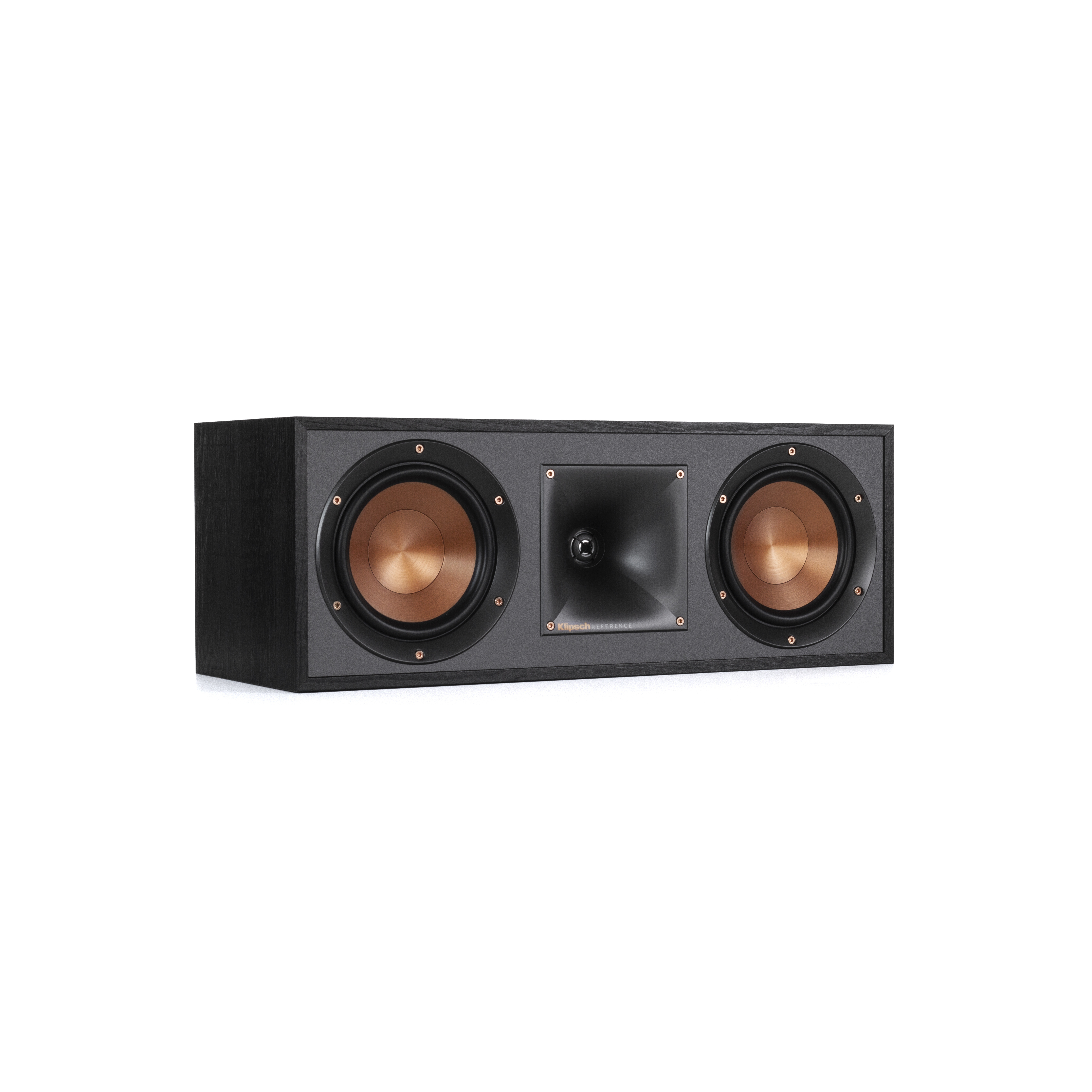
Klipsch R-52C Powerful Detailed Center Channel Home Speaker - Black
The R-52C's documented center-channel role and Easy Home Theater's firsthand dialogue impression make it a reasonable audition candidate for a home theater. ChoiceCheck's treb
-
Klipsch THX-5002-L In-Ceiling Speaker
The THX-5002-L offers a documented ceiling-integrated design, THX Ultra2 certification and a paintable grille, making it a conditional fit when appearance and installation are central to the brief. Its frequency range, impedance, sensitivit
-
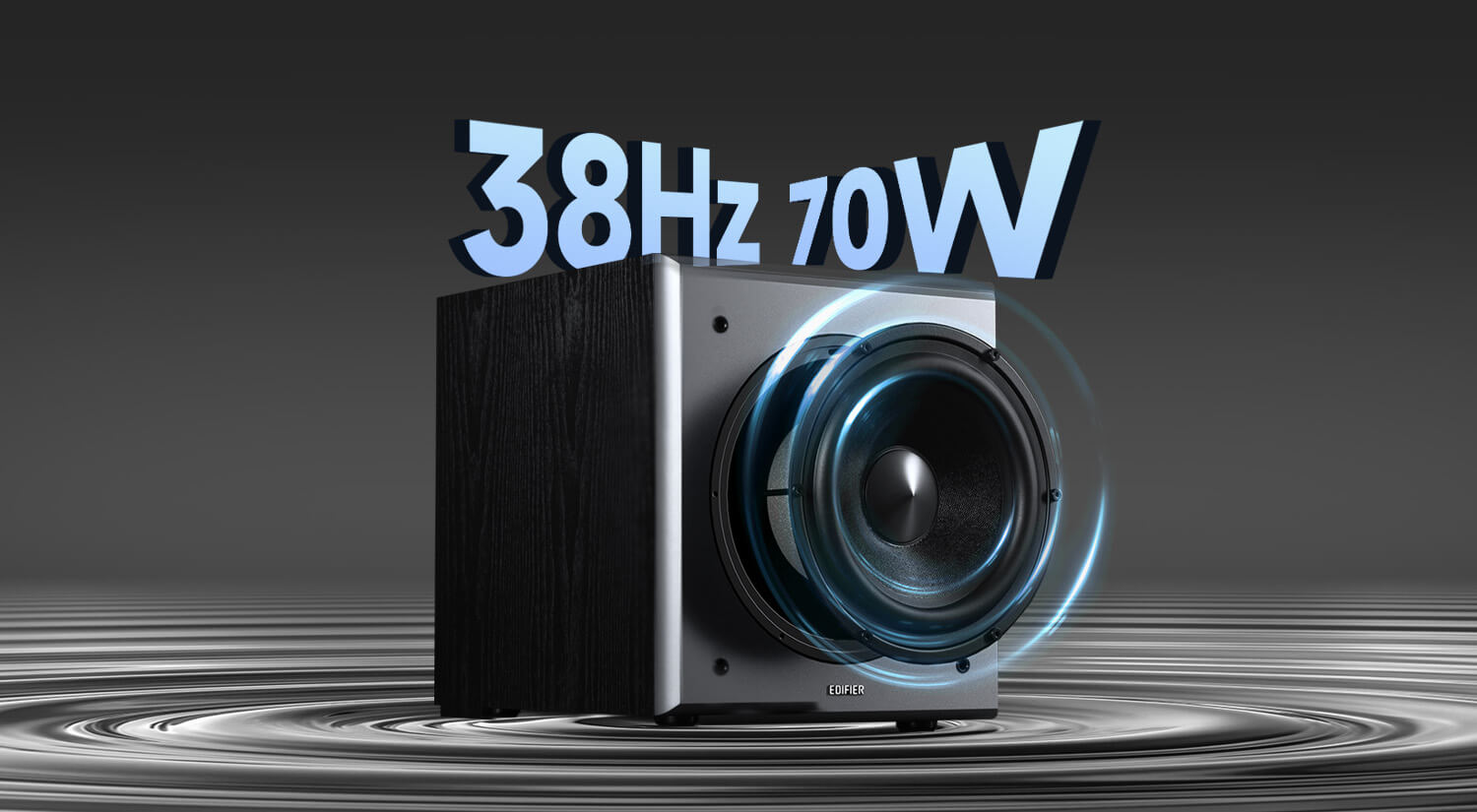
Edifier T5 Powered Subwoofer
The Edifier T5 is a sensible add-on for home listeners who want audible bass impact in music, movies, and games. Its published 38–160 Hz range, 70 W RMS output, and RCA Signal In/Out pass-through support straightforward integration. Plan sp
-
Klipsch RP-8000F II 2.0 Dual Floorstanding Speaker Pair (Walnut)
The RP-8000F II fits a fixed stereo or surround installation where the owner can aim the cabinets toward a main seat and check adjacent seats. Stable imaging in Clements' revi
-
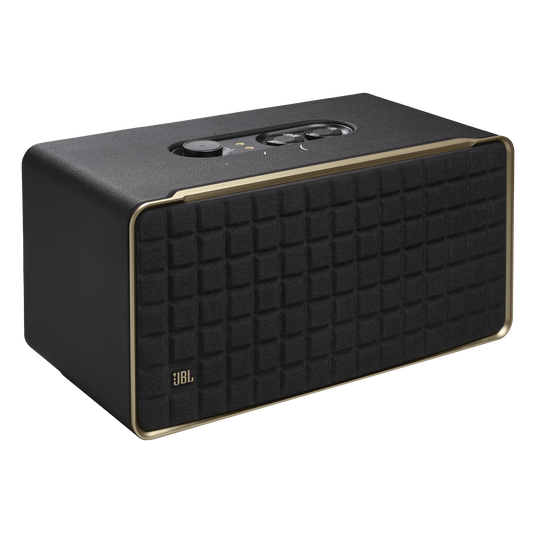
JBL Authentics 500 Black
The JBL Authentics 500 suits home listeners who want a single mains-powered smart speaker with room-filling output, built-in Wi-Fi streaming, automatic room adjustment, and a bold retro design. Reviews support its engaging sound, balanced o

Sources and method
- Measurements for speaker Klipsch RP-8000F IISpinorama · retrieved 2026-09-28Lab review
- Klipsch RP-8000F-II Product ReviewFrieve Audio Review · retrieved 2026-09-28Editorial review
- Klipsch RP-8000F II Floor-Standing Loudspeakers ReviewSecrets of Home Theater and High Fidelity · retrieved 2026-10-08Lab review
- Klipsch RP-8000F II Floorstanding Speaker ReviewErin's Audio Corner · retrieved 2026-10-08Lab review
- RP-8000F II specification sheet V02Klipsch via RealAudio · retrieved 2026-10-08DatasheetPDF
- RP-8000F II Floorstanding SpeakerKlipsch · retrieved 2026-10-08Manufacturer
- Klipsch RP-8000F II Floor-Standing Loudspeakers ReviewSecrets of Home Theater and High Fidelity · retrieved 2026-09-28Lab review