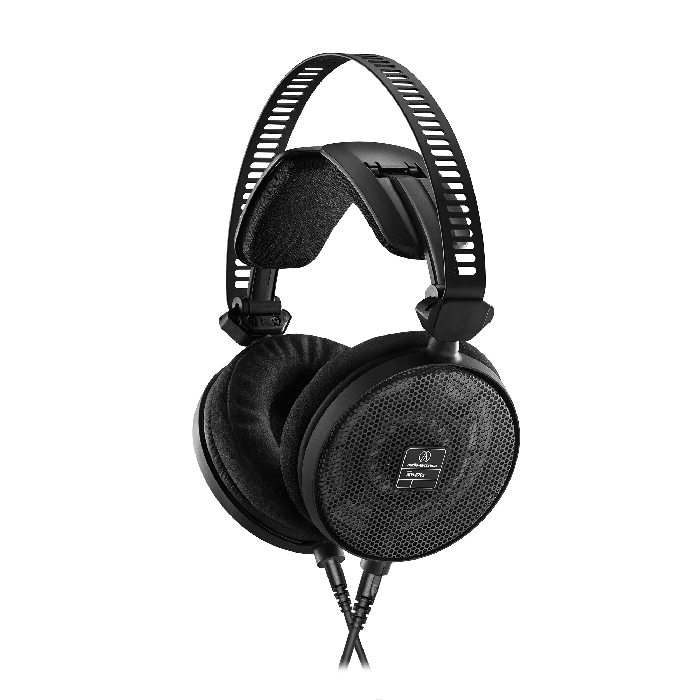
Audio-Technica ATH-R70x Professional Open-Back Reference Headphones
The ATH-R70x suits quiet-room listeners who value low weight and immersive spatial presentation. Check personal fit: low mass does not settle ear-cup clearance or sagging. Verify source output for its 470 ohm load, and allow desk space for the long detachable cable.
Updated 2026-10-08

We may earn a commission from qualifying purchases.
Prices and sellers
No price information yet
Conditions and limitations
Quiet-room wired listening
- Capability
- Open-back listening through an analog headphone output.
- Limitations
- No device-specific output test was obtained.
- Requirements
- Sound leakage must be acceptable.
- Check the actual source output for the published load.
Compatibility
Analog headphone connection
- Connection
- 3.5 mm stereo plug or 6.3 mm stereo adapter.
- Functions
- Wired audio playback
- Notes
- Connector format is documented; source-specific output capability remains unverified.
- Protocol
- Analog stereo
- Result
- partial
- Source device
- Analog headphone output
- Target device
- Audio-Technica ATH-R70x
Where sources differ
Manufacturer lists 3 m while Tape Op uses approximate feet wording. No verified distinct cable variant was identified, so the specification is retained and no exact discrepancy is fabricated.
Reported issues and fixes
Reported sagging on one tester
- Status
- reported
- Symptom
- One Sonarworks tester experienced insufficient clamping force and sagging.
Care and support
Documented replacement ear pads
- Details
- The Japanese manufacturer support page lists HP-R70x ear pads. Local stock and long-term availability are not established.
Ownership costs
Replacement pad documentation informs maintenance planning; no prices, replacement interval or total ownership calculation was researched.
Who it suits
Choose after room, source and fit checks
- Check before buying
- Try ear clearance and stability.
- Confirm the source output.
- Confirm exact-model parts availability locally.
- Constraints
- Leakage must be acceptable.
- Needs
- Stationary listening with an analog source.
- Reason
- Confirm room suitability, actual output and personal fit before choosing this exact model.
- Tradeoffs
- Long cable reach can crowd a desk.
- Assessment
- conditional
Audio-Technica · Headphones.com · Sonarworks · Audio-Technica · Audio-Technica
Reviewer consensus
Consensus rows require at least two distinct sources for the topic.
| Topic | Positive | Negative | Mixed | Reading | Evidence |
|---|---|---|---|---|---|
| Amplifier requirements | 0 | 0 | 2 | Mixed · 2/2 | [7], [7] |
| Comfort & usability | 1 | 1 | 1 | Mixed · 1/3 | [5], [7], [1] |
| Isolation & leakage | 0 | 1 | 1 | Mixed · 1/2 | [7], [2] |
Single-source notes
The review
Audio-Technica ATH-R70x buyer guide
What it is
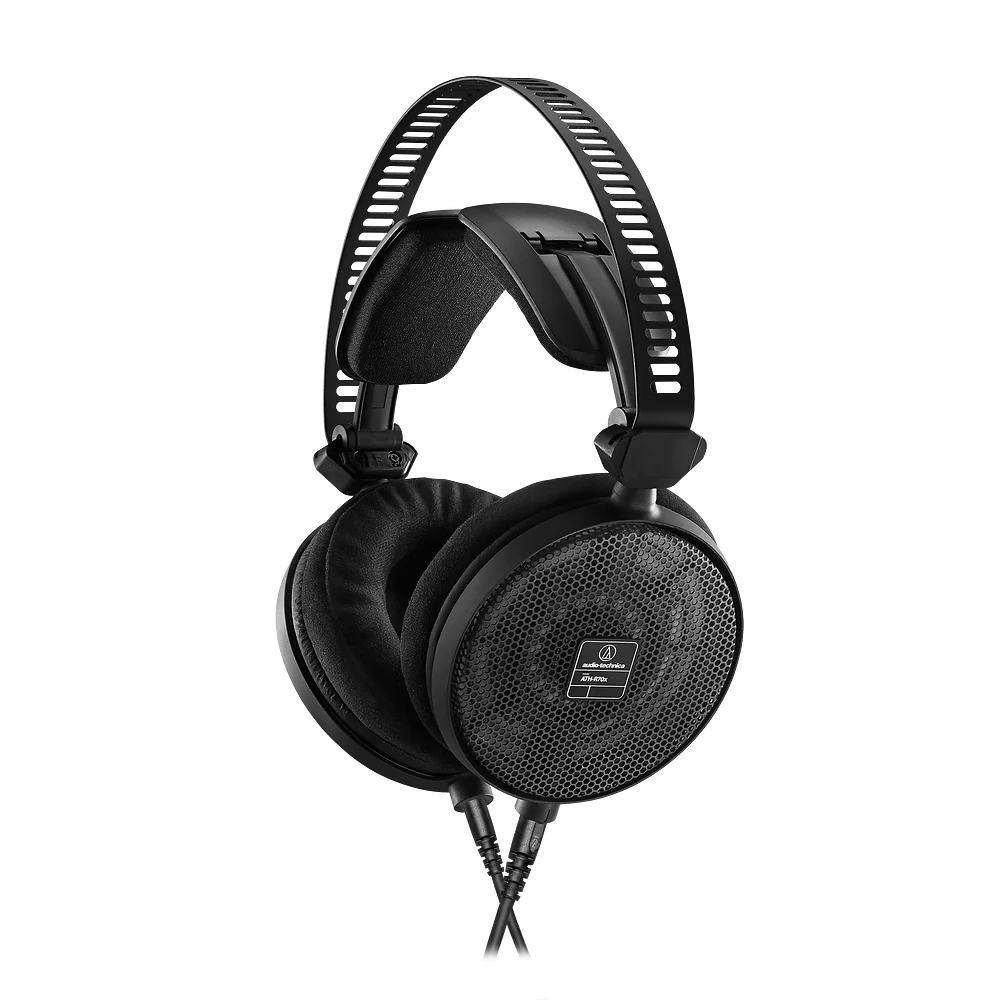
The Audio-Technica ATH-R70x is an open-back dynamic headphone with a manufacturer-specified 45 mm driver and a 210 g body measured without its cable. This guide concerns the original R70x, so specifications or experiences attached to a similarly named model should not silently replace the evidence here. Its clearest attractions are low physical weight and the spatial presentation praised in independent listening. Those advantages make it worth considering for a stationary listening or mixing setup, provided that the room and source are appropriate. Start with the environment rather than the reference-headphone label. The manufacturer documents open-back construction, which makes acoustic privacy and nearby people relevant buying considerations. No quantified leakage benchmark was verified in this pass. An open listening experience is attractive when the room permits it; if privacy is a requirement, check that requirement explicitly before buying. Next check the actual headphone output and try the fit. The published impedance identifies the electrical load, while the fit reports identify separate physical uncertainties. Passing one of those checks does not establish that the other two will work in your setup. [7], [1], [5], [7], [2]
Sound and comfort
Headphones.com praises the R70x's immersive sense of space and describes its tonal presentation as slightly warm. These are attributed listening impressions, not physical measurements of a room or a promise that every listener will hear the same thing. For a buyer who enjoys a sense of surrounding space, this review provides a reason to audition the headphone with familiar recordings. For someone who chooses primarily by tonal balance, the warmth description is a separate consideration. Neither impression should be reduced to a claim that a larger apparent stage automatically makes every recording more accurate. Use the spatial praise as a preference test. Listen for whether the presentation helps you follow placement in music you know, and whether the reported warmth fits your taste. A reviewer's enthusiasm can identify a worthwhile candidate, but it cannot settle your personal preference in advance. There is also a practical consideration here: an open construction calls for checking acoustic privacy. If your listening situation requires isolation, an appealing spatial impression does not establish that requirement. The strongest recommendation is therefore conditional on both listening preference and where the headphone will be used, with actual leakage performance left unquantified. [1], [7], [2]
Low weight does not guarantee the right fit
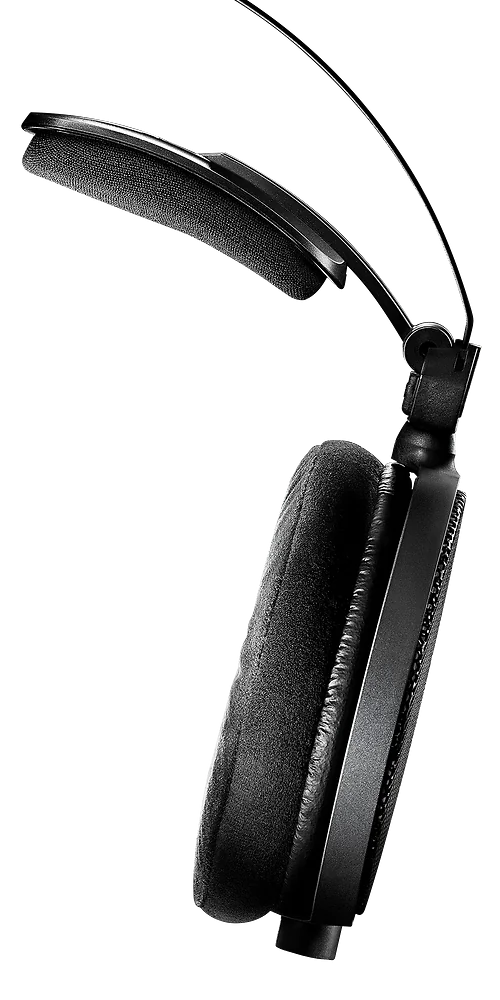
The manufacturer's 210 g figure and the positive comfort report are useful, but they answer different questions. Weight describes the body without the cable; comfort describes one reviewer's experience wearing it. Headphones.com describes small circular ear cups and notes a possible concern for unusually large ears. Sonarworks reports that one tester experienced sagging because clamping force was insufficient. Those findings should sit alongside the positive report instead of being erased by it. They show why a light headphone can still fail a particular person's fit requirements. [7], [1], [5]
When trying the headphone, check ear clearance and whether it stays in the position you want over time. These checks directly address the two reported limitations without assuming either will occur for everyone. A brief demonstration can establish initial comfort but may not answer the sagging concern, so use enough time to judge the fit if the seller permits it. Avoid treating an untested modification as a proven remedy. The evidence supports a trial and a suitable return arrangement when personal fit is uncertain; it does not support promising that low weight alone guarantees all-day comfort. [1], [5]
Power and practical limits
The manufacturer publishes 470 ohm impedance and 98 dB/mW sensitivity. These are specifications rather than new measurements from this research pass. The connection uses a 3.5 mm stereo plug with a 6.3 mm stereo adapter, so choosing the appropriate socket is only the first part of compatibility. The more useful buying question is whether your particular headphone output can deliver the volume and usable adjustment range you need with this load. Do not read the impedance number as proof that every laptop fails or that every device described as an amplifier succeeds. Before buying extra equipment, check the output information for the source you actually plan to use and, where possible, audition that combination at a comfortable listening level. This evidence does not establish a universally required amplifier model, a minimum output specification for every recording, or identical performance from all sockets of the same size. A source recommendation needs those missing details rather than an assumption based on connector fit alone. Treat the published electrical specifications as a prompt to verify the complete signal path. That approach also avoids buying a different source merely because a general headphone description sounded categorical. [7], [7]
What the physical measurement does and does not show
Sonarworks reports that measured pairs differed by no more than approximately +/- 1.5 dB across the spectrum. This is a physical frequency-response consistency result, not the site's subjective sound or comfort rating. The article does not disclose the number of pairs, fixture, or drive level for this particular result, so those conditions remain unknown here. Its useful implication is that the tested pairs showed relatively close response agreement under that review's comparison. It does not establish a guaranteed production tolerance for every headphone sold. [5]
Pair consistency and listener fit should also remain separate. A result describing differences among measured units cannot promise identical perception across different ears, head shapes or wearing positions. That matters when using a general review to make a personal purchase: a repeatable result in the reviewed sample still leaves your fit to check. Use the measurement as bounded evidence about those tested pairs, alongside the individual fit warnings. The buying decision becomes stronger when each piece answers its own question, with no invented precision, sample count or assurance beyond what the sources actually disclose. [5], [1]
Allow for the long detachable cable
The manufacturer lists a 3 m detachable cable. Tape Op's reviewer found the included Y-cable longer than preferred for a desk, while noting its usefulness when sitting farther from equipment. These describe a practical tradeoff rather than an inherent fault. Plan the distance between your source and seat, and consider where unused cable will sit. A long cable can provide reach, yet that same length can be inconvenient in a compact workspace. Keep the official metric specification separate from the review's approximate description; the latter should not silently redefine the cable length. [6], [7]
Detachable does not by itself mean that any replacement cable is suitable. Confirm the replacement is intended for this exact headphone and ends in the connection your source requires. This research does not establish a particular third-party cable as tested compatible, nor does it establish that changing a cable improves sound. If the supplied cable already fits the workspace, the evidence gives no reason to make replacement mandatory. If its length is a problem, make compatibility and routing the reasons for researching an alternative, rather than assuming an unspecified upgrade is necessary. [6], [7]
Replacement pads are documented, with regional limits
Audio-Technica's Japanese support page lists HP-R70x replacement ear pads for the ATH-R70x. This is meaningful evidence that an exact-model replacement part is documented by the manufacturer. It is a narrower finding than a promise of worldwide stock, delivery to your address, or indefinite service. Buyers outside Japan should confirm availability with their local support channel before relying on that listing. The model identifier is useful when asking about the part, since a broadly similar ear pad is not automatically an established substitute. [4]
The listing helps with one ownership question but does not supply a complete repairability assessment. It does not establish the service life of the pads in your use, a replacement interval, or a full repair procedure for every component. No current price observation or total ownership cost is included in this guide. If ongoing maintenance matters to your purchase, check exact-part availability and the local service route while the product is still under consideration. Keep those unanswered questions explicit rather than turning a parts listing into a claim that all future repairs will be easy. [4]
By the numbers
| Target loudness | Required voltage |
|---|---|
| 90 dB SPL | 0.2729 Vrms |
| 100 dB SPL | 0.8631 Vrms |
| 110 dB SPL | 2.7293 Vrms |
Measured performance
Pair to pair frequency response variation
1.5 dBSonarworks comparison of measured ATH-R70x pairs across the spectrum · Reported as approximately +/- 1.5 dB, not an exact guaranteed maximum. The review does not disclose the number of pairs, fixture or drive level for this result.
Source [5]Alternatives
| Alternative | Where this Product wins | Where it loses | Pick it if |
|---|---|---|---|
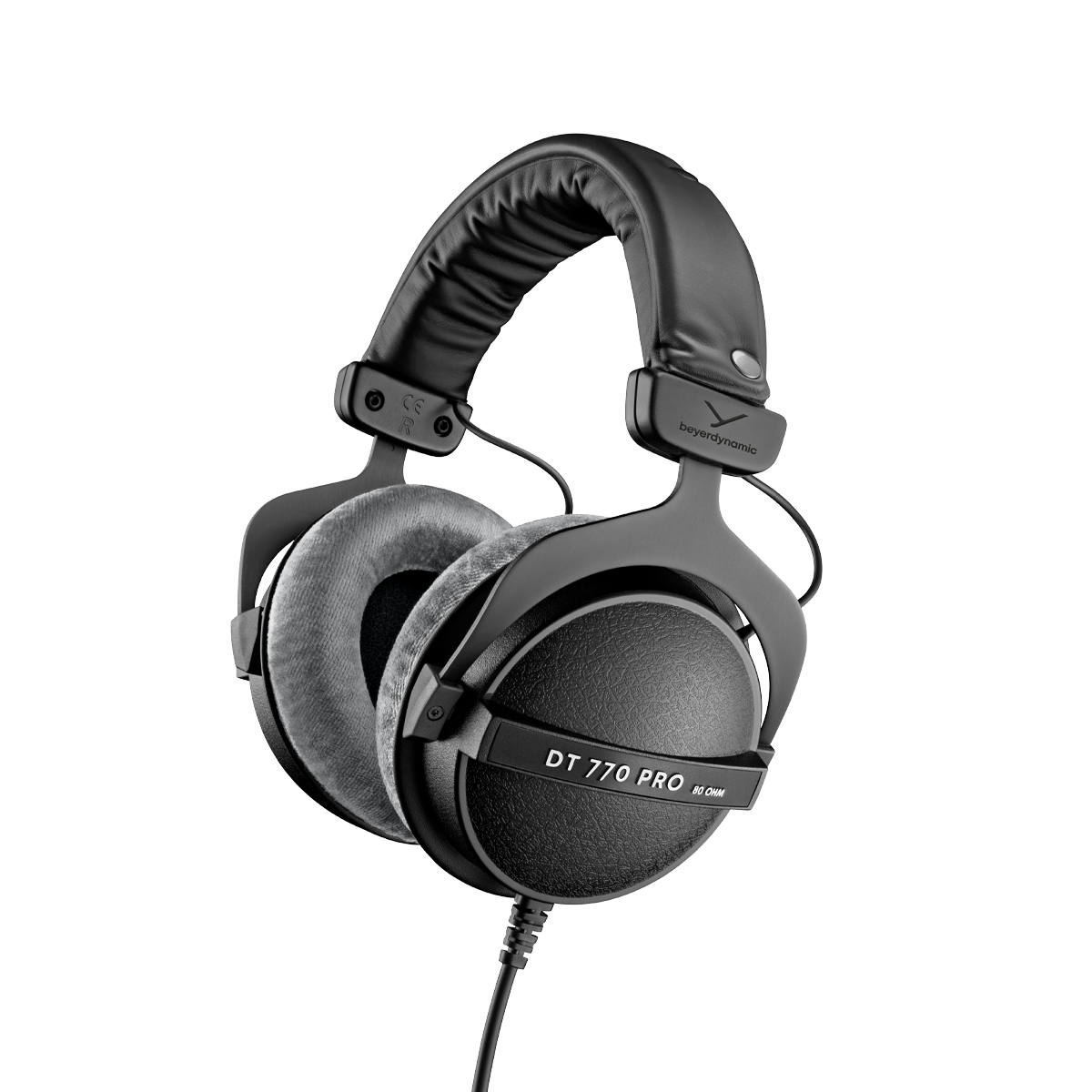
| beyerdynamic DT 770 PRO 80 Ohm | The ATH-R70x has a manufacturer-listed 210 g body and an open spatial presentation praised by Headphones.com. [7], [1] | The ATH-R70x's 470 ohm impedance makes source-output verification a buying consideration. [7] | Choose ATH-R70x for open-back spatial presentation; choose DT 770 PRO for closed-back isolation. |
| Specification | Audio-Technica ATH-R70x Professional Open-Back Reference Headphones | beyerdynamic DT 770 PRO 80 Ohm Over-Ear Studio Headphones |
|---|---|---|
| Impedance | 470 Ω [7] | 80 Ω |
Buyer questions
Before you buy
Compatibility
Does it need a headphone amplifier?
Its rated impedance is 470 ohm, so buyers should verify that their source can provide adequate output. [7]
Everyday use
What size driver does it use?
The manufacturer specifies a 45 mm driver. [7]
Product images
Facts and specifications
Manufacturer datasheet
| Specification | Value | Source |
|---|---|---|
| Acoustic Design | Open-back dynamic | [7] |
| Cable Length | 3 m | [7] |
| Driver Size | 45 mm | [7] |
| Impedance | 470 Ω | [7] |
| Interface | 3.5 mm stereo plug with 6.3 mm stereo adapter | [7] |
| Sensitivity | 98 dB/mW | [7] |
| Weight | 210 g | [7] |
Other facts
KnowSpec analysis
Direct answer
The ATH-R70x suits quiet-room listeners who value low weight and immersive spatial presentation. Check personal fit: low mass does not settle ear-cup clearance or sagging. Verify source output for its 470 ohm load, and allow desk space for the long detachable cable.
Method: Evidence synthesisVisible information gaps
Missing information is shown rather than guessed.
- Topic:Battery Lifenot found
- Topic:Buyer Fitnot found
- Topic:Distortionnot found
- Topic:Isolation And Leakagenot found
Products in this content
-
beyerdynamic DT 770 PRO 80 Ohm Over-Ear Studio Headphones
The closed-back design and comfortable velour pads suit recording sessions, while replacement components support maintenance. HeadphoneCheck favors the 80 Ohm model for recording over final mi
-
Sony MDR-7506 Professional Stereo Monitor Headphones
Sony documents studio and broadcast use. Independent comfort observations differ, so evaluate fit on the actual unit and do not generalize an aged sample with replaced cushions to new stock.
-
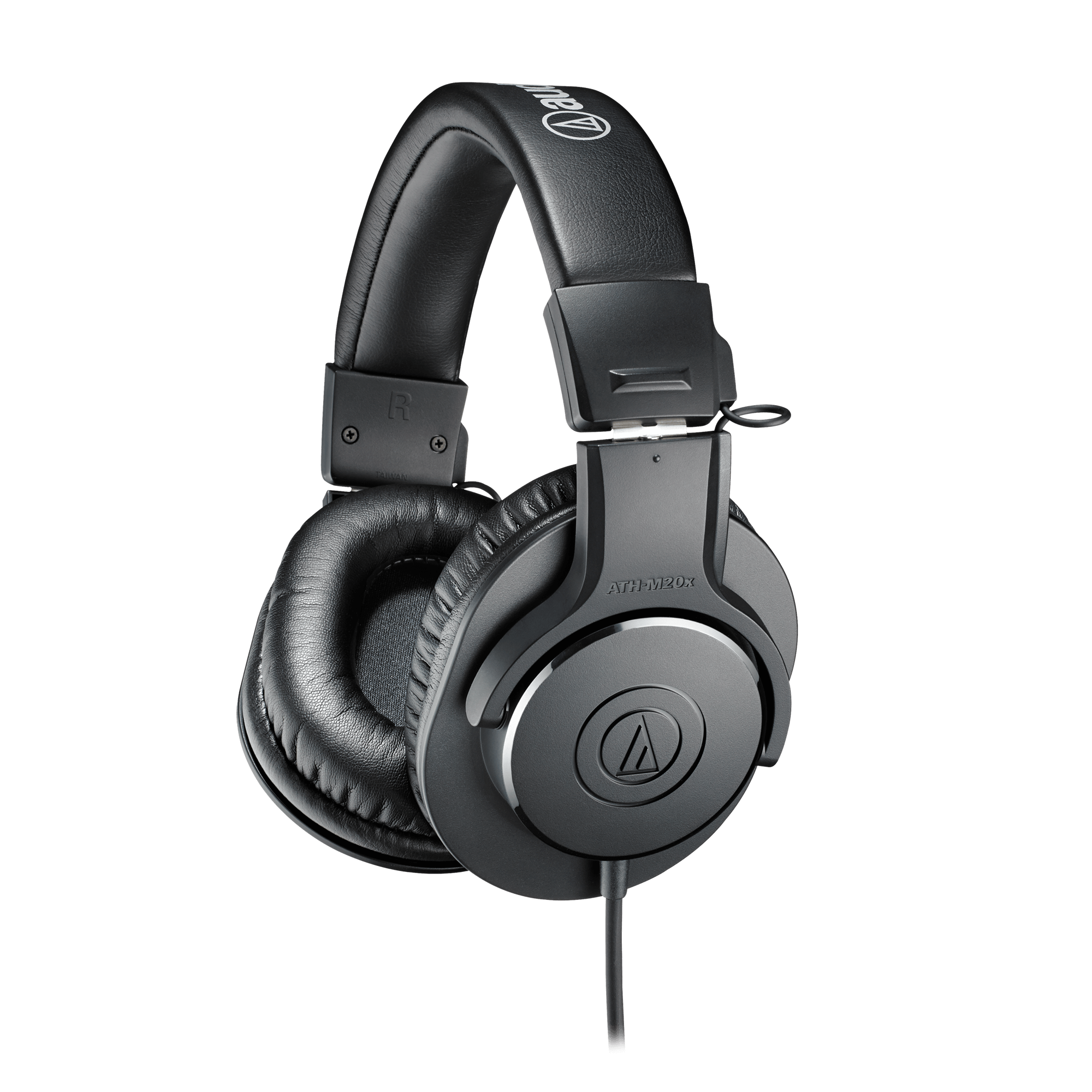
Audio-Technica ATH-M20x Professional Studio Monitor Headphones
The Audio-Technica ATH-M20x suits buyers seeking an accessible wired monitoring headphone that runs from common devices without a dedicated amplifier. Accepted reviews describ
-
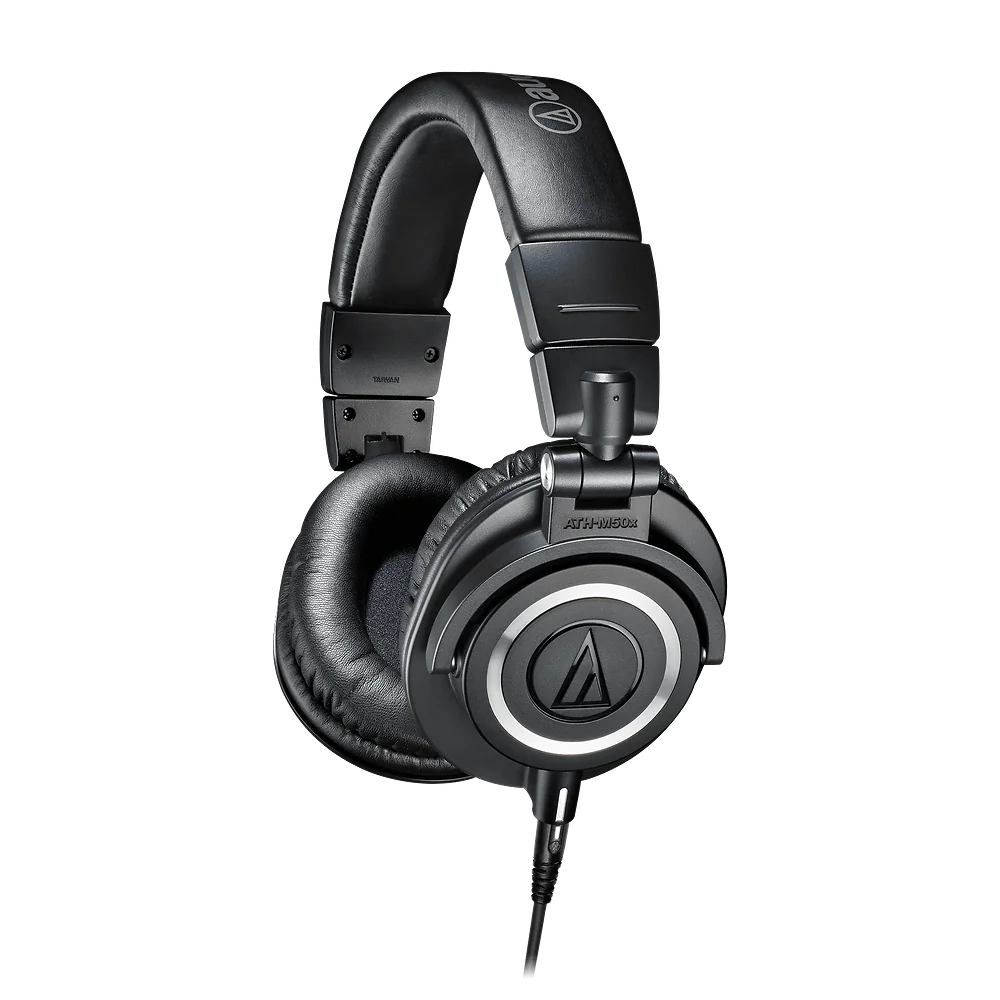
Audio-Technica ATH-M50x Professional Studio Monitor Headphones, Black
Choose the black wired ATH-M50x for recording, everyday desk listening and replaceable-cable convenience if its pads fit you. Vocal tracking is a stronger case than shutting ou
-
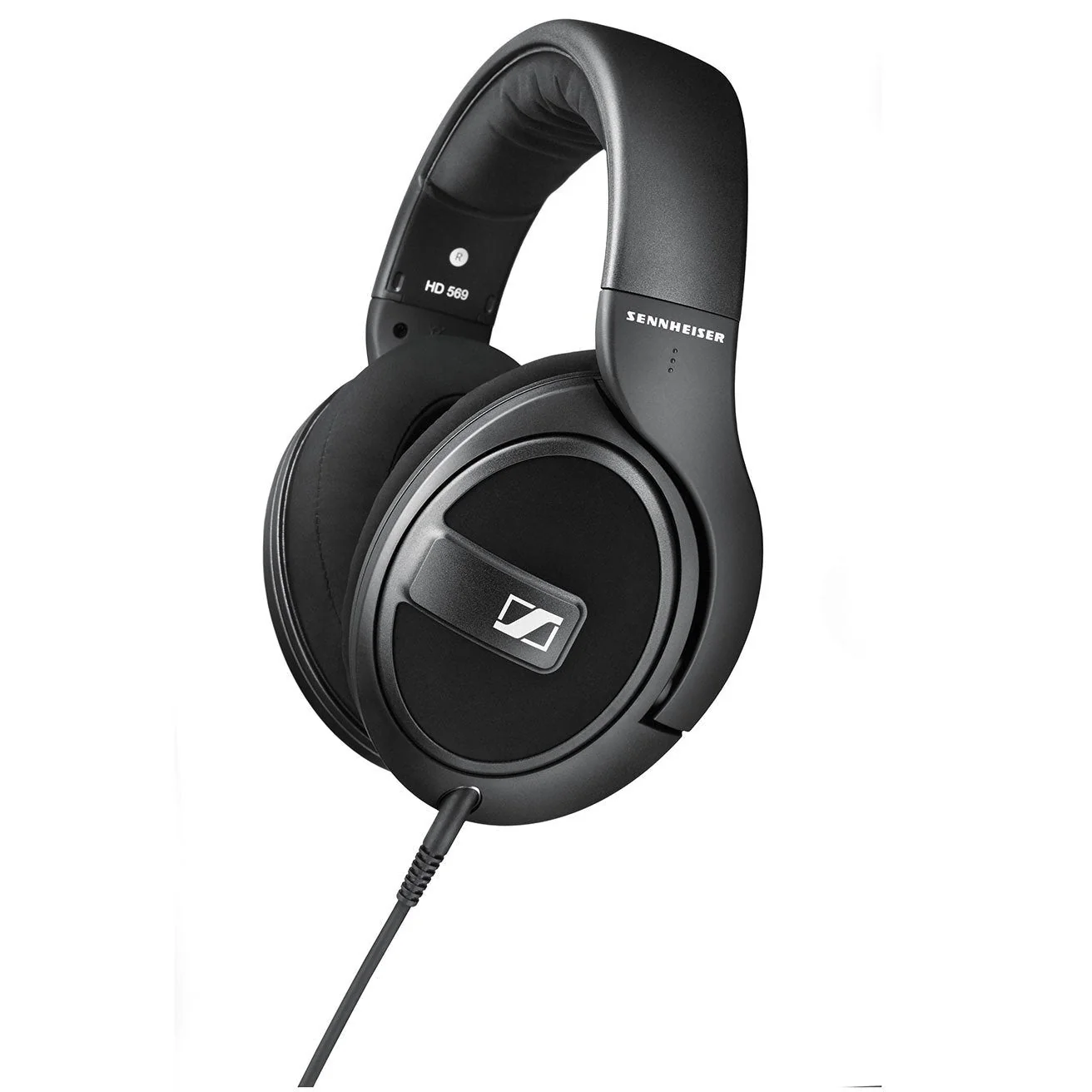
Sennheiser HD 569 Closed-Back Around-Ear Headphones
The Sennheiser HD 569 is worth considering for home listening if you want a closed-back design, reviewer-praised comfort and a sense of space in playback. Sennheiser lists 38 mm drivers and a weight of 300 g.
-
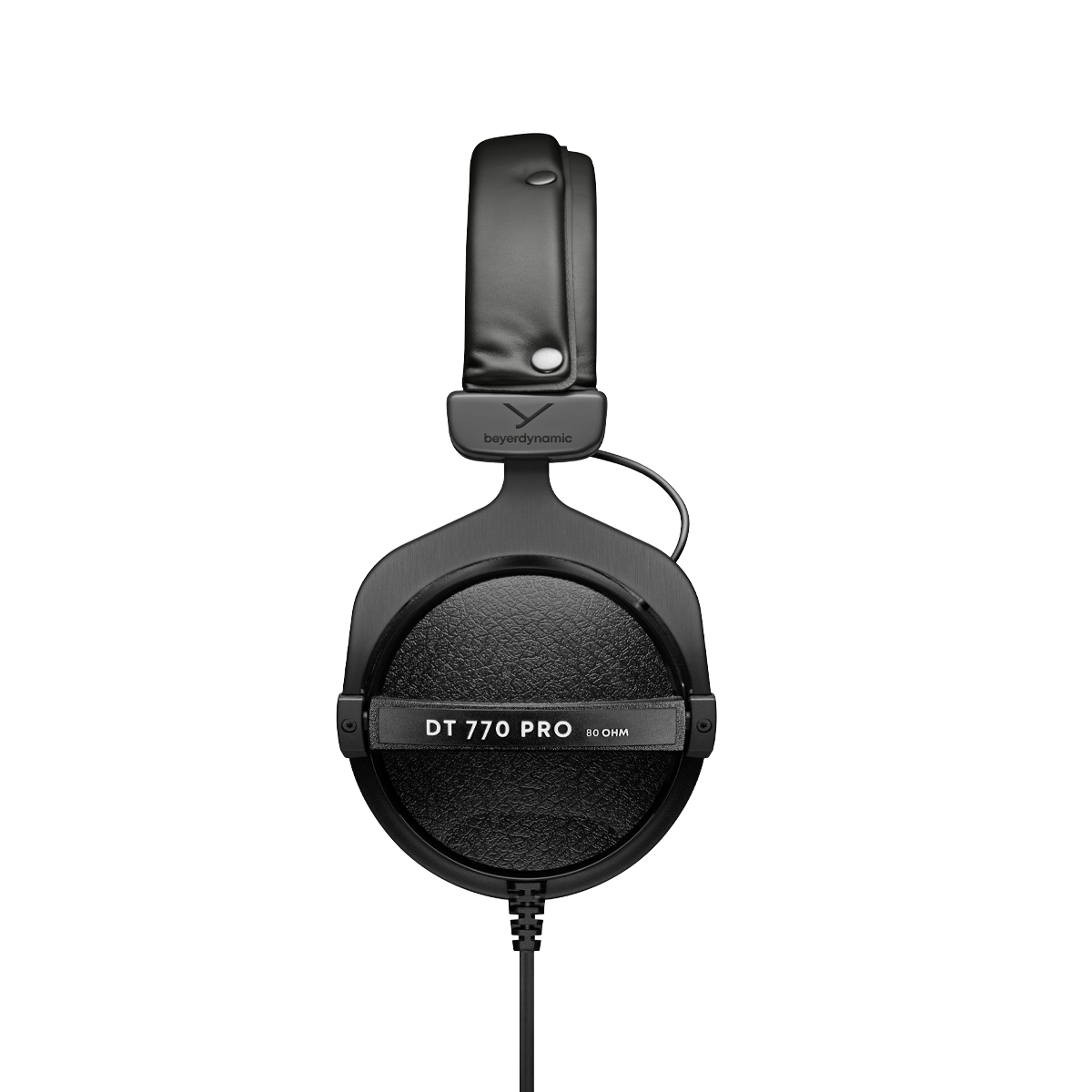
beyerdynamic DT 770 PRO 80 Ohm Closed-Back Studio Headphones, Black
Its documented studio-monitoring role and replacement padding support a conditional studio fit. Listening judgments differ: treble sensitivity and bass balance deserve an audi
Sources and method
- Audio Technica ATH-R70x Review: A Gateway to SoundstageHeadphones.com · retrieved 2026-09-28Editorial review
- ATH-R70x User ManualAudio-Technica · retrieved 2026-10-08ManualPDF
- Audio-Technica ATH-R70x Headphones ReviewRTINGS · retrieved 2026-09-28Lab review
- ATH-R70x parts and accessoriesAudio-Technica · retrieved 2026-10-08Manufacturer support
- Audio-Technica ATH-R70x Studio Headphone ReviewSonarworks · retrieved 2026-10-08Lab review
- Audio-Technica: ATH-R70x open-back reference headphoneTape Op · retrieved 2026-09-28Editorial review
- ATH-R70xAudio-Technica · retrieved 2026-09-28Manufacturer
- ATH-R70xAudio-Technica · retrieved 2026-10-08Manufacturer