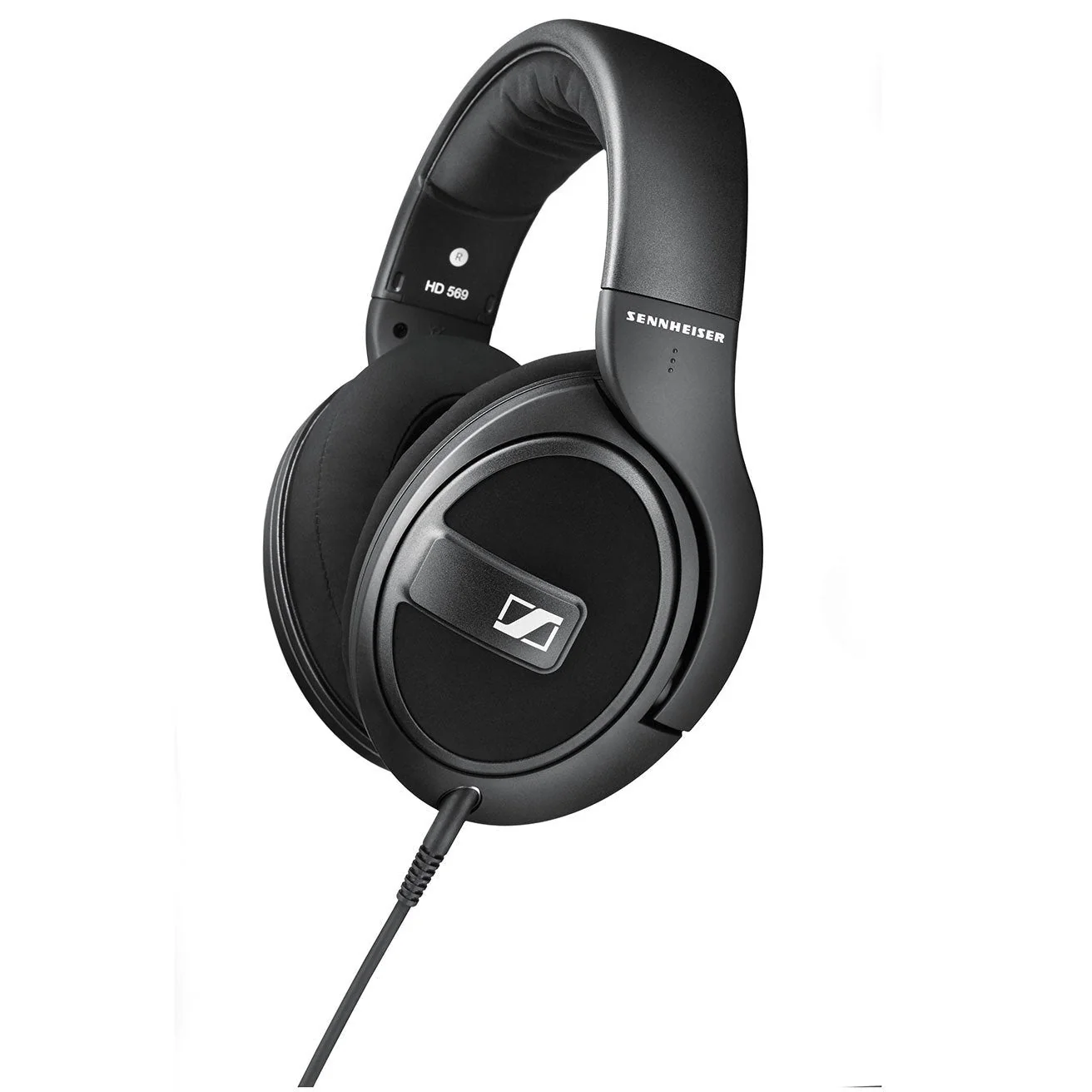
Sennheiser HD 569 Closed-Back Around-Ear Headphones
The Sennheiser HD 569 is worth considering for home listening if you want a closed-back design, reviewer-praised comfort and a sense of space in playback. Sennheiser lists 38 mm drivers and a weight of 300 g. The main caveats are reported bass resonances and one reviewer's preference for a powerful stationary headphone amplifier; the latter is a subjective recommendation, not an established electrical minimum.
Updated 2026-10-11

We may earn a commission from qualifying purchases.
Prices and sellers
No price information yet
Areas not yet researched (7)
No conclusion is available for these areas. This does not mean the Product has no limitations or reported issues.
- Conditions and limitations
- Compatibility
- Where sources differ
- Reported issues and fixes
- Care and support
- Ownership costs
- Who it suits
Reviewer consensus
Single-source notes
- Amplifier requirements: Weak point · 1/1 · [1]
- Build quality: Agreed · 1/1 · [3]
- Buyer fit: Agreed · 1/1 · [1]
- Comfort & usability: Agreed · 1/1 · [3]
- Connectivity and codec support: Agreed · 1/1 · [1]
- Sound / experience quality: Agreed · 1/1 · [3]
- Frequency response: Agreed · 1/1 · [4]
- Isolation & leakage: Agreed · 1/1 · [4]
- Limitations: Weak point · 1/1 · [3]
- Repairability: Agreed · 1/1 · [4]
“a strong three-dimensionality”
The review
Sennheiser HD 569: comfort and space, with bass caveats
Spatial presentation and its trade-off
HeadphoneCheck praises the sense of three-dimensional space but identifies bass resonances as a limitation. That combination makes the HD 569 a candidate to audition for home listening, while leaving room for disagreement about its tonal balance. [3], [1]
Sennheiser specifies a frequency range from 10 Hz to 28000 Hz and a driver diameter of 38 mm. These are manufacturer specifications; they do not establish a flat measured response. [4]
Comfort, construction and isolation
HeadphoneCheck rates comfort and handling positively and considers the predominantly plastic construction robust. Sennheiser lists a weight of 300 g; the review's comfort verdict should be read as a wearing impression rather than inferred from weight alone. [3], [4]
The closed-back design is supported by Sennheiser's claim of effective passive isolation. That claim does not quantify attenuation or establish how much sound escapes into the room. [4]
Cable length and amplifier expectations
The supplied evidence identifies a 1.2 m cable. Check that this length fits the distance between your listening position and equipment. [1]
Sennheiser specifies an impedance of 23 ohm. Separately, The Audiophile Man recommends a powerful stationary headphone amplifier. His verdict is subjective and does not supply a minimum power or voltage requirement. [1], [4]
Turn the evidence into a personal shortlist
For an audition, separate the decisions that the existing evidence can help with: tonal preference, wearing comfort, cable reach and replaceable pads. Start with music you know and listen for whether the reported spatial presentation compensates for the bass reservations in your own judgment. Then assess the fit over a realistic session and check the cable arrangement at your usual listening position. These are proposed checks derived from the documented benefits and limitations, not additional test results. The home-listening recommendation should remain conditional on those priorities, rather than becoming a promise that every listener will hear the same balance. Replaceable pads offer a documented maintenance option, but do not establish availability of every spare part or service for the complete headphone. [3], [1], [4]
Closed cups do not specify a noise-reduction result
Sound & Vision's Steve Guttenberg describes isolation as average for this type of headphone. That offers a useful counterweight to Sennheiser's favorable passive-isolation wording, while remaining an individual review impression. Neither statement supplies a measured attenuation curve, so the evidence does not justify predicting a particular reduction in surrounding speech, traffic or other noise. A buyer who needs isolation should assess that requirement independently of whether the earcups are closed. Try the headphones in a representative environment if possible, at an ordinary listening level, and check whether the remaining sound is acceptable. This is a suggested purchase check, not a claim that such an environment was reproduced in either source or that louder playback is an appropriate substitute. [4], [6]
Who should shortlist it?
The strongest supported use case is home listening: The Audiophile Man recommends it for that role, while HeadphoneCheck praises comfort and spatial presentation. Keep the reported bass resonances and subjective amplifier recommendation in the buying decision. [3], [1]
What the amplifier experiment actually establishes
DIY-Audio-Heaven reports a 1 dB bass increase when comparing higher and lower amplifier output resistance after matching the output level. The measurement record preserves the test conditions, including its sealed flatbed rig; the source does not state the sample count. This is a relative response change within that experiment, not a measured minimum amplifier power requirement. It also does not test every portable device, explain every listening preference, or turn The Audiophile Man's stationary-amplifier recommendation into an electrical specification. Use the result to distinguish an investigated interaction from a subjective recommendation. The manufacturer's impedance remains a separate specification, and neither item alone establishes how loudly or cleanly an unspecified source will drive these headphones. [1], [4], [5]
Listening equipment is context, not a controlled power test
The Audiophile Man's strongest stationary-system preference comes from listening through an Icon Audio HP8 Mk.II headphone amplifier to a vinyl recording of The Fall's Live At The Witch Trials. Other parts of the review describe different recordings and digital equipment. That context is valuable because it identifies what the reviewer actually heard, but it does not isolate amplifier power as the cause of his preference. The account does not establish a controlled, level-matched comparison using the same recording across every setup. Buyers should therefore treat the recommendation as one informed listening experience. It can motivate an audition with their own equipment, while leaving the required output capability and the size of any audible improvement undetermined. [1]
Choose the cable for the actual listening position
The short cable mentioned above is only part of the supplied connection choice. The Audiophile Man describes both a 1.2 m cable ending in 3.5 mm and a 3 m cable ending in 6.35 mm. This matters when comparing a nearby portable source with equipment positioned farther from a chair: check both the socket and the route the cable must follow before deciding that the shorter lead is inadequate. The review documents those particular terminations, not universal compatibility with every device. A matching audio socket also does not establish support for every microphone or remote-control function. Verify those functions separately for the intended source, rather than treating the presence of an analog connection as a complete compatibility test. [1]
Replaceable pads
Sennheiser identifies the soft ear pads as replaceable. This supports pad replacement, without establishing full driver or headband serviceability. [4]
Why the weight entries are not interchangeable
The separate Sound & Vision specifications page lists 1.7 pounds, whereas Sennheiser's Japanese product page lists 300 g. These entries disagree; the secondary page does not explain its weighing method or whether the listed figure includes packaging or accessories. The manufacturer figure is retained as the primary specification. It would be misleading to average the entries, convert the secondary number into an apparently precise corrected specification, or assume that the discrepancy proves a different hardware version. For the buyer, the practical consequence is to distinguish a catalog figure from a wearing assessment. HeadphoneCheck's favorable comfort judgment is an attributed experience, not a result that can be calculated from either of these conflicting weight entries. [3], [4], [2]
Measured performance
Bass change output resistance
1 dBDIY-Audio-Heaven compared 0.2 ohm and 120 ohm amplifier output resistance, matching levels at 1 kHz with 13 dB compensation; sealed flatbed rig. · Relative bass increase under the higher output resistance, not absolute bass level. Sample count, hardware revision and absolute playback level were not stated. The general method uses a sealed flatbed rig with unsmoothed, corrected response plots.
Source [5]Buyer questions
Before you buy
Compatibility
Which cable lengths and plugs are documented?
The Audiophile Man reports a 1.2 m cable with a 3.5 mm termination and a 3 m cable with a 6.35 mm termination. Check the socket and cable reach of the intended setup; this does not establish every device's microphone or remote compatibility. [1]
Setup
Everyday use
Does the closed-back design reduce surrounding sound?
Sennheiser claims effective passive isolation. The available claim does not quantify noise reduction or sound leakage. [4]
Care and maintenance
Can the ear pads be replaced?
Yes. Sennheiser states that the soft ear pads are replaceable; this does not establish repairability of every other part. [4]
Product images
Facts and specifications
Manufacturer datasheet
| Specification | Value | Source |
|---|---|---|
| Acoustic Design | closed-back JP | [4] |
| Driver Size | 38 mm JP | [4] |
| Highest Frequency | 28 kHz JP | [4] |
| Lowest Frequency | 10 Hz JP | [4] |
| Impedance | 23 Ω JP | [4] |
| Weight | 300 g JP | [4] |
Stated by reviewers
| Specification | Value | Source |
|---|---|---|
| Buyer Fit | The Audiophile Man recommends the HD 569 for home listening. GB | [1] |
| Cable Length | 1.2 m GB | [1] |
| Interface | The Audiophile Man reports two included cables: 1.2 m with 3.5 mm termination and 3 m with 6.35 mm termination. GB | [1] |
| Limitation | HeadphoneCheck identifies bass resonances as a limitation on sound quality. US | [3] |
KnowSpec analysis
Is the HD 569 a good fit for home listening?
The Sennheiser HD 569 is worth considering for home listening if you want a closed-back design, reviewer-praised comfort and a sense of space in playback. Sennheiser lists 38 mm drivers and a weight of 300 g. The main caveats are reported bass resonances and one reviewer's preference for a powerful stationary headphone amplifier; the latter is a subjective recommendation, not an established electrical minimum.
Method: Separating subjective listening findings from manufacturer frequency specifications.Soundstage praise does not erase bass reservations
HeadphoneCheck praises the spatial presentation but also identifies bass resonances. Read those findings together: the evidence supports an appealing sense of space, not a claim of uniformly accurate tonal balance. Sennheiser's stated frequency endpoints describe a specification, rather than a measured response curve.
Method: Synthesis of the supplied verified manufacturer specifications and attributed review verdicts.Visible information gaps
Missing information is shown rather than guessed.
- Topic:Distortionnot found
- Topic:Battery Lifenot found
- Sensitivitynot found
Products in this content
-
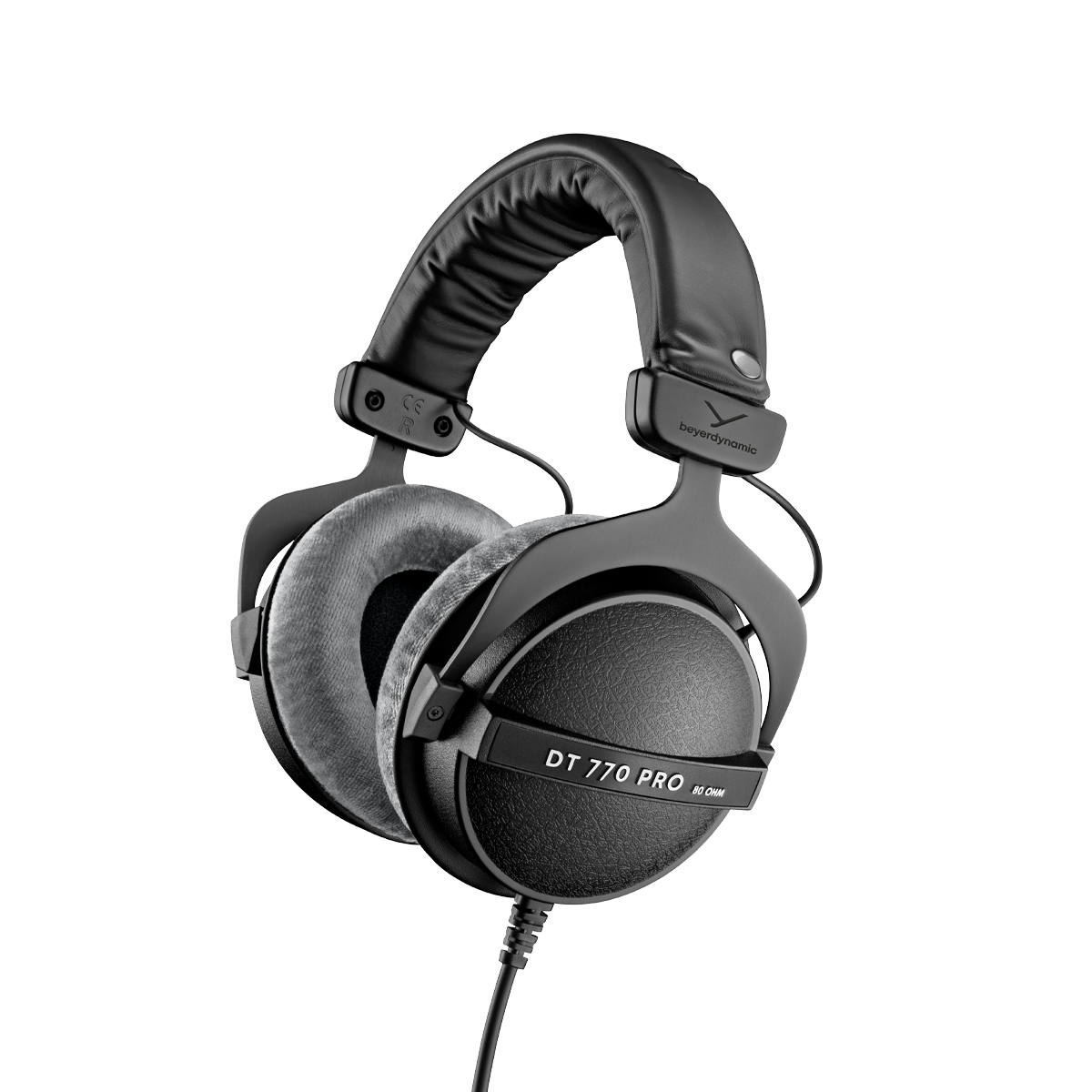
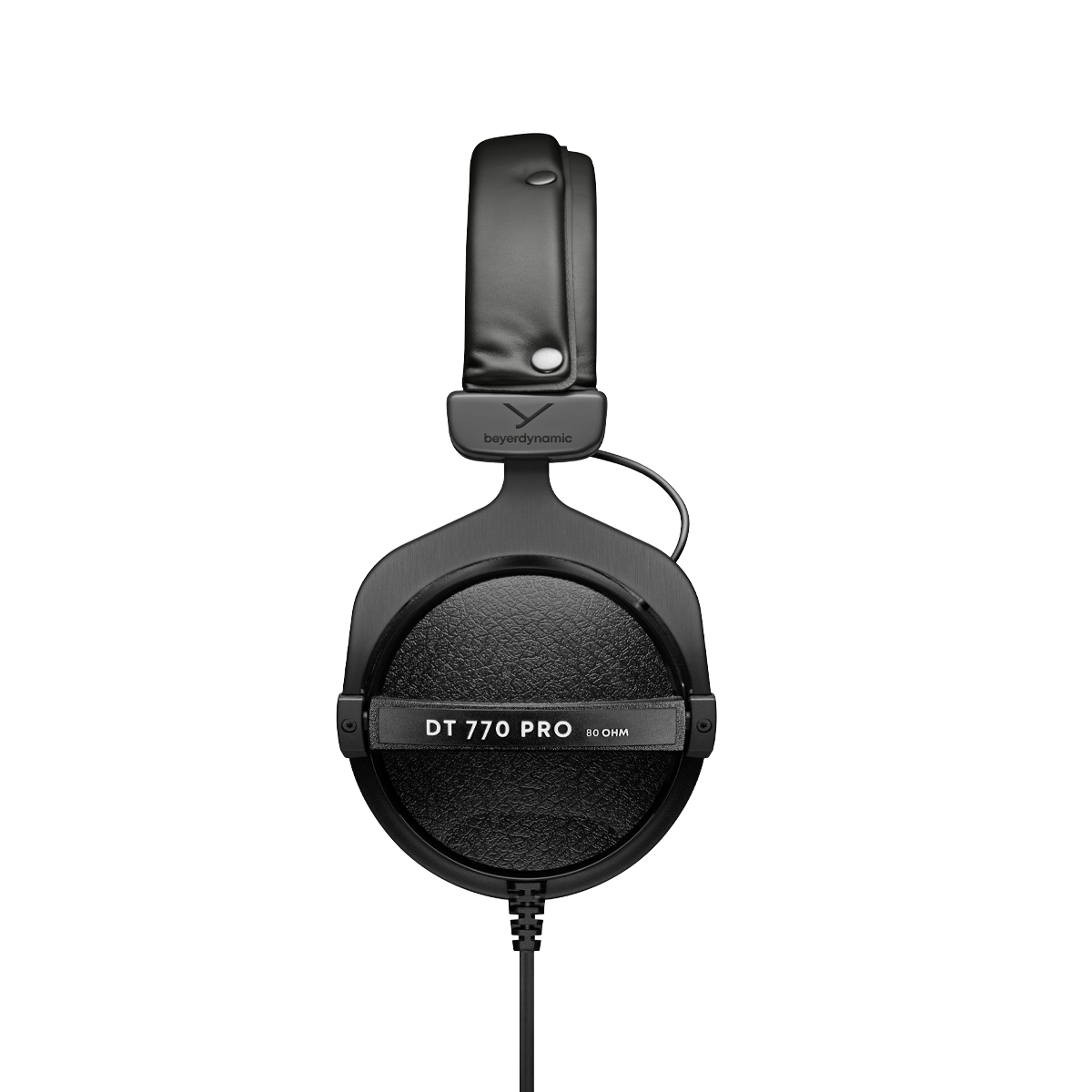
beyerdynamic DT 770 PRO 80 Ohm Over-Ear Studio Headphones
The closed-back design and comfortable velour pads suit recording sessions, while replacement components support maintenance. HeadphoneCheck favors the 80 Ohm model for recording over final mi
-
Sony MDR-7506 Professional Stereo Monitor Headphones
Sony documents studio and broadcast use. Independent comfort observations differ, so evaluate fit on the actual unit and do not generalize an aged sample with replaced cushions to new stock.
-
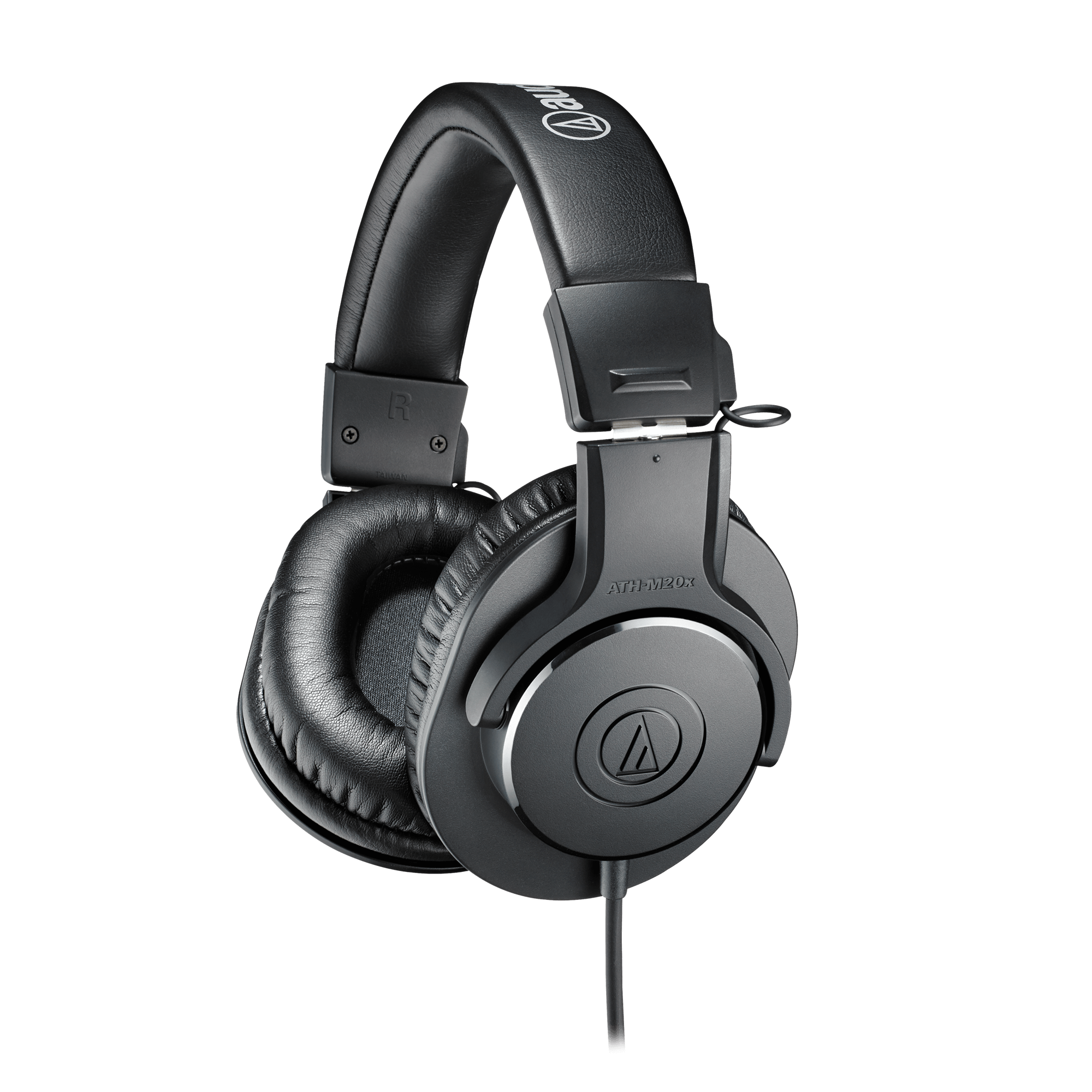
Audio-Technica ATH-M20x Professional Studio Monitor Headphones
The Audio-Technica ATH-M20x suits buyers seeking an accessible wired monitoring headphone that runs from common devices without a dedicated amplifier. Accepted reviews describ
-
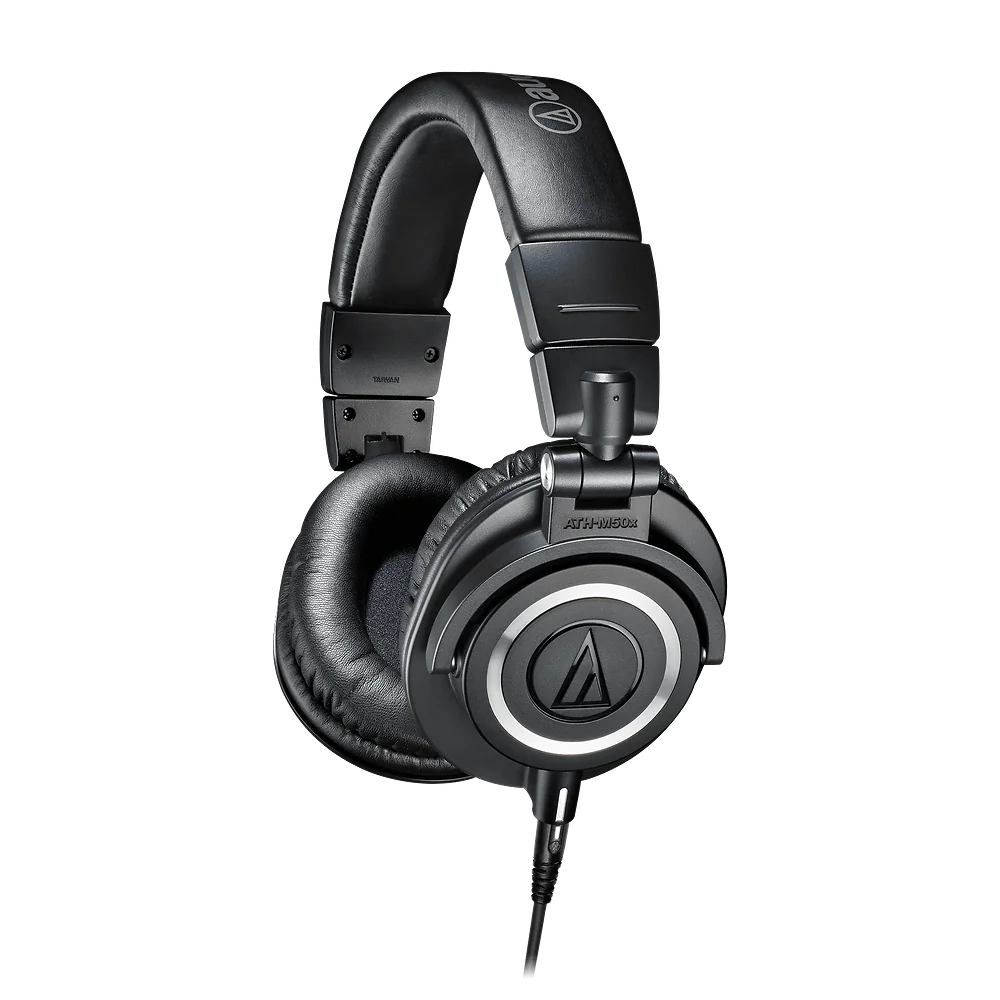
Audio-Technica ATH-M50x Professional Studio Monitor Headphones, Black
Choose the black wired ATH-M50x for recording, everyday desk listening and replaceable-cable convenience if its pads fit you. Vocal tracking is a stronger case than shutting ou
-
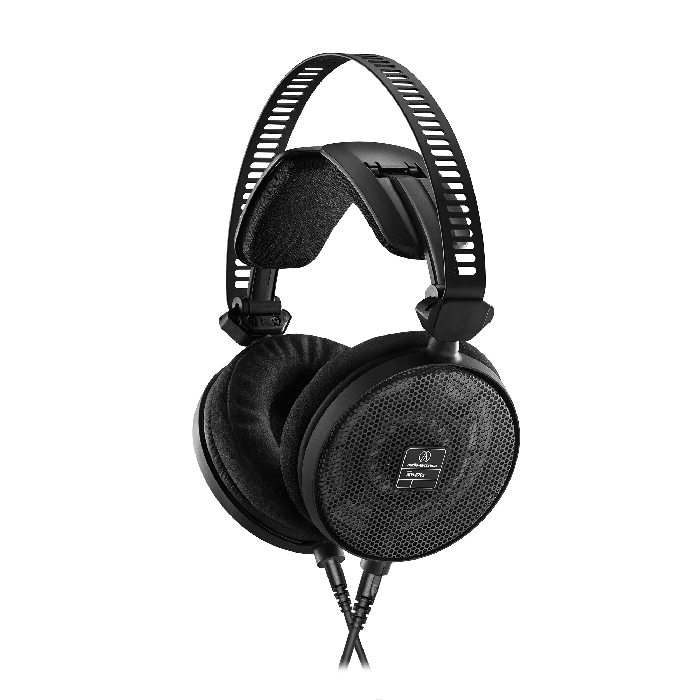
Audio-Technica ATH-R70x Professional Open-Back Reference Headphones
The ATH-R70x suits quiet-room listeners who value low weight and immersive spatial presentation. Check personal fit: low mass does not settle ear-cup clearance or sagging. Ver
-
beyerdynamic DT 770 PRO 80 Ohm Closed-Back Studio Headphones, Black
Its documented studio-monitoring role and replacement padding support a conditional studio fit. Listening judgments differ: treble sensitivity and bass balance deserve an audi
Sources and method
- HD569 HEADPHONES FROM SENNHEISERThe Audiophile Man · retrieved 2026-09-25Editorial review
- Sennheiser HD 569 Headphones Review SpecsSound & Vision · retrieved 2026-10-11Editorial review
- Sennheiser HD 569 ReviewHeadphoneCheck · retrieved 2026-09-25Editorial review
- HD 569Sennheiser Hearing Japan · retrieved 2026-09-25Manufacturer
- HD569DIY-Audio-Heaven · retrieved 2026-10-11Lab review
- Sennheiser HD 569 Headphones ReviewSound & Vision · retrieved 2026-10-11Editorial review