Jackery Explorer 2000 v2 Portable Power Station
A portable essential-load plan with dependable wall charging is the clearest fit: Solar Power Auditor attributes 1,710 Wh usable AC energy to OutdoorGearLab, while The Solar Lab separately sustained 2,200 W. The 400 W solar-input ceiling and fixed battery capacity make replenishment and load prioritization more important during a long outage. Do not average the 84% and 90% efficiency reports; their protocols are insufficiently matched. Buyers needing later battery expansion should resolve the conflicting editorial assertion against exact-model support before purchase.
Updated 2026-10-08

We may earn a commission from qualifying purchases.
Prices and sellers
No price information yet
Conditions and limitations
Fast AC input depends on charging mode
- Capability
- The Solar Lab observed full 1,800 W AC input only with Emergency Charging Mode enabled.
- Limitations
- The review does not disclose firmware or a complete charge-time protocol.
- Requirements
- Confirm the selected charging mode and a suitable wall outlet.
Compatibility
US port layout and reviewer load tests were reviewed, but no fully specified device-to-device case establishes compatibility for a buyer's exact appliance.
Where sources differ
Efficiency reports use incompletely disclosed protocols
- Explanation
- Retain both attributed results; undisclosed matching protocols prevent a single guaranteed percentage.
- Status
- unresolved
Conflicting expansion advice
- Explanation
- Do not adopt the expansion assertion; confirm exact-model support before buying accessories.
- Status
- unresolved
Reported issues and fixes
Reviewed sources describe design limits but do not establish a reproducible defect with a specific affected hardware or firmware version.
Care and support
Rated cycles retain a stated fraction of capacity
- Details
- Solar Power Auditor reports Jackery's 4,000-cycle rating to 70% retained capacity. This is not an independently completed long-term cycle test.
Ownership costs
Idle consumption and fixed capacity inform ownership planning; no electricity tariff, accessory cost, purchase price or numerical ownership total is introduced.
Who it suits
Choose around your load and refill plan
- Check before buying
- Confirm exact US model, appliance running and startup requirements, each socket rating and the selected charging mode.
- Constraints
- Fixed battery capacity and a reported 400 W maximum solar input.
- Needs
- Portable essential-device backup with wall charging between demanding uses.
- Reason
- Suitable when verified appliance requirements, port needs and access to wall charging fit the fixed-capacity design; less suitable when later battery expansion or sustained heavy solar-only use is required.
- Tradeoffs
- Tested output supports demanding loads, but storage and replenishment still bound runtime.
- Assessment
- conditional
Solar Power Auditor · PortablePowerPick · The Solar Lab · Watts on the Roof
Specifications
Inverter idle power
17 WReviewer tested idle draw · The Solar Lab: inverter on, no external load; ambient temperature, firmware and instrument were not reported. Approximate result.
Source [2]Continuous ac output
2200 WReviewer appliance-load testing · The Solar Lab reports varied loads at rated output without overheating. Test duration, ambient temperature, load inventory and firmware were not disclosed.
Source [2]Short burst ac output
3100 WReviewer startup and short-burst test · The Solar Lab reports approximately 3,100 W for short bursts; exact burst duration, appliance, ambient temperature and instrument were not reported.
Source [2]Reported conversion efficiency
90 %Reviewer efficiency testing · The Solar Lab reports 90% efficiency. Load profile, ambient temperature, instrumentation and cutoff were not disclosed; do not equate the protocol with OutdoorGearLab's 84% usable-capacity result.
Source [2]Reviewer consensus
Consensus rows require at least two distinct sources for the topic.
| Topic | Positive | Negative | Mixed | Reading | Evidence |
|---|---|---|---|---|---|
| Ac dc usb outputs | 2 | 0 | 0 | Agreed · 2/2 | [2], [4] |
| Charge time and input limits | 0 | 0 | 2 | Mixed · 2/2 | [3], [2] |
| Efficiency | 1 | 1 | 0 | Debated · 1 v 1 | [2], [3] |
| Limitations | 0 | 2 | 0 | Weak point · 2/2 | [1], [6] |
| Usable battery capacity | 0 | 0 | 2 | Mixed · 2/2 | [2], [3] |
Single-source notes
- Buyer fit: Agreed · 1/1 · [3]
- Continuous and surge output: Mixed · 1/1 · [2]
- Efficiency and standby loss: Mixed · 1/1 · [2]
- Inverter quality: Agreed · 1/1 · [6]
- Portability and expansion: Agreed · 1/1 · [6]
- Solar input and mppt: Weak point · 1/1 · [2]
- Sustained performance: Agreed · 1/1 · [2]
- Thermal noise and cycle life: Mixed · 1/1 · [3]
Alternatives
| Alternative | Where this Product wins | Where it loses | Pick it if |
|---|---|---|---|
| Jackery Explorer 300 V2 Portable Power Station | The Explorer 2000 v2 sustained 2,200 W in The Solar Lab's testing, supporting a plan that needs substantial output. [2] | The Explorer 2000 v2 carries a reported weight of 17,690 g; buyers should evaluate the lifting requirement before prioritizing its larger output. [6] | Choose the Explorer 2000 v2 when substantial output matters; consider the smaller Explorer 300 V2 when carrying weight is the priority. |
| Specification | Jackery Explorer 2000 v2 Portable Power Station | Jackery Explorer 300 V2 Portable Power Station |
|---|---|---|
| Power | Not stated | 300 W |
| Weight | 17690 g US [6] | 3750 g |
The review
Jackery Explorer 2000 v2: tested performance and buyer tradeoffs
Performance first
The Jackery Explorer 2000 v2 combines a reported nominal battery capacity of 2,042 Wh with a smaller amount of energy actually available to an AC appliance. Solar Power Auditor attributes 1,710 Wh of delivered energy and 84% usable capacity to OutdoorGearLab testing. These figures answer different questions: nominal capacity identifies the storage class, while delivered AC energy is the more relevant starting point for estimating a powered device's runtime. Solar Power Auditor did not perform this test itself, and its report should not be counted as a second independent experiment. For a buyer, the useful lesson is to budget around the measured result rather than assume every watt-hour on the label reaches the load. Actual runtime still depends on the connected equipment and operating conditions. [3], [2]
The Solar Lab separately reports 90% efficiency in its own testing. That is a different result from the 84% figure repeated by Solar Power Auditor, and this research does not average the two or call one a guaranteed conversion rate. The published descriptions do not provide sufficiently matched load profiles, cutoff behavior, ambient temperatures or instrumentation to demonstrate a like-for-like comparison. A reader can therefore use the results as evidence that testing found a meaningful difference between stored and delivered energy, but cannot assume that their particular appliance will reproduce either percentage. The distinction also matters when comparing reviews: two websites repeating OutdoorGearLab's capacity result add corroboration of the reporting, not two additional laboratory samples. Keep the source and method attached to each number. [3], [2]
Output power determines whether the unit can support a load at a particular moment; stored energy determines how long that load can run. The Solar Lab reports that the Explorer 2000 v2 sustained its rated 2,200 W AC output across the loads it tested without noticing overheating. Its separate startup testing reached approximately 3,100 W for short bursts, while sustained loads above the continuous rating were not its successful operating case. This is useful evidence for a buyer with occasional demanding appliances, but it does not establish that every motor or compressor will start. The review does not disclose an exact surge duration or a complete appliance inventory. Compare your equipment's running and starting requirements with these separately reported results, and leave headroom when several devices operate together. [2]
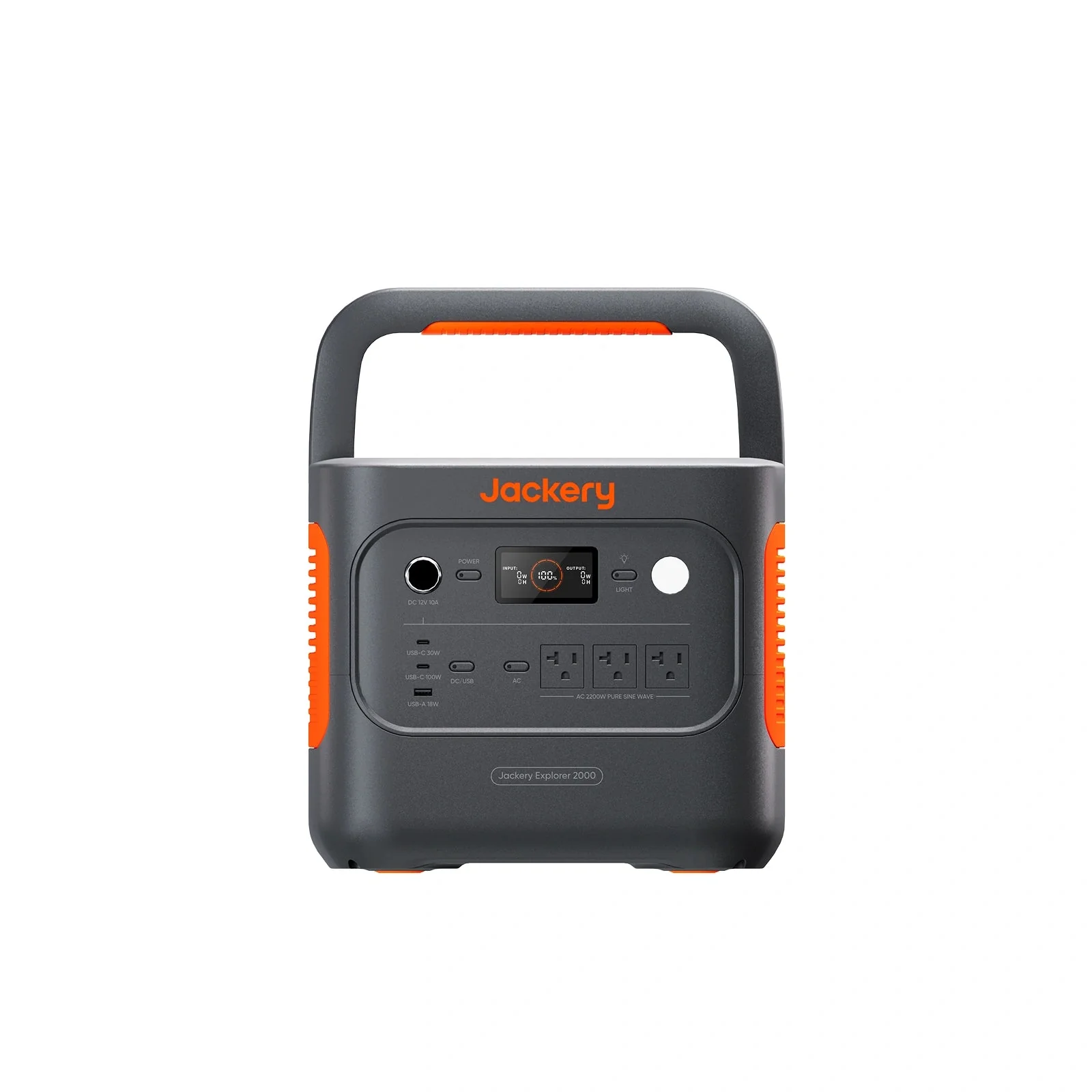
The reported US port layout has three AC outlets, two USB-C ports, one USB-A port and a 12 V car outlet. PortablePowerPick describes the inverter output as a pure sine wave. Port count is a practical connection limit, so a buyer should list the equipment that must be powered simultaneously rather than focus only on total wattage. The two USB-C sockets should not be assumed to have identical power capability merely because a review groups them together; confirm the labels for the exact US unit before connecting a demanding laptop. The Solar Lab also measured approximately 17 W of idle draw with the inverter enabled and no external load. That consumption matters for intermittent appliances, because a running inverter continues using energy between periods of useful output. [2], [6], [4]
Charging and longevity
Solar Power Auditor reports an OutdoorGearLab full recharge time of two hours and thirty minutes. Treat that as the reported test result, not the time every charging mode will require. The Solar Lab found that reaching the full 1,800 W AC input required Emergency Charging Mode, and ordinary charging was closer to 1,300 W. This mode dependence is a reason to inspect the selected setting when planning a short recharge stop. The secondary timing report does not disclose enough detail to prove that the test used the fastest mode, so this article does not present the longer time as a demonstrated failure of every fast-charge promise. A practical charging plan includes the selected mode, access to a suitable wall outlet and time for the battery to finish charging. [3], [2]
The Solar Lab reports a 400 W maximum solar input, which is a modest replenishment route relative to the reported 2,042 Wh battery capacity. This ceiling limits how quickly a depleted battery can be restored from sunlight; it is not a prediction that a panel array will deliver the maximum continuously. The review specifically warns that heavy loads can consume energy faster than solar charging puts it back. For a weekend away, the important question is therefore whether your planned daily consumption fits the energy you bring and can replenish. Occasional solar top-ups are a different requirement from relying on the sun to replace repeated high-power cooking or other sustained use. Wall-charging access makes the product easier to fit into a demanding routine, consistent with the preserved buyer-fit evidence. [3], [2]
The reported manufacturer longevity specification is 4,000 cycles to 70% retained capacity. That is a cycle-life rating, not an observation that the review completed thousands of full cycles, and the retained-capacity threshold is part of the claim. It should not be rewritten as 4,000 cycles to 80%, nor converted into a guaranteed number of calendar years for every owner. Capacity planning also has a separate constraint: the battery is not expandable according to the preserved non-expansion evidence and The Solar Lab's hands-on review. PowerStationGearLab publishes an opposing add-on-battery assertion, which this research records as a source discrepancy rather than a feature. Anyone who expects to grow storage later should confirm the exact model and expansion support before purchase, rather than infer compatibility from another Jackery product's name. [6], [3], [1]
Who should buy it
The strongest fit is portable essential-device backup where the owner can recharge from a wall between uses. The existing reviewer weight claim describes an approximately 39 lb package, so portability here means moving a substantial battery between a vehicle, home and campsite; it does not mean effortless carrying for every person. The combination of tested output and reported usable capacity gives room for a considered equipment plan, while the fixed battery size makes load selection important during a longer interruption. Before choosing it, identify the appliances that must run, the ones that can wait and where recharging will happen. The evidence supports the product's backup role, but it does not justify a single universal refrigerator runtime or a promise to power an entire home. [3], [6], [2]
Buyers who expect storage expansion or frequent heavy solar-only use face the clearest tradeoffs. The non-expandable battery limits later capacity growth, while the solar-input ceiling can constrain recovery after a high-consumption day. Connection needs may be just as decisive: count the required AC and USB devices, verify each socket's rating and confirm the exact regional unit. Review pages can disagree on ports, solar limits and expansion, so a similarly named model should not silently substitute for this US ASIN. Charging-mode access also deserves a check if quick wall charging is essential to your routine. These questions make the decision conditional on your equipment and refill plan rather than on a broad recommendation that every household or campsite has the same needs. [6], [2], [4]
The evidence is strongest for the reported continuous output, a conditioned idle test, a brief surge test and source-attributed capacity results. It is weaker for a universal efficiency percentage or an exact runtime under an unspecified appliance load. A buyer comparing alternatives should preserve these distinctions: a measured burst is not continuous output, a synthesis site's repeated capacity number is not another test, and a reviewer score is not a physical measurement. This research adds structured test conditions wherever the reviewer actually states them and explicitly leaves undisclosed details unknown. That approach allows useful planning without pretending the published tests cover every room temperature, firmware revision or duty cycle. The decision should follow the load and charging requirements you can confirm, with the unresolved evidence limits kept visible. [3], [2]
Buyer questions
Before you buy
How much usable AC energy was reported?
Solar Power Auditor attributes 1,710 Wh usable AC energy to OutdoorGearLab testing, compared with 2,042 Wh nominal storage. The publisher is reporting another laboratory's result; it did not conduct a separate capacity test. Use the delivered-energy figure as a planning reference, with your actual load and conditions still affecting runtime. [3], [2]
Setup
How long did a full recharge take?
Solar Power Auditor reports an OutdoorGearLab full recharge of two hours and thirty minutes. The timing report does not establish the selected charging mode. Separately, The Solar Lab found full 1,800 W AC input depended on Emergency Charging Mode, so check the setting before planning a short recharge stop. [3], [2]
Everyday use
Can it sustain its rated AC output?
The Solar Lab reports sustained 2,200 W output across its tested loads. Its startup test reached approximately 3,100 W briefly, which is separate from continuous power and does not guarantee that every motor will start. The review does not disclose an exact burst duration or a complete load list. [2]
Limitations
Can the battery capacity be expanded?
The preserved evidence and The Solar Lab describe the Explorer 2000 v2 as non-expandable. PowerStationGearLab publishes a conflicting add-on-battery assertion; it is recorded as a discrepancy and not adopted as a capability. Confirm the exact model before purchasing any expansion accessory. [6], [2], [1]
Care and maintenance
What does the reported cycle-life rating mean?
Solar Power Auditor reports Jackery's rating as 4,000 cycles to 70% retained capacity. This is a reported manufacturer rating, not a reviewer measurement over thousands of cycles. The retention threshold belongs with the cycle count, and it does not promise a fixed calendar lifespan for every owner. [3]
Product images
Facts and specifications
Stated by reviewers
| Specification | Value | Source |
|---|---|---|
| Battery Capacity | 2042 Wh US | [2] |
| Charge Cycles | 4000 US | [3] |
| Ports | 3 AC outlets, 2 USB-C ports, 1 USB-A port, and 1 12V car socket US | [2], [4] |
| Solar Input | 400 W US | [2] |
| Weight | 17690 g US | [6] |
Measured by a lab
| Specification | Value | Source |
|---|---|---|
| AC Output | 2200 W US; 2200 W US | [2] |
| Battery Capacity | 1710 Wh US | [3] |
| Charge Time | 2.5 hours US | [3] |
| Efficiency | 84 % US; 90 % US | [3], [2] |
| Surge Output | 3100 W US | [2] |
Other facts
KnowSpec analysis
Is the Jackery Explorer 2000 v2 a fit for your backup plan?
A portable essential-load plan with dependable wall charging is the clearest fit: Solar Power Auditor attributes 1,710 Wh usable AC energy to OutdoorGearLab, while The Solar Lab separately sustained 2,200 W. The 400 W solar-input ceiling and fixed battery capacity make replenishment and load prioritization more important during a long outage. Do not average the 84% and 90% efficiency reports; their protocols are insufficiently matched. Buyers needing later battery expansion should resolve the conflicting editorial assertion against exact-model support before purchase.
Method: Source-attributed evidence synthesis with charging and load-planning implicationsVisible information gaps
Missing information is shown rather than guessed.
- Topic:Safety And Certificationnot found
- Source.Manufacturernot public
Products in this content
-
BLUETTI EB3A Portable Power Station | 600W 268Wh
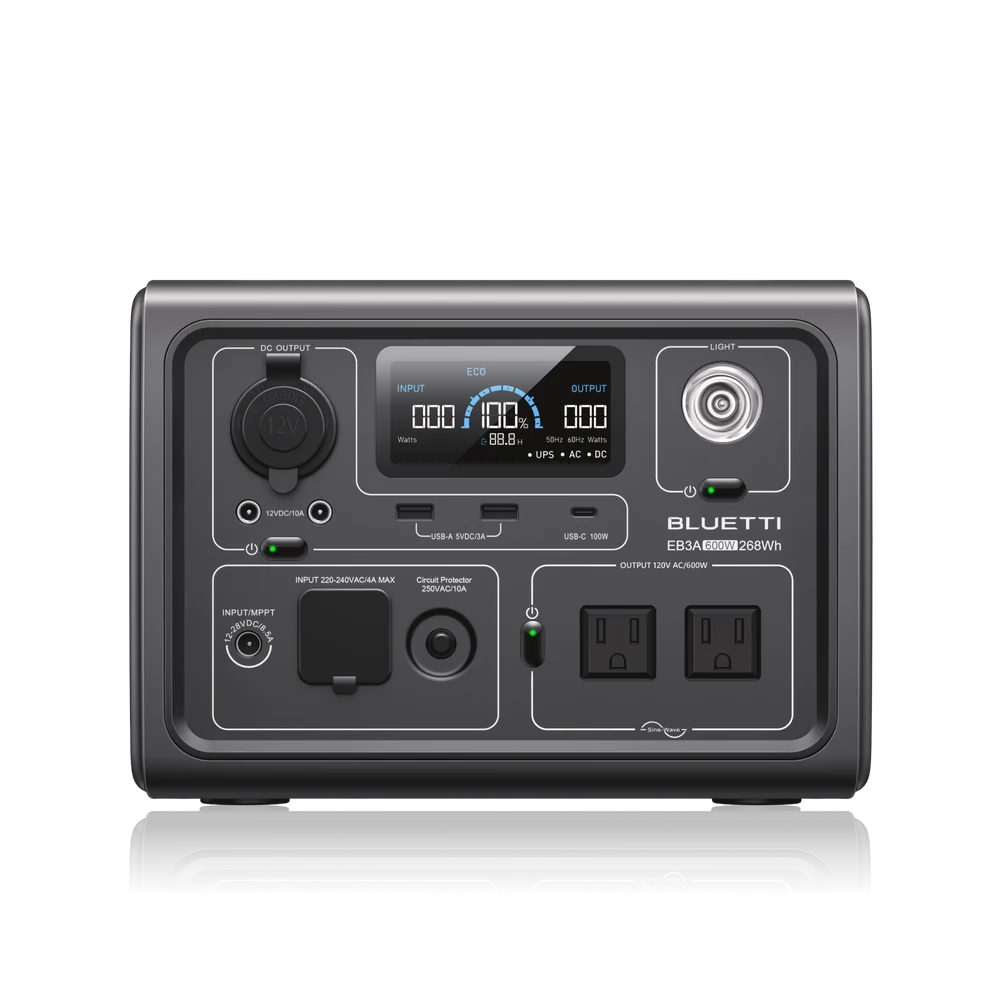
The EB3A suits portable sessions with a load checked against its 600W AC rating. Its manual lists 268.8Wh, while a UK reviewer delivered 229Wh in one test. European reviewers ran a router and
-
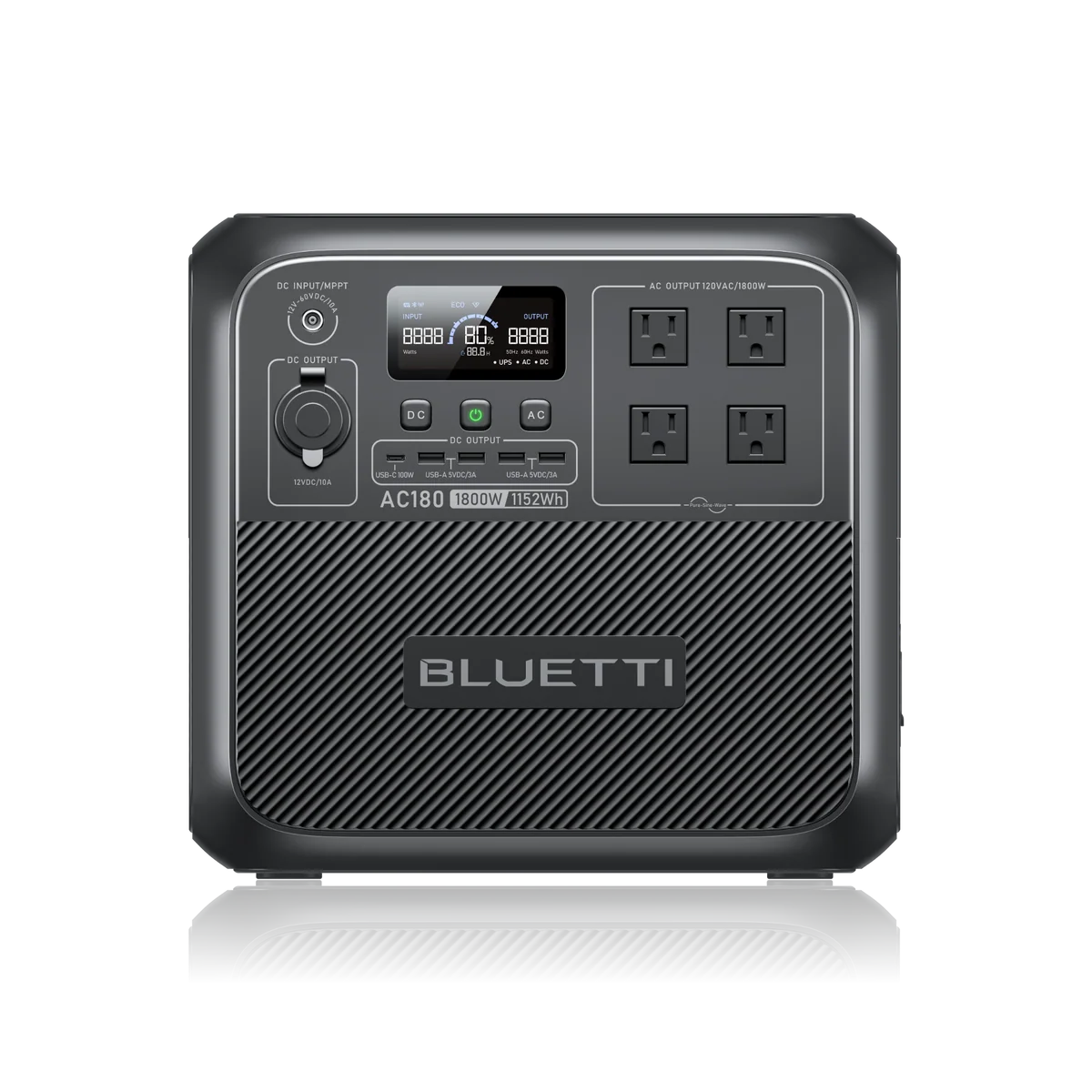
BLUETTI AC180 Portable Power Station
The BLUETTI AC180 offers 1,152 Wh of rated capacity, 1,800 W continuous AC output and 2,700 W surge output in a 16 kg unit. Testing sustained the full 1,800 W load for 30 minutes and delivered 983 Wh to a heater, making it c
-
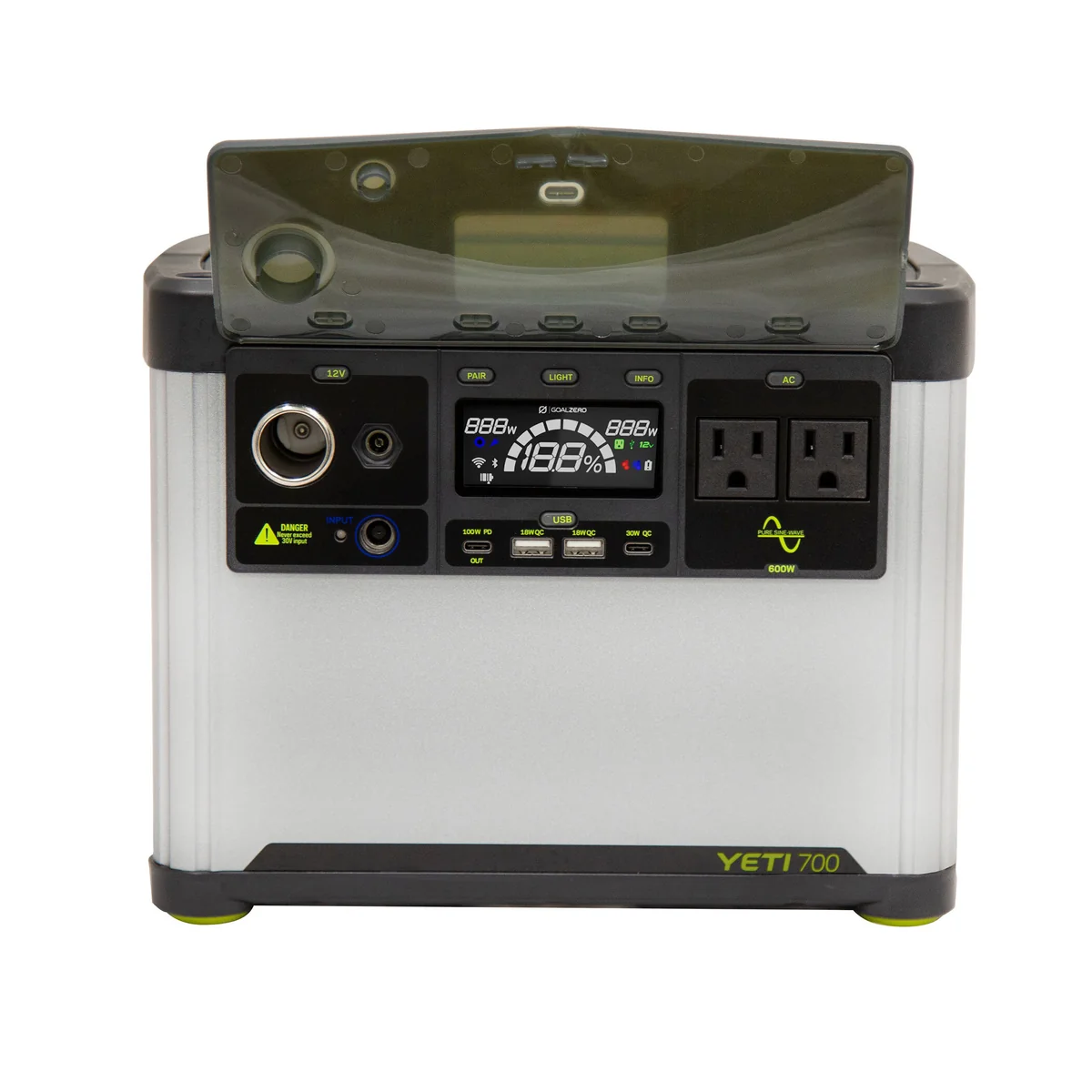
Goal Zero Yeti 700 Portable Power Station
The Yeti 700 suits modest CPAP, RV-day, phone, and laptop loads, with a 677.376 Wh battery, 600 W AC output, multiple AC, USB, and DC ports, solar input, fast AC input, and cited safety certifications. It rem
-
DJI Power 1000 Portable Power Station
The DJI Power 1000 is best matched to remote shoots and drone-centered field kits that need serious AC output. Evidence identifies a 1024 Wh battery and shows the 2200 W continuous rating holding through full discharge. A separate test repo
-
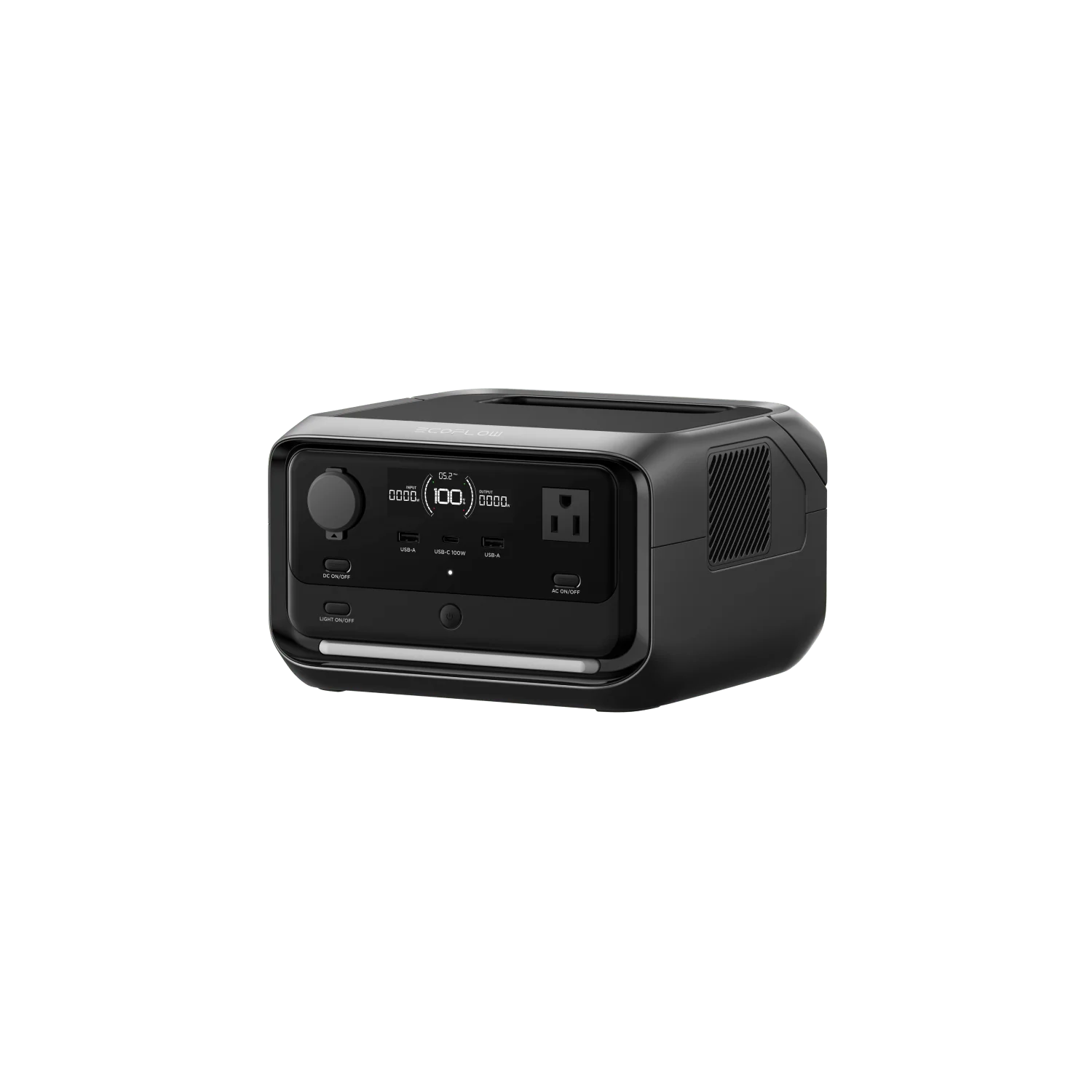
EcoFlow RIVER 3 Plus Portable Power Station
The EcoFlow RIVER 3 Plus combines 286 Wh of battery capacity with 600 W of continuous AC output, making it a compact option for modest portable loads. Independent testing does not support treating the promote
-
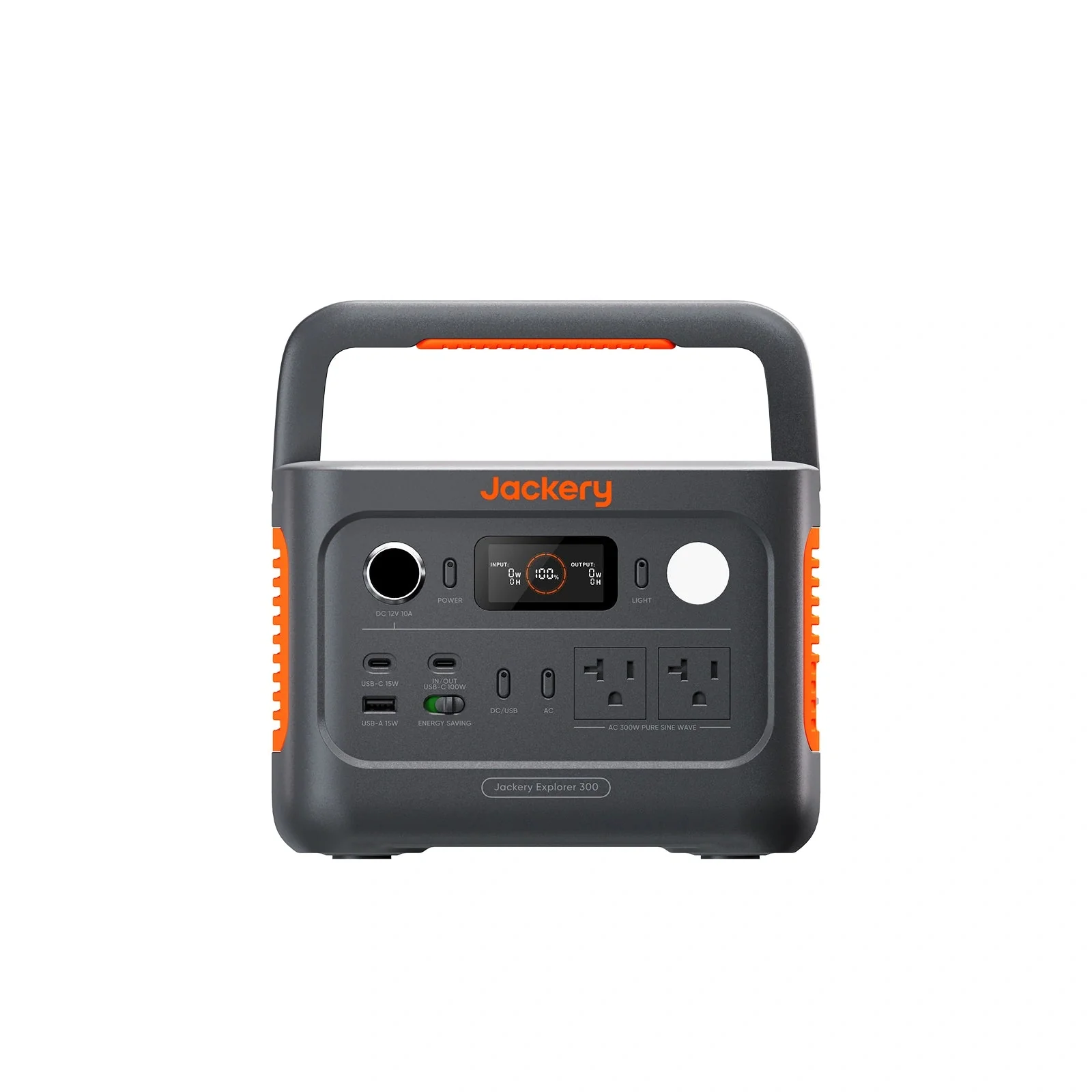
Jackery Explorer 300 V2 Portable Power Station
The Explorer 300 v2 fits buyers seeking a compact first power station for modest loads, short outages and portable use. Evidence supports low weight, two AC outlets and usable energy below the rated battery
Sources and method
- Jackery Explorer 2000 v2 Review (2026): The Step-Up Pick for Home Backup?PowerStationGearLab · retrieved 2026-10-08Editorial review
- Jackery Explorer 2000 V2 Review: Should You Buy It or the 2000 Plus?The Solar Lab · retrieved 2026-09-27Lab review
- Jackery Explorer 2000 v2 Review — Best Carry Ratio Here, and a Recharge Claim That MissedSolar Power Auditor · retrieved 2026-09-27Editorial review
- Jackery Explorer 2000 v2 Review (2026): The 2 kWh Sweet Spot, SynthesizedWatts on the Roof · retrieved 2026-10-08Editorial review
- Jackery Explorer 2000 v2 Review — Best Carry Ratio Here, and a Recharge Claim That MissedSolar Power Auditor · retrieved 2026-10-08Editorial review
- Jackery Explorer 2000 v2 Review (2026): Lightweight High-Capacity PowerPortablePowerPick · retrieved 2026-09-27Editorial review
- Jackery Explorer 2000 V2 Review: Should You Buy It or the 2000 Plus?The Solar Lab · retrieved 2026-10-08Lab review