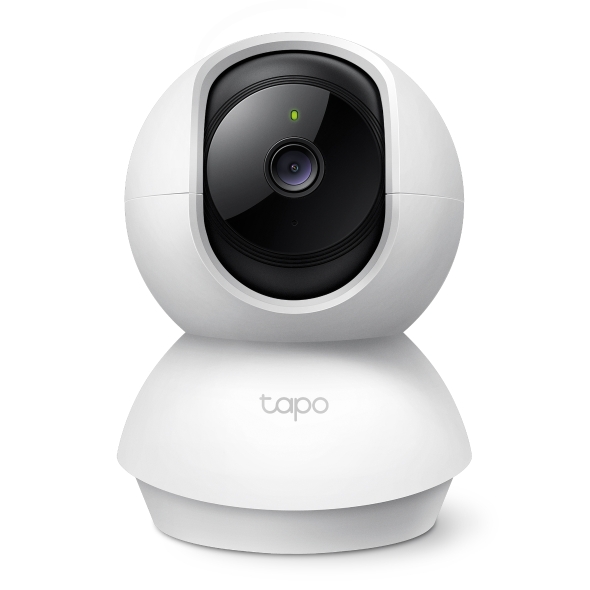
TP-Link Tapo C210P2 Pan/Tilt Home Security Wi-Fi Camera (2-Pack)
Local microSD recording can avoid a subscription according to the retained reviewer, while cloud storage separately requires Tapo Care. Confirm the shipped hardware revision before applying the 512 GB limit from the 2.0/2.20/2.26 datasheet or interpreting the UK support date. The US 1.8 end-of-life entry is revision-specific. This makes local recording a conditional fit, while measured alert reliability remains unproven.
Updated 2026-10-08

We may earn a commission from qualifying purchases.
Prices and sellers
No price information yet
Conditions and limitations
Local recording without a cloud subscription
- Capability
- The retained reviewer reports subscription-free local microSD recording.
- Limitations
- Cloud storage separately requires a subscription.
- Requirements
- Verify card compatibility for the supplied hardware revision.
Compatibility
RTSP and ONVIF Profile S are manufacturer specifications; no exact recorder pairing was independently tested.
Where sources differ
The 512 GB datasheet covers named later revisions. The shipped US revision is unknown and earlier version information remains a gap.
Reported issues and fixes
Reviews discuss sensitivity and network variability but identify no reproducible defect with a known affected firmware or fix.
Care and support
US hardware 1.8 lifecycle entry
- Details
- The manufacturer end-of-life list names US hardware 1.8 and directs readers to contact it for a replacement. The ASIN's shipped revision is unknown.
Ownership costs
Local and cloud subscription requirements are distinguished. No price observations or monetary ownership calculation were made.
Who it suits
Conditional local-recording fit
- Check before buying
- Confirm the supplied hardware revision and its card support.
- Constraints
- Provide the documented 2.4 GHz Wi-Fi network.
- Needs
- Local microSD recording.
- Reason
- The documented functions support a local-recording option, but hardware revision and measured reliability remain unresolved.
- Tradeoffs
- Cloud recording has a separate subscription requirement.
- Assessment
- conditional
Reviewer consensus
Consensus rows require at least two distinct sources for the topic.
| Topic | Positive | Negative | Mixed | Reading | Evidence |
|---|---|---|---|---|---|
| Local storage and privacy | 1 | 2 | 0 | Debated · 1 v 2 | [1], [3], [5] |
| Subscription cost and locked features | 1 | 1 | 0 | Debated · 1 v 1 | [1], [6] |
Single-source notes
- Day night image quality: Agreed · 1/1 · [1]
- Efficiency: Agreed · 1/1 · [1]
- False alert rate: Mixed · 1/1 · [4]
- Installation and power options: Mixed · 1/1 · [1]
- Limitations: Weak point · 1/1 · [1]
- Motion detection ai accuracy: Mixed · 1/1 · [1]
- Smart home platform integration: Mixed · 1/1 · [1]
- Sustained performance: Mixed · 1/1 · [2]
The review
Tapo C210P2: recording, power and revision caveats
Documented video specifications
Tapo C210P2 should be assessed as a camera with documented video specifications and a small body of published use reports. The accepted manufacturer datasheet specifies an image width of 2304 px and a frame rate of 15 fps. Those numbers identify the recording format, but they do not by themselves establish whether a face will be recognizable at the far end of a room, whether a moving pet will remain sharp, or how much detail will survive difficult lighting. For a buyer, the useful distinction is between knowing the stated format and knowing how a particular installation performs. The former is supported here; the latter still needs a relevant test. Lim Team describes using the camera and adjusting detection sensitivity, but supplies no controlled image-quality measurements. That experience adds context without replacing a repeatable test. A household wanting occasional visual checks can use the format as an initial screening criterion. Someone needing dependable identification of fast-moving subjects should ask for representative recorded footage at the intended distance before relying on the headline specification. The evidence does not justify promising a measured recognition range, a measured motion-clarity result, or a laboratory accuracy score. [1], [4]
Protocols and a practical buying decision
The 2.0, 2.20 and 2.26 datasheet lists RTSP support and ONVIF Profile S. These are manufacturer compatibility statements, not evidence that this research connected the camera to a particular recorder, NAS, or third-party application. Buyers considering such a setup should check the capabilities required by their intended recorder and the documentation for the supplied hardware revision before depending on those protocols. A protocol entry does not establish that every recording, notification, or camera-control function is available through another application. The supported wireless band, local-recording route, cloud-service requirement, and revision uncertainty should be assessed together. For a household wanting app-based visual checks with local storage, the evidence provides a plausible conditional fit: confirm the network and hardware documentation, then verify the recording behaviour that matters to you. For someone requiring a proven third-party recording combination or quantified alert reliability, this package leaves important questions open. The buying conclusion is therefore specific rather than absolute. Choose on the documented capabilities that match the intended installation, and seek additional testing for the requirements this evidence cannot establish. No price comparison, guaranteed running cost, or unsupported competing-product claim is needed to make that decision. The retained distinction between specifications, reviewer experience, and unresolved gaps gives buyers a clearer basis for those checks. [5], [6], [1]
Power and installation
The datasheet names a 9V DC Power Adapter as the power source, gives a power cord length of 3 m, and lists typical power consumption of 1.78 W. All three are manufacturer specifications for the revisions covered by that document, rather than measurements collected in an independent home installation. Placement therefore deserves attention before purchase: the desired camera position needs a practical adapter connection and an acceptable cable route. A stated cord length is useful for planning, but checking the real path to the socket is more informative than measuring a straight line across the room. The same datasheet specifies IEEE 802.11b/g/n, 2.4 GHz Wi-Fi. Confirm that the intended installation can provide that documented network rather than assuming any wireless network will satisfy the camera's requirements. Power and connectivity are separate checks; satisfying the adapter requirement does not demonstrate wireless reliability. The typical consumption figure should also remain distinct from a household energy measurement. It does not establish consumption during every recording mode or supply the inputs for a battery-runtime calculation. This camera's documented adapter arrangement is the relevant planning basis. Buyers comparing installation options should resolve the socket position, cable route, and supported wireless band before treating easy placement as assured. [1]
Local recording and subscription scope
The retained hands-on review states that local microSD recording can operate without a subscription. That statement is now represented specifically as a local-recording subscription claim; it must not be read as a promise that every recording service is included. The manufacturer datasheet separately describes Tapo Care cloud storage as requiring a subscription. This separation is useful for buyers because the decision is about where recordings will be kept and which service is needed, rather than simply whether the product has a subscription. The same datasheet specifies a microSD slot supporting up to 512 GB for the hardware revisions named in the document, 2.0, 2.20 and 2.26. The supplied revision for this US ASIN remains unidentified, so that capacity is recorded with a revision caveat rather than generalized to every C210P2 package. Check the actual hardware revision and its documentation before selecting a card on the basis of that limit. Capacity alone does not establish a guaranteed number of recorded days; the evidence here provides no verified duration for the shipped unit. A buyer satisfied with local recording can evaluate that route separately from cloud features. A buyer requiring cloud recording should explicitly confirm the service requirements instead of extending the subscription-free local statement to the cloud. [5], [6], [1]
Check the hardware revision
TP-Link's UK PSTI support table distinguishes Tapo C210P2 hardware revisions. The V2.20 entry carries a support date of 20 February 2029, but that entry is not a verified commitment for an unidentified revision shipped under this US ASIN. A separate manufacturer end-of-life list names Tapo C210P2 hardware 1.8 for the US and directs readers to contact the manufacturer for a replacement. These documents concern different revision and regional scopes, so they should not be compressed into a single assertion that every C210P2 is supported until one date or that every C210P2 is discontinued. The useful buyer action is to identify the supplied hardware revision, then consult the regional support information for that exact revision. The ASIN identity is preserved throughout this research and is not used as evidence of a particular hardware number. For someone planning long-term monitoring, that distinction matters as much as the headline video format: a broad model name is insufficient for interpreting a revision-specific support statement. Neither document establishes the warranty terms, repairability, availability of spare parts, or remaining support period for the actual unit in this listing. Those points remain unresolved instead of being inferred from a neighbouring revision. Confirming revision and region is therefore a concrete pre-purchase check. [5], [3]
Detection controls help, but accuracy is not quantified
Lim Team's first-person report describes fine-tuning detection sensitivity to reduce unwanted alerts associated with pets or minor movement. This is a useful example of adjusting the camera to a particular home, but it is a reviewer observation with no published false-alert count, defined trial duration, identified firmware, or reproducible comparison. It should guide a setup question rather than become a numerical accuracy claim. The manufacturer datasheet adds a specific condition: activity zones are documented as working only with motion detection. A buyer should therefore check which detection mode is enabled when evaluating those controls and avoid assuming the same condition applies to every alert category. The evidence supports asking how sensitivity and zones behave in the intended room; it does not support a promise that unwanted notifications will disappear. Household Ranker's editorial synthesis also cautions that network performance should not be assumed identical across homes. That is secondary commentary, not another direct test sample. Together, these sources encourage a conditional decision: evaluate the notification behaviour and connection in the actual installation before relying on continuous monitoring. Detection accuracy, notification latency, and quantified connection uptime remain evidence gaps. Published praise or a subjective score cannot fill those gaps, and neither has been stored as a physical measurement. [1], [4], [2]
Buyer questions
Before you buy
Setup
How is the camera powered?
The datasheet specifies a DC power adapter and typical power consumption of 1.78 W. This is a specification rather than a measured energy-use test. [1]
Which wireless network is documented?
The 2.0/2.20/2.26 datasheet specifies IEEE 802.11b/g/n, 2.4 GHz Wi-Fi. Confirm support for that band at the intended installation. [1]
Limitations
What frame rate is documented?
The manufacturer datasheet specifies 15 fps. The accepted evidence does not include an independent measurement of motion quality. [1]
Care and maintenance
Does the UK support table guarantee support for this US listing?
No verified guarantee can be drawn for this US ASIN from the V2.20 entry. The support table distinguishes hardware revisions, and the shipped US hardware revision is unknown in the accepted evidence. [5]
Product images
Facts and specifications
Manufacturer datasheet
| Specification | Value | Source |
|---|---|---|
| Cable Length | 3 m | [1] |
| Compatibility | RTSP and ONVIF Profile S are specified in the 2.0/2.20/2.26 datasheet; third-party recorder interoperability is not independently tested here. | [1] |
| Frame Rate | 15 fps | [1] |
| Limitation | Activity zones are documented as working only with motion detection in the 2.0/2.20/2.26 datasheet. | [1] |
| Power | 1.78 W | [1] |
| Power Source | 9V DC Power Adapter | [1] |
| Resolution Width | 2304 px | [1] |
| Storage Capacity | 512 GB | [1] |
| Subscription Required | Tapo Care cloud storage requires a subscription; this does not describe local microSD recording. | [1] |
| Wi-Fi Standard | IEEE 802.11b/g/n, 2.4 GHz Wi-Fi | [1] |
Stated by reviewers
| Specification | Value | Source |
|---|---|---|
| Subscription Required | Local microSD recording does not require a subscription according to the reviewer; this does not cover cloud recording. | [6] |
| Use Case | Lim Team's reviewer reports adjusting detection sensitivity to reduce unwanted alerts in their own use; the report gives no measured false-alert rate or identified firmware version. | [4] |
Other facts
| Specification | Value | Source |
|---|---|---|
| Risk | The PSTI support table distinguishes Tapo C210P2 hardware revisions. Its V2.20 date is not a verified support promise for the unknown hardware revision of this US ASIN. UK; TP-Link's end-of-life list names Tapo C210P2 hardware 1.8 for US and says to contact the manufacturer for a replacement. This does not identify the revision shipped under this ASIN. US | [5], [3] |
KnowSpec analysis
A conditional fit for local indoor recording
Local microSD recording can avoid a subscription according to the retained reviewer, while cloud storage separately requires Tapo Care. Confirm the shipped hardware revision before applying the 512 GB limit from the 2.0/2.20/2.26 datasheet or interpreting the UK support date. The US 1.8 end-of-life entry is revision-specific. This makes local recording a conditional fit, while measured alert reliability remains unproven.
Method: editorial_synthesisVisible information gaps
Missing information is shown rather than guessed.
- Topic:Measured Performancenot found
- Topic:Buyer Fitnot found
- Topic:False Alert Ratenot found
- Local Storageconflicting
- Topic:Sustained Performancenot found
- Topic:Smart Home Platform Integrationconflicting
- Topic:Battery Life Real Worldnot found
- Topic:Weather Durability Outdoornot found
- Topic:Motion Detection Ai Accuracynot found
- Topic:Two Way Audio Qualitynot found
- Topic:Notification Latencynot found
- Topic:Mobile App Qualitynot found
Products in this content
-
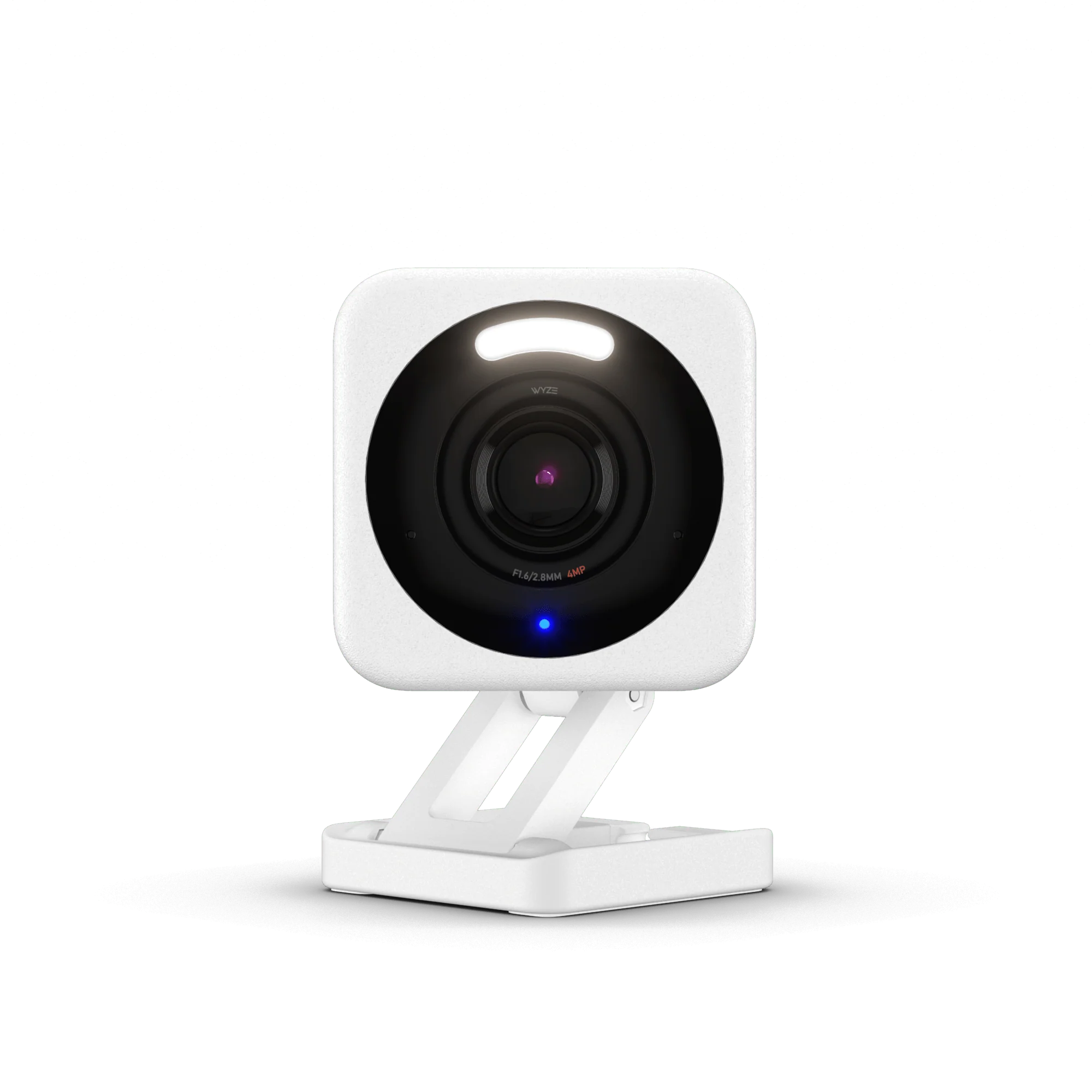
Wyze Cam v4 2.5K Wired Indoor/Outdoor Security Camera (White, 1 Pack)
The Wyze Cam v4 establishes high hardware-per-dollar value in compact monitoring, delivering 2560 px resolution video alongside color night vision and an integ
-
REOLINK Duo 3 PoE 16MP Dual-Lens 180° Panoramic Outdoor Security Camera
The Duo 3 PoE is a candidate for broad frontages and long walls when compatible wired power is available. Current manufacturer specifications, a qualified business-card observation and one reported Luma NVR integration support that role. Pl
-
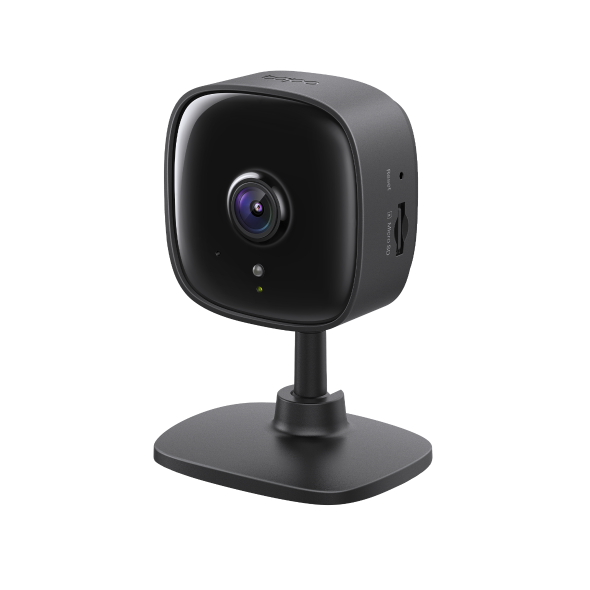
TP-Link Tapo C101 Black Home Security Wi-Fi Camera
Tapo C101 suits a fixed indoor view when you can keep the camera powered and prefer local recording. Its microSD slot provides an alternative to subscription-based Tapo Care cloud storage. The reviewer finds
-
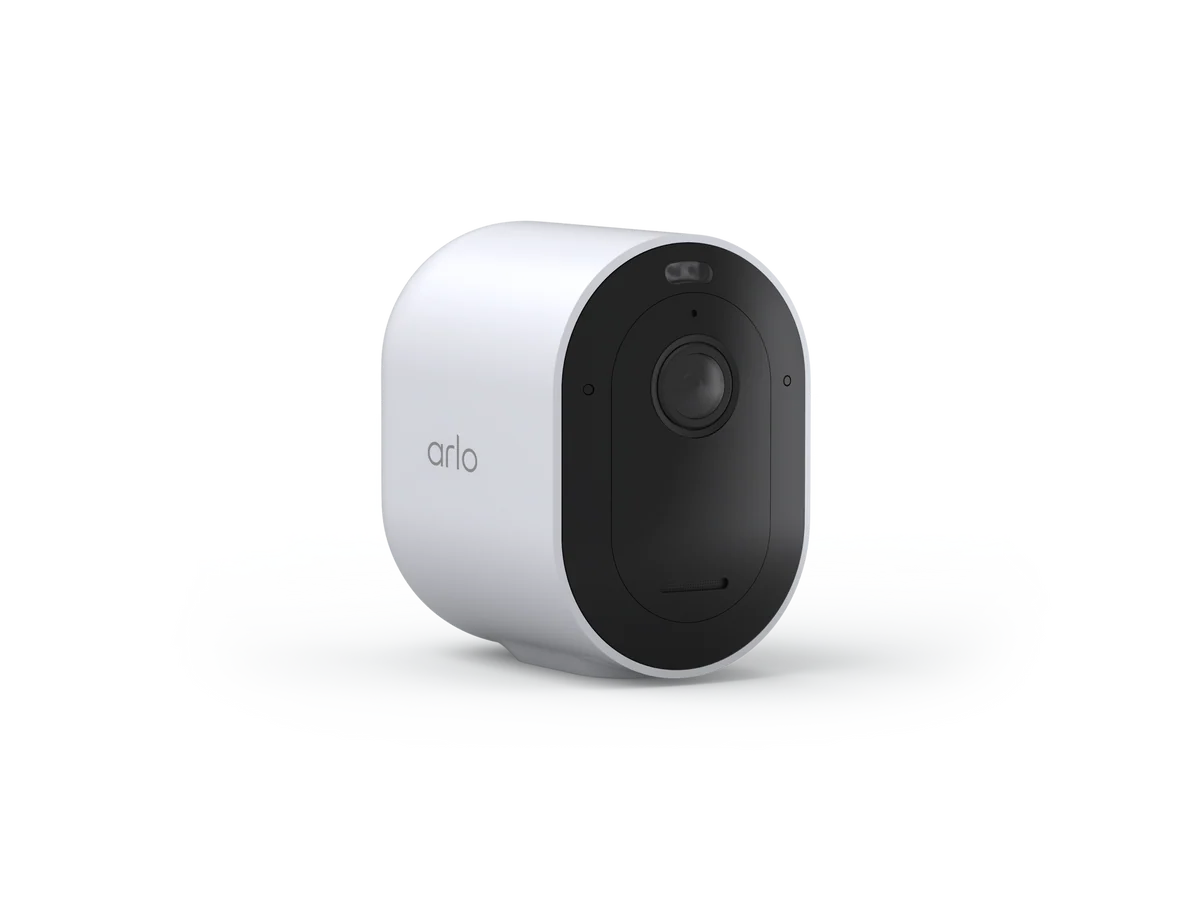
Arlo Pro 6 2K Wireless Outdoor Security Camera - 6th Gen (White, 1 Camera)
The Arlo Pro 6 suits homeowners who want a polished wire-free outdoor camera with strong day-and-night video, broad smart-home integration, guided setup, usefu
-
UniFi Protect G6 Bullet 4K PoE Security Camera - Black, Single Camera (UVC-G6-Bullet-B)
The UniFi Protect G6 Bullet delivers dedicated outdoor surveillance video capture at 3840 px wide and 30 fps without recurring m
Sources and method
- Tapo C210P2 2.0 & 2.20 & 2.26 DatasheetTP-Link · retrieved 2026-10-02DatasheetPDF
- Tapo C210P2 ReviewHousehold Ranker · retrieved 2026-10-08Editorial review
- Smart Home End-of-Life ListTP-Link · retrieved 2026-10-08ManufacturerPDF
- TP-Link Tapo C210P2 2-Pack Security Camera REVIEW: A Long-Term User’s PerspectiveLim Team · retrieved 2026-10-08Editorial review
- TP-Link PSTI Statement of Compliance, 10 November 2025TP-Link · retrieved 2026-10-02ManufacturerPDF
- Tapo C210P2 Review: cheap 2K indoor cameras that mostly just workSecurity Camera GURU · retrieved 2026-10-02Editorial review